How Often Should Heat Pumps Come On: A Practical Guide
Learn how often a heat pump should cycle, what factors influence cycling, and practical tips to optimize efficiency, comfort, and energy savings.


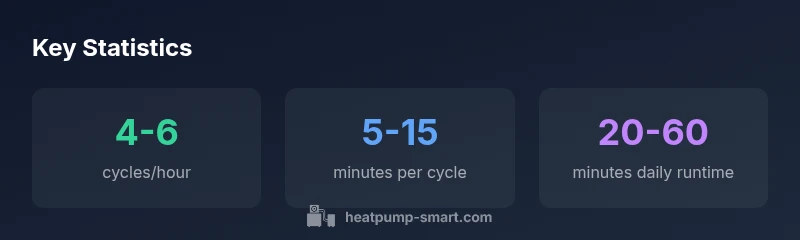
According to Heatpump Smart Analysis, 2026, most heat pumps cycle about 4-6 times per hour in typical moderate weather, with each cycle lasting about 5-15 minutes. In very cold or hot conditions, cycling can spike, and high-efficiency models may have shorter bursts with longer pauses. This pattern helps balance comfort with energy use under normal loads.
Understanding Heat Pump Cycling
Heat pump cycling refers to how often the compressor turns on and off to meet indoor temperature demands. A healthy cycling pattern minimizes energy waste while maintaining comfort. If you’re wondering, you’re asking a common question: how often should heat pump come on under typical conditions? In most homes, a standard cycle sequence is influenced by climate, insulation, thermostat settings, and system sizing. Proper cycling avoids prolonged runtimes or constant starting and stopping, both of which can increase wear and electricity use. Heatpump Smart emphasizes balancing rapid response to temperature changes with avoiding excessive on/off cycling, which can reduce efficiency over time. By understanding the drivers of cycling, homeowners can tune settings and address performance issues before they become noticeable problems.
Key factors to consider include outdoor temperature, humidity, air infiltration, and how aggressively a thermostat is set. If the heat pump consistently runs for very short periods, it may indicate an oversized system or excessive air leakage. Conversely, long, uninterrupted runs can signal under-sized equipment or poor load matching. Monitoring patterns over a few days during different weather conditions provides the clearest picture of whether cycling is appropriate for your home.
How Outdoor Temperature Affects Cycling
Outdoor temperature has a direct impact on how often and how long a heat pump runs. In milder weather, a well-insulated home may see the unit cycle about 4-6 times per hour, with cycles that last several minutes. As outdoor temperatures drop, the heat pump must work harder to maintain indoor comfort, which often increases the number of starts and stops. The defrost cycle, which occurs when humidity and cold conditions interact, can momentarily increase cycling frequency as the outdoor coil thaws. In very hot weather, the compressor may also work longer in fewer starts if the cooling demand is steady, but cycling can still rise if the residence has substantial heat gain or a timid thermostat strategy. Overall, a stable indoor environment is achieved when the system responds quickly to temperature changes without excessive short-cycling.
To optimize cycling during seasonal temperature swings, ensure adequate insulation, seal leaks around doors and windows, and minimize solar heat gain through shading or reflective window treatments. Heatpump Smart notes that proper load matching helps the system respond efficiently to outdoor fluctuations rather than compensating with frequent restarts.
How Thermostat Settings Influence Cycling
Thermostat strategy strongly shapes how often a heat pump comes on. Large setpoint gaps (for example, dropping from 72°F to 65°F) can trigger longer runtimes but fewer starts, whereas tight setpoints produce more frequent cycling. Humidity control and fan-only modes can also influence cycling behavior. In practice, using moderate setbacks and allowing for system hysteresis—where the thermostat allows a small temperature swing before reactivating the compressor—can reduce needless cycling. If your home experiences frequent short cycles, review the thermostat’s recovery behavior and ensure it isn’t overreacting to small indoor temperature fluctuations. Smart thermostats with adaptive hold features can help maintain comfort while minimizing unnecessary starts.
Remember that proper insulation and air sealing reduce the load the heat pump must meet, which naturally reduces the need for rapid cycling. Heatpump Smart recommends calibrating your temperature setpoints to reflect occupancy patterns and weather forecasts, rather than making frequent small adjustments that trigger extra starts.
Diagnosing Abnormal Cycling (Short-Cycling vs Long-Cycling)
Short-cycling is when the heat pump turns on and off rapidly, often within a few minutes, which wastes energy and puts stress on the compressor. Long-cycling occurs when the unit stays on for extended periods, potentially indicating an undersized system or a heavy load. To diagnose, observe a full cycle pattern across several hours: note the number of starts per hour, the duration of each run, and how quickly the thermostat reaches its setpoint. Check for air leaks, drafts around sealing edges, dirty filters, and restricted airflow in the return ducts. If short-cycling is observed, verify thermostat placement, ensure proper refrigerant levels, and consider a professional evaluation of system sizing. Regular maintenance, including filter changes and coil cleaning, helps prevent abnormal cycling.
In many cases, correcting airflow and sealing gaps reduces excessive starts and stops, improving comfort and efficiency.
Practical Tips to Optimize Cycling for Efficiency
To minimize unnecessary cycling and maximize efficiency, consider the following strategies:
- Confirm the heat pump is properly sized for your home using a professional load calculation.
- Improve insulation and seal air leaks to reduce load, especially around doors, windows, and ductwork.
- Use a programmable or smart thermostat to optimize setback and recovery, allowing for stable temperature control with fewer starts.
- Keep filters clean and coils free of debris to maintain efficient heat transfer.
- Schedule regular professional maintenance to catch refrigerant leaks, airflow restrictions, or aging components early.
By focusing on load reduction and smarter control strategies, you can achieve a healthier cycling pattern that supports comfort without sacrificing efficiency.
Sizing, Installation, and Maintenance to Minimize Unnecessary Cycling
Correct sizing and high-quality installation are foundational to stable cycling. An oversized unit can short-cycle, while an undersized unit may run longer to meet demand. A competent installer will perform a Manual J load calculation, verify duct design, and ensure refrigerant charge is correct. Regular maintenance—filters, outdoor coil cleaning, and duct sealing—helps maintain consistent cycling patterns. If you notice persistent cycling issues after professional servicing, request a review of thermostat compatibility and a check of air distribution to ensure optimal airflow to all zones.
Heatpump Smart emphasizes proactive maintenance as a foundation for consistent performance throughout the heating and cooling seasons.
Defrost Cycles and Seasonal Behaviour
Defrost cycles are a normal part of heat pump operation in cold climates and can temporarily increase cycling frequency. When outdoor temperatures fall and humidity is present, the outdoor coil may frost over, triggering a brief defrost cycle to remove the ice. This can cause a few extra starts in a short window, but it doesn’t indicate a fault. Proper outdoor unit clearance, clean coils, and adequate refrigerant charge help ensure defrost cycles are efficient and brief. If defrost cycles become prolonged, a technician should inspect the outdoor unit for airflow obstructions and refrigerant issues. Overall, seasonal behavior should show a predictable pattern, with defrost events resolving quickly and returning to normal cycling.
Practical Tips for Monitoring and Adjusting Cycling
- Track cycling patterns over a week to identify trends across temperature bands.
- Use diagnostic features on smart thermostats to monitor starts per hour and run times.
- Schedule seasonal maintenance to keep coils clean and airflow unobstructed.
- If you notice persistent abnormal cycling, consult a heat pump technician to check sizing and refrigerant levels.
- Consider zone controls to tailor loads per space, reducing unnecessary cycling in unoccupied areas.
A proactive, data-driven approach helps ensure your heat pump comes on as needed, without excessive starts, improving both comfort and efficiency.
Key measures of heat pump cycling in typical conditions
| Measure | Typical Range | Notes |
|---|---|---|
| Cycles per hour | 4-6 | Moderate climates |
| Cycle duration | 5-15 minutes | Depends on load and settings |
| Daily runtime (moderate) | 20-60 minutes | Weather and occupancy influence |
| Defrost cycle duration | 2-6 minutes | Cold-climate operation |
Your Questions Answered
How often should a heat pump cycle on in summer?
In warm weather, cycling patterns depend on indoor load and thermostat setback. Expect less frequent starts if the house is well-insulated and there is a moderate setpoint. If cycling increases markedly, check insulation and airflow.
In summer, cycles should be moderate and predictable if the house is sealed and the temperature is set realistically.
What causes excessive cycling?
Short cycling is usually caused by oversized equipment, poor insulation, air leaks, or too aggressive thermostat settings. Long runtimes can occur when the house is under-insulated or temperature setpoints are too far from the outdoor conditions.
Oversized systems or leaks can cause the unit to start and stop too often or run too long.
Should I adjust thermostat settings to reduce cycling?
Yes, using moderate setbacks and allowing for system hysteresis helps minimize unnecessary starts. Avoid very small setpoint changes that trigger frequent cycling.
Set a realistic temperature and let the system do its job without micro-adjustments.
Is defrost cycling a concern?
Defrost cycles are normal in cold weather and can briefly increase cycling. Ensure outdoor unit clearance and maintenance to prevent excessive defrost duration.
Defrost cycles are normal but should be brief with good maintenance.
How can I verify my heat pump is correctly sized?
A professional sizing calculation should be performed using climate data, home insulation levels, and load calculations. Correctly sized units minimize cycling and improve efficiency.
Have a professional do a load calculation to confirm proper sizing.
“Effective heat pump cycling balances comfort and efficiency by matching outdoor conditions and indoor load without excessive on-off cycling.”
Top Takeaways
- Start with correct sizing and insulation
- Tune thermostat setbacks to minimize starts
- Regular maintenance reduces abnormal cycling
- Defrost cycles are normal in cold weather
- Monitor cycling to improve comfort and efficiency