How to Protect Heat Pump from Snow: A Practical Guide
Learn proven, safe strategies to shield your outdoor heat pump from snowfall, keep airflow clear, and maintain efficiency all winter. This Heatpump Smart guide covers best practices, common mistakes, and know‑when‑to‑call-a-pro tips.


Protecting a heat pump from snow means preparing the outdoor unit, maintaining airflow, and using approved defenses to prevent snow buildup and ice. This guide covers clearance requirements, protective accessories, and simple maintenance steps you can perform yourself. Following these practices helps preserve efficiency, reduce defrost cycles, and avoid winter downtime, with safety tips and when to call a professional.
What happens when snow accumulates on a heat pump?
Snow piling on the outdoor unit isn't just unsightly — it can interfere with heat transfer and performance. The condenser coil relies on airflow through its fins; snow acts like an insulating blanket and blocks airflow, causing the system to run longer to achieve the same heating output. In cold climates, thaw‑freeze cycles can create ice buildup on the cabinet and refrigerant lines, reducing efficiency and increasing wear on the compressor. According to Heatpump Smart's analysis, even light accumulations can elevate operating costs over a winter season because the unit must work harder to extract heat from the cold outdoor air. The result is higher energy use, more frequent defrost cycles, and potential reliability issues if snow repeatedly blankets the coil.
Understanding these dynamics helps frame the protections you’ll implement. The next sections outline practical strategies and climate‑specific tweaks that keep your system warmer, longer, and more efficient throughout winter.
Key principles for snow protection
To reliably shield a heat pump from snow, start with a few core principles that apply across climates:
- Maintain clear airflow: Keep sufficient clearance around the condenser so air can move freely. Snow, ice, or debris that blocks fins reduces heat transfer and forces the compressor to work harder.
- Ensure drainage: Meltwater should flow away from the unit so pooled ice cannot refreeze and obstruct the cabinet or create slippery hazards.
- Avoid blocking access: You (or a technician) need easy access to the electrical disconnect, service panels, and filtration points for periodic checks.
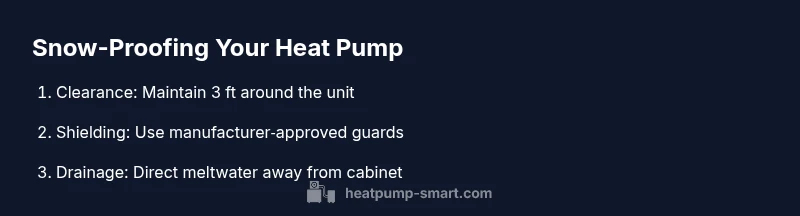
- Use manufacturer‑approved defenses: Only install shields, guards, or covers that are designed for your model. Improvised barriers can trap moisture and reduce performance.
- Plan for the worst, but act safely: Tailor protections to your snowfall rate and wind direction; never compromise electrical safety or service clearances.
The Heatpump Smart team emphasizes that snow protection is as much about airflow and drainage as it is about keeping snow away from the unit’s cabinet. A well‑designed setup minimizes icing and helps the defrost cycle work efficiently when needed.
Practical protection strategies you can implement
Below is a practical, field‑tested set of steps you can apply this winter. Start with the baseline clearance, then progressively add layers of protection depending on your climate and available equipment. Always consult your heat pump’s manual before making modifications and use only manufacturer‑approved accessories.
- Create a clear perimeter: Clear a zone of at least 3 feet around the unit on all sides. Keep the top free of branches, leaves, and loose debris that can accumulate under snow and meltwater.
- Clear snow promptly: After a storm, remove loose snow from around the base and top with a plastic scoop or soft brush. Avoid metal tools that can bend fins or dent casing.
- Keep the top free, but avoid covering: Do not completely cover the outdoor unit with tarps or blankets. If your model supports a protective shield, install it according to the manufacturer’s instructions to deflect snow without trapping moisture.
- Direct meltwater away: Ensure grading around the unit slopes outward and away from the cabinet. Use pavers or gravel to encourage drainage and prevent ice patches near the base.
- Consider wind shields or snow guards: If your climate consistently dumps heavy snow, add a manufacturer‑approved shield or guard above the unit to deflect drifting snow. Do not rely on improvised coverings.
- Position away from building overhangs: Locate the unit where roof snow buildup or icicles won’t cascade onto the cabinet. If relocation isn’t possible, discuss protective solutions with a pro.
- Schedule routine checks: Plan a post‑storm inspection to assess frost, ice, or debris buildup and verify clearances. Small issues can compound into bigger problems if ignored.
Seasonal maintenance plan for winter protection
Winter protection isn’t a one‑off task. Implement a seasonal plan that aligns with snow events and freezing temperatures. A simple, repeatable routine helps sustain performance without heavy labor when blizzards hit. Start before the first major snow and recheck after every sustained freeze or thaw cycle.
- Pre‑season inspection: Have a technician review the unit’s clearance, shielding, and drainage options. Confirm there are no bent fins or ice near the electrical components.
- Regular post‑storm checks: After snowfalls, inspect for ice on the cabinet, clogged louvers, and shifted guards. Clear any buildup and recheck the drainage path.
- Mid‑winter review: If your area experiences frequent storms, schedule a mid‑winter check to adjust guards, re‑level the unit if ground movement occurred, and confirm that airflow remains unobstructed.
- End‑of‑season maintenance: At the end of winter, perform a thorough cleaning of fins (gentle brushing only) and prepare for spring, ensuring the unit will be ready for warmer weather without residual ice risk.
Throughout the season, document what you changed, the weather conditions, and any recurring issues. This habit supports future planning and helps the Heatpump Smart team tailor recommendations for your home or building.
Common mistakes to avoid when protecting against snow
Homeowners often stumble into simple, costly mistakes when trying to shield a heat pump from snow. Avoid these pitfalls to keep your system healthy and efficient:
- Don’t cover the unit: Tarps, blankets, or plastic sheeting trap moisture and promote corrosion or mold growth. Always use only manufacturer‑approved shields if recommended.
- Don’t block air intake or exhaust: Obstructing the louvers reduces performance. Maintain open air paths on all sides.
- Don’t pile snow against the cabinet: Snow that rests against the base or top can melt into the cabinet, leading to ice formation and potential water ingress.
- Don’t rely on DIY heat sources: Using external heaters near the unit can create hazardous conditions or damage the components. Rely on airflow and drainage rather than heat patches.
- Don’t ignore ice buildup: If you notice frost or ice on the coils or refrigerant lines, stop and call a technician. Repeated icing can indicate a defrost issue or airflow problem that requires professional attention.
Following these cautions reduces the risk of damage and helps your heat pump perform reliably through winter.
When to call a professional for snow protection concerns
Some protection tasks are best left to a qualified technician. You should contact a pro when you observe persistent icing, excessive frost on the cabinet, unusual noises from the outdoor unit, or if you notice ice forming on refrigerant lines. A technician can verify proper airflow, assess coil cleanliness, and confirm that any guards or shields are correctly installed and not impeding service access. If you rely on older equipment, a pro can also determine whether up‑grades to more robust wind guards or condensate drainage improvements are warranted given your climate and snowfall patterns. Regular professional maintenance, combined with careful DIY protection, can extend the life of your heat pump and keep energy costs predictable all winter.
Quick-start checklist you can use today
- Clear 3 feet around the unit; remove loose snow and debris.
- Inspect the top and sides for ice buildup after storms.
- Ensure there is no obstruction to air intake or exhaust louvers.
- If you have guards, confirm they are properly installed and not loose.
- Direct meltwater away from the cabinet and foundation.
- Schedule a professional check if icing recurs or you notice performance declines.
Tools & Materials
- Snow shovel or plastic scoop(To remove loose snow around the unit without damaging fins)
- Soft brush or non-metal broom(For gentle brushing of snow from fins without bending them)
- Measuring tape(To confirm at least 3 feet of clearance on all sides)
- Non-metallic scraper(Use carefully if needed to remove ice near non‑sensitive surfaces)
- Manufacturer‑approved snow guard/shield(Install according to the unit’s manual)
- Power shut‑off switch or disconnect access(Always turn off power before any maintenance)
- Water hose with spray nozzle(Rinse off salt or grime after storms if safe to do so)
- Weather‑ appropriate footwear with grip(Prevent slips when working near snow and ice)
- Safety gloves(Protect hands when handling cold metal and sharp edges)
Steps
Estimated time: 60-90 minutes
- 1
Assess site and establish clearance
Before you touch snow, survey the area around the outdoor unit. Confirm a minimum clearance of 3 feet on all sides and ensure the top is free from branches and debris that could drop or drift snow onto the cabinet. Document any changes you intend to make and plan for a quick recheck after a storm.
Tip: Use chalk marks to designate safety borders so you don’t accidentally encroach on the space you marked. - 2
Clear snow and debris from around the unit
Carefully remove snow from the base and sides of the unit. Do not hit fins or coils with metal tools. Clear any accumulated leaves or dirt that could clog airflow louvers once the snow melts.
Tip: Always shut off power at the disconnect before touching the unit. - 3
Install or adjust protective shields
Attach a manufacturer‑approved shield or snow guard above the unit if your climate warrants it. Follow the installation instructions to ensure the guard doesn’t block air paths or doors. Secure it firmly to withstand wind and heavier snow loads.
Tip: Check guards after heavy snow events to ensure they haven’t shifted. - 4
Create drainage and vent paths
Ensure the ground around the unit slopes slightly away from the cabinet to direct meltwater outward. Avoid depressions where water can pool and refreeze. If needed, install surface material that encourages runoff without causing vibration issues.
Tip: Test drive the drainage by pouring a small amount of water and watching the flow direction. - 5
Maintain airflow during snow events
Keep the surrounding area free of snow drifts near the intake and exhaust. Re‑check after each big storm and remove new buildup promptly. Do not obstruct the unit with temporary coverings or clutter.
Tip: If you notice reduced airflow after a storm, pause and recheck before calling for service. - 6
Plan for professional inspection
If icing persists, or you notice frost accumulating on coils or refrigerant lines, schedule a technician visit. A pro can diagnose a defrost issue, verify refrigerant charge, and confirm that airflow and shielding are correctly configured.
Tip: Document recurring icing patterns to share with the technician.
Your Questions Answered
Can I cover my heat pump to protect it from snow?
No. Most heat pump manufacturers advise against covering the outdoors. Covers trap moisture, promote corrosion, and can impede airflow and defrost functions.
No. Do not cover the outdoor unit; moisture and restricted airflow can damage it.
What clearance is recommended around a heat pump?
Maintain at least three feet of clearance on all sides and keep the top free of obstructions to ensure proper airflow and service access.
Keep a few feet around the unit clear to maintain airflow and access.
Should I use tarps or improvised shields?
Avoid improvised coverings. Use manufacturer‑approved shields if your model supports them, and follow the installation guidelines to prevent moisture buildup.
Only use shields approved by the manufacturer; avoid improvised covers.
What if I see ice on the coil or lines?
Ice on the coil or lines can indicate restricted airflow or a defrost issue. Remove loose ice if safe and contact a technician if icing recurs.
Spot icing may be normal; persistent icing needs a pro check.
Is it risky to DIY snow removal around the unit?
DIY snow removal is generally safe with plastic tools and proper protection, but avoid metal tools and never touch fins. Always shut off power first.
Be careful; shut off power and use plastic tools.
When should I call a professional for protection concerns?
Call a pro if icing recurs, you hear unusual noises, or you see signs of refrigerant leaks or corrosion after snow protection steps.
If problems persist after DIY steps, contact a technician.
Watch Video
Top Takeaways
- Maintain a minimum three‑foot clearance around the unit.
- Never fully cover the outdoor unit.
- Clear snow promptly to preserve airflow and efficiency.
- Direct meltwater away from the cabinet to prevent refreezing.
- Consult Heatpump Smart resources or a pro for complex protection needs.