Protecting Your Heat Pump from Snow and Ice: A Practical Winter Guide
Learn how to protect your heat pump from snow and ice with proven methods, safe removal practices, and winter maintenance tips to keep comfort and efficiency steady all season.


Protecting heat pump snow ice requires proactive placement, airflow, and seasonal maintenance. In this guide you’ll learn practical measures to shield outdoor units from snow, slush, and frost, plus safe snow removal and drainage strategies. According to Heatpump Smart, simple steps can preserve efficiency, reduce icing events, and lengthen service intervals during winter months.
Why snow and ice threaten heat pumps
Snow and ice can block airflow, melt and refreeze around the outdoor condenser, and increase frost in defrost cycles. When airflow is restricted, the compressor works harder and efficiency drops. Ice on the coil reduces heat transfer and can trigger iced-coil issues. Freezing conditions can also cause drainage problems and potentially water backup into internal components. Heatpump Smart's guidance emphasizes proactive measures in snow-prone environments. In practice, start with assessing site conditions, unit orientation, and nearby obstructions. Ensure no snow piles sit against the unit, and keep the top clear so the coil can shed meltwater properly. If you notice excess ice forming on the fins after a heavy snowfall, stop and consult a pro rather than attempting aggressive scraping; improper removal can bend fins and impair heat transfer.
Site location and clearances for winter protection
Placement around an outdoor heat pump matters as much as the unit itself. Choose a location with at least 12-24 inches of clearance on all sides and 5-6 feet of vertical height above grade to prevent snow drifting into the cabinet. If possible, avoid alcoves or wind-swept corners where drifting snow accumulates. Consider installing a low windbreak on the prevailing wind side, but ensure it does not restrict airflow to the coils. Roof overhangs can reduce snowfall on the top; ensure the top remains open to shedding. Ground slope should direct meltwater away; poor drainage can pool water and refreeze, creating new icing issues.
Airflow, defrost cycles, and frost management
Outdoor units depend on steady airflow to reject heat during cold weather. Snow buildup around the cabinet can choke intake and exhaust, while ice on the coil impedes heat exchange and can trigger longer defrost cycles. Maintain a clear radius around the unit (typically 12-24 inches) and keep nearby vegetation trimmed. If the unit begins icing during cold snaps, ensure nothing is dangling above or around the top that could shed ice back onto the face. When defrost cycles run longer than usual or frosting persists, consult a technician rather than attempting risky remedies yourself.
Protective hardware and coverings (what works, what to avoid)
Use manufacturer-approved shields, deflectors, and wind barriers designed for your model. These components help prevent drifting snow and direct meltwater away from the cabinet without restricting airflow. Avoid enclosing the outdoor unit in solid coverings or heavy plastics; airflow is essential for efficient operation and frost prevention. For very windy sites, consider adjustable side screens that can be removed during servicing. Always verify compatibility with your heat pump’s outdoor unit and follow installation instructions from the manufacturer.
Drainage and meltwater management
Snow and ice melt into drainage paths that can refreeze against the cabinet base. Ensure grade and soil slope direct meltwater away from the unit, and install splash guards or short downspout extensions if needed. Keep gutters and downspouts clear so that water does not back up toward the outdoor unit. In cold climates, even small water ponds can refreeze into compact ice, so proactive drainage planning is essential for continuous airflow and safe maintenance access.
Seasonal maintenance routine you can follow
Create a winter maintenance calendar that includes a pre-season inspection, mid-season checks after heavy snowfall, and post-season service. During inspections, look for bent fins, ice buildup, debris, and any signs of corrosion on electrical connections. Schedule a professional tune-up at least once per year, ideally before the coldest months. Keeping a simple log helps you track what was cleaned, adjusted, or replaced, so you stay on top of wear and performance.
When to call a pro and what to expect
If you notice persistent icing, frost on the coils after a defrost cycle, unusual noises, or a drop in heating performance, contact a licensed HVAC technician. A pro can perform coil cleaning, inspect electrical connections, verify refrigerant levels, and confirm proper airflow clearances. Regular professional maintenance reduces the risk of breakdowns and keeps winter operation efficient.
Tools & Materials
- Snow rake with extension pole(Non-metal blade preferred; maintain distance from the coil when clearing snow from the ground.)
- Insulated safety gloves(Waterproof, with good grip; protect hands during snow removal.)
- Ladder (optional)(Use only if safe and necessary to access higher sections; have a spotter.)
- Gutter splash guards or splash shields(Redirect meltwater away from the outdoor cabinet.)
- Plastic sheeting or tarp(Temporary coverage only for wind protection; never fully enclose the unit.)
- Soft-bristle brush(For gentle removal of loose snow (avoid fins).)
- Headlamp or flashlight(Illumination for safe snow removal in low light.)
Steps
Estimated time: 90-120 minutes
- 1
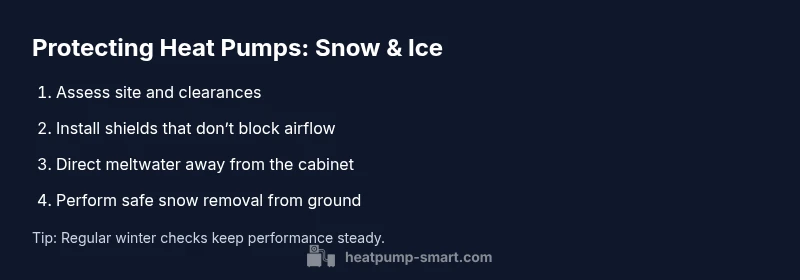
Assess site and clearances
Walk around the unit and confirm a clear 12-24 inch radius on all sides and a clear above-height clearance. Remove any snow piles that may block airflow or trap meltwater against the cabinet.
Tip: Check for debris that could disrupt fans; keep access for service personnel unobstructed. - 2
Install protective deflectors
If using deflectors, install as per manufacturer instructions to shield the cabinet from drifting snow without restricting airflow.
Tip: Avoid obstructing the top intake and exhaust vents; airflow is essential for heat transfer. - 3
Manage meltwater
Create a drainage plan that directs meltwater away from the unit and foundation. Use splash guards if necessary to keep water off the cabinet base.
Tip: Regularly inspect drainage paths after heavy snows; refreeze can occur quickly. - 4
Perform safe snow removal
From ground level, carefully remove accumulated snow from the unit using a long snow rake; avoid metal tools that can bend fins.
Tip: Never use hot water or aggressive scraping; rapid temperature changes can damage components. - 5
Schedule winter maintenance
Arrange a pre-season inspection and a mid-winter check with a licensed tech to verify airflow, coils, and refrigerant status.
Tip: Keep a winter maintenance log to track interventions and recommendations. - 6
Know when to call a pro
If icing persists after clear airflow, if you hear unusual noises, or if heating performance drops, contact a professional promptly.
Tip: Early intervention prevents minor issues from becoming major repairs.
Your Questions Answered
Can snow and ice damage a heat pump?
Snow and ice can impede airflow and cause ice buildup on the coils, reducing efficiency and potentially triggering frost issues. Regular winter maintenance helps prevent damage and keeps performance steady.
Snow and ice can block airflow and freeze around the coils, reducing efficiency. Regular winter maintenance helps prevent damage.
Should I cover my heat pump in winter?
Do not fully enclosure or cover the outdoor unit. Proper airflow is essential for defrost cycles and heat transfer. Use airflow-permitting shields only.
Don't fully cover the unit; use shields that still allow air to flow.
How can I prevent ice buildup on the unit?
Keep a clear zone around the unit, install deflectors, and ensure drainage paths are open. If ice persists after airflow is clear, contact a pro.
Keep airflow clear and manage drainage; call a pro if ice persists.
Is it safe to use a snow rake on the outdoor unit?
Yes, from the ground, use a long snow rake with a non-metal blade to remove loose snow. Avoid scraping fins with metal tools to prevent damage.
Yes, use a long rake from the ground and avoid metal scraping.
When should I call a professional?
Call a technician if icing persists after clearing airflow, if you hear unusual noises, or if heating performance drops noticeably.
Call a pro if icing continues or performance drops.
Do heat pumps in cold climates need extra maintenance?
Yes. Cold-climate operation benefits from additional winter checks, coil cleaning, and refrigerant status verification to maintain efficiency.
In cold climates, extra winter checks help keep efficiency high.
Watch Video
Top Takeaways
- Inspect site clearances before winter starts.
- Maintain 12-24 inches of airflow around the unit.
- Use manufacturer-approved shields to reduce snow drift.
- Redirect meltwater away from the cabinet to prevent refreezing.
- Schedule annual professional maintenance for reliability.