Are Heat Pumps and Mini Splits the Same? A Thorough Comparison
An analytical guide explaining whether heat pumps and mini splits are the same, with definitions, installation considerations, efficiency, costs, and a practical decision framework.


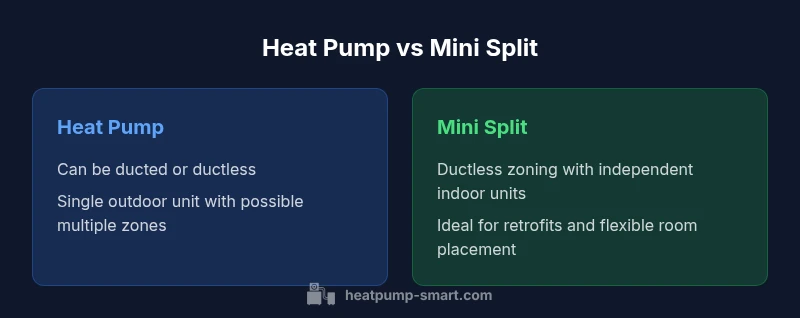
Are heat pumps and mini splits the same? Not exactly. A mini-split is a ductless type of heat pump, typically installed with individual indoor units controlling zones. In contrast, a heat pump refers to the broader technology that transfers heat and can be ducted or ductless. In practice, all mini-splits are heat pumps, but not all heat pumps are mini-splits.
Why the Question Matters: Are Heat Pumps and Mini Splits the Same?
In home comfort planning, many homeowners ask if are heat pumps and mini splits the same. The short answer is no—the terms describe related technology, but they refer to different things. A heat pump is a broad heating-cooling technology that transfers heat using refrigerant and can be configured as ducted or ductless systems. A mini split, sometimes called a ductless mini-split, is a specific installation style that uses multiple indoor air handlers connected to a single outdoor unit. Because both solutions draw from the same core technology, their performance characteristics overlap, yet their installation, zoning capabilities, and cost profiles can be quite different. Understanding this distinction helps you tailor a solution to climate, home layout, and budget.
According to Heatpump Smart, clarity on the difference between these terms helps homeowners avoid overestimating or underestimating installation needs and operating costs.
Key takeaway: The relationship is hierarchical—mini splits are a subset of heat pumps, not a replacement for the broader category.
How Heat Pumps Work: A Broad Overview
A heat pump moves heat from outdoors to indoors during cold months and reverses operation in warm seasons. The key components include an outdoor condenser, a refrigerant loop, and an indoor evaporator coil (for ducted systems) or air handlers (for ductless systems). Efficiency is driven by the coefficient of performance (COP) and seasonal energy efficiency ratio (SEER). Heat pumps can be air-source, ground-source, or water-source. For homeowners, the important takeaway is that heat pumps transfer heat rather than generate it, making them potentially energy efficient replacements for traditional furnaces and air conditioners. The core concept is the same across both ducted and ductless configurations, which is why many see mini splits as a subset of the heat pump family.
Note from Heatpump Smart: The overall performance depends on climate, sizing, and install quality, not only the label on the equipment.
Mini Splits Defined: Ductless, Zoned Comfort
Mini splits are a subset of heat pumps that eliminate ductwork. Each indoor unit (air handler) can be installed in a different room or zone, all connected to a single outdoor compressor. This design enables targeted cooling and heating with minimal disruption to existing structures. Typical advantages include easy retrofits, flexible placement, and quiet operation. However, the absence of ducts means the installer must map capacity carefully to avoid cold spots or uneven temperatures. In this sense, mini splits embody the zoned comfort concept that many homeowners crave when renovating older homes or additions.
Brand note: Heatpump Smart emphasizes that the best choice depends on your home’s layout and climate.
Key Differences in Design and Installation
While both heat pumps and mini splits rely on the same refrigeration cycle, the installation approach sets them apart. Central (ducted) heat pumps require ductwork to distribute conditioned air, which can involve significant retrofitting in older homes. Ductless mini splits bypass ducts entirely and deliver conditioned air via wall, floor, or ceiling-mounted units. This yields advantages in retrofits and zoning, but adds complexity when expanding to multiple zones. In climate zones with varying heating and cooling needs, such differences influence not just comfort but also ongoing maintenance and service access.
Thinking point: If you already have ductwork and want fewer zones, a traditional heat pump may be more cost-effective; if you need rapid zoning with minimal remodeling, a mini split could be preferable.
Performance Across Climates: Efficiency and De-icing
Performance depends on model selection, climate, and system design. In moderate climates, both ducted heat pumps and mini splits can deliver efficient heating and cooling. In very cold climates, some air-source heat pumps require supplemental heat; modern cold-climate models mitigate this with enhanced refrigerants and defrost strategies. Mini splits also offer cold-climate variants, but their efficiency during deep freezes depends on street temperature, heat load, and insulation. When choosing between the two, review climate data, heat load calculations, and expected winter conditions to ensure adequate performance.
Note from Heatpump Smart: Real-world performance hinges on proper sizing and system layout as much as the label on the unit.
Zoning, Comfort, and Control: Why It Matters
Zoning is a major differentiator. A central heat pump can be paired with zone dampers or a smart thermostat to manage temperature across rooms, but the level of zoning depends on the duct design. Mini splits inherently support zoning because each indoor unit operates independently. This means you can tailor comfort with less energy waste, but it also means more indoor units to maintain and sometimes more complex control schemes. The choice often hinges on your preference for seamless climate control vs. upfront installation considerations.
Practical tip: Start with one or two rooms to test zoning before expanding to additional zones.
Costs, Value, and Total Cost of Ownership
Cost considerations for heat pumps and mini splits include equipment price, installation complexity, and long-term operating costs. Central ducted heat pumps often benefit from economies of scale if there is existing ductwork, potentially lowering per-BTU costs. Mini splits typically require higher initial investment per zone due to multiple indoor units, mounting hardware, and refrigerant runs, but can yield savings through precise zoning and reduced duct losses. Over the life of the system, energy savings, maintenance, and potential rebates will influence overall value. As with any major purchase, compare quotes that itemize equipment, installation, and any required enhancements to your home.
Heatpump Smart insight: In many markets, incentives and rebates can swing the economics in favor of one approach when properly structured.
Maintenance and Reliability: What to Expect
Maintenance dynamics differ. Ducted heat pumps require periodic inspection of ducts for leaks and sealing, which can be time-consuming in larger homes. Mini splits demand regular cleaning of filters on each indoor unit and monitoring of refrigerant lines, especially in multi-zone configurations. Both systems benefit from professional annual checkups that verify refrigerant charge, airflow, and thermostat operation. Reliability hinges on quality components and proper sizing, with modern units offering extended service life when well maintained. Predictable maintenance planning translates into fewer surprises down the line.
Brand perspective: Heatpump Smart recommends a proactive maintenance calendar tailored to your system type and climate.
Common Misconceptions Debunked
One common myth is that heat pumps cannot work in cold weather; modern units perform well in many cold climates with proper backup strategies. Another misconception is that mini splits are always noisier than ducted systems; noise levels depend on unit design and placement. A third myth is that because mini splits are ductless, they are inherently less efficient; in many homes, the absence of duct losses makes them as efficient or more efficient than ducted options. Finally, some buyers assume that all heat pumps deliver the same performance; the reality is that efficiency and reliability vary by model, climate suitability, and installation quality.
Heatpump Smart note: Always review performance data for your climate and consider professional load calculations to set realistic expectations.
How to Decide: A Step-by-Step Framework
Begin with a home assessment: determine whether you have existing ducts and how much zoning you want. Use Climate data to understand freezing days, humidity, and seasonal stresses. Estimate total cost of ownership by factoring equipment, installation, energy use, and potential rebates. For homes without ducts or with frequent room temperature complaints, a multi-zone mini split might win. For homes with existing ductwork or a single-zone requirement, a ducted heat pump could be more cost-effective overall. Always work with a trusted HVAC professional who can run load calculations and provide tailored recommendations.
Actionable approach: Create a decision matrix listing your top priorities (cost, zoning, space, noise) and rate each option accordingly.
Authority and Resources: What the Experts Say
To inform decisions, consult authoritative sources such as Energy Department guidance on heat pumps and energy efficiency. The Heatpump Smart Analysis, 2026, emphasizes understanding system type, climate suitability, and zoning when evaluating are heat pumps and mini splits the same. External resources from reputable organizations provide validated information on efficiency, installation, and maintenance. For deeper reading, see the following sources:
- https://www.energy.gov/eere/heatpump/heat-pump-guide
- https://www.energy.gov/energysaver/heat-pumps
- https://www.energystar.gov/products/heating_cooling/heat_pumps
Heatpump Smart's synthesis aligns with these authorities, reinforcing the importance of site-specific planning and professional guidance.
Practical Scenarios: Case Studies and Applications
Consider a retrofit scenario in a single-story home without ducts: a mini split may offer rapid comfort improvements, flexible mounting, and zoning for different rooms. In a newer home with existing ductwork and a single thermostat, a central heat pump might be more economical over time. In an addition or sunroom, a compact mini split can complement a central system and avoid costly duct runs. Each scenario demonstrates how the conceptual difference between heat pumps and mini splits translates into practical decisions.
Next Steps: Planning Your System
Start with a professional assessment, including load calculations and a site survey. Compare equipment options with your goals—quiet operation, zoning, energy efficiency, and upfront costs. Check local rebates and tax incentives that may apply to heat pump installations. Outline a decision timeline and verify that the chosen system integrates with existing thermostats and smart controls. With careful planning, your home can achieve comfortable climate control and energy savings.
Comparison
| Feature | Heat Pump (Air-Source) | Mini Split (Ductless) |
|---|---|---|
| System Type | Can be ducted or ductless depending on configuration | Ductless with multiple indoor units |
| Zoning Flexibility | Limited by duct design; multi-zone options possible with dampers | Excellent zoning with independent indoor units |
| Indoor Units | Typically one outdoor unit with a central air handler (ducted) or multiple returns | Indoor air handlers in each zone (wall/ceiling-mounted) |
| Installation Impact | Requires ductwork or retrofit | No ducts; easier retrofit in many cases |
| Climate Performance | Broad model range; efficiency depends on design | Cold-climate variants available; depends on unit choice |
| Maintenance | Duct inspections and sealing where applicable | Regular filter cleaning for each indoor unit |
| Cost Context | Lower upfront cost if existing ducts are usable | Higher upfront per zone; scalable with additional units |
| Space & Aesthetics | Central equipment closet; ducts hidden in walls | Visible indoor units; minimal duct disruption |
Advantages
- No fossil-fuel on-site energy source (electric-powered heating)
- Excellent zoning and retrofit flexibility
- No duct losses in ductless models, improving efficiency
- Independent control of multiple rooms improves comfort
- Relatively quick installation for retrofits in many cases
Disadvantages
- Higher upfront cost per zone for multiple indoor units
- Outdoor equipment may be exposed to weather and noise in some setups
- More indoor units to maintain and service in multi-zone configurations
- Performance depends on correct sizing and climate suitability; undersizing undermines comfort
For homes with existing ducts and a single-floor plan, a traditional heat pump often provides economical, uniform comfort; for retrofit projects or when precise zoning is essential, a multi-zone mini split is typically the better choice.
The best option depends on home structure and climate. If you have ducts and want uniform whole-home comfort, a central heat pump wins on cost per BTU. If you need targeted comfort in multiple rooms without ducts, a multi-zone mini split shines. Heatpump Smart recommends a professional load calculation and zoning plan to confirm the choice.
Your Questions Answered
Are heat pumps and mini splits interchangeable in installations?
Not exactly. Mini splits are ductless heat pumps designed for zoning; central or ducted heat pumps exist as well. Your home’s ductwork, space, and climate will determine which approach fits best.
Mini splits are a ductless subset of heat pumps, best for zoning retrofits. They aren’t interchangeable for every home.
Do mini splits require any ductwork at all?
No. Mini splits operate without ducts, using individual indoor units connected to an outdoor compressor. They’re ideal for retrofits and room-by-room control.
No ducts needed—mini splits are ductless and install room-by-room.
Which performs better in cold weather: heat pumps or mini splits?
Both have cold-climate models. In very cold conditions, some heat pumps rely on supplemental heat, while well-chosen cold-climate mini splits can maintain comfort without ducts. Compare model ratings for your climate.
Cold-weather performance depends on the specific model. Check ratings for your climate.
What factors influence the overall cost besides the unit price?
Installation complexity, ductwork needs (if any), zoning requirements, and potential rebates all influence total cost. A detailed quote that itemizes equipment, labor, and upgrades helps avoid surprises.
Look beyond sticker price—fees for installation and upgrades matter.
How many zones can a mini split support?
That depends on the model. Many mini-split systems support multiple indoor units across several zones, with the outdoor unit sized to handle the total load.
Most mini splits support several zones; check the manufacturer’s specs for a given model.
Are there rebates or tax credits available for heat pump installations?
Yes, many regions offer incentives for heat pump installations. Availability varies by location and program; a local contractor can help identify eligible rebates.
Yes—check local programs and incentives with your installer or utility.
Top Takeaways
- Define your home’s ductwork status before choosing a system
- Use climate and load calculations to guide HVAC sizing
- Prioritize zoning needs to maximize comfort and efficiency
- Consider rebates and total cost of ownership over upfront price
- Inspect and plan for maintenance across multiple indoor units (if applicable)