Is Heat Pump the Same as AC? A Comprehensive Comparison
Explore whether a heat pump is the same as AC, including how they work, efficiency, costs, and when each makes sense. Heatpump Smart provides an analytical guide to help homeowners decide.


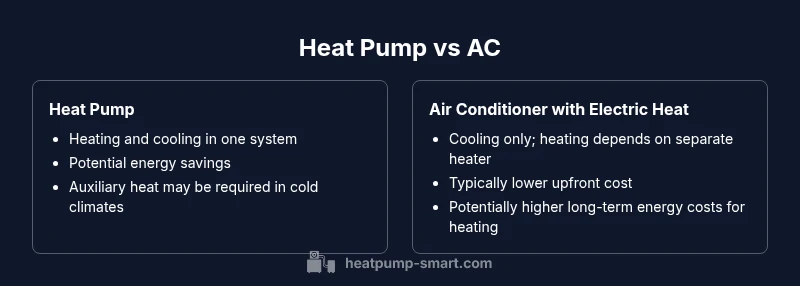
Short answer: a heat pump is not the same as a central air conditioner, though both can cool. A heat pump uses a reversible refrigeration cycle to move heat in or out of a home, enabling heating and cooling in one system. An air conditioner primarily cools and relies on a separate heating source, such as a furnace or electric heat, for warmth. For many homes, a properly chosen heat pump can replace both the cooling plant and the heating system, delivering year-round comfort with potential energy savings.
Is heat pump the same as AC? Clarifying the Question
According to Heatpump Smart, the short answer to is heat pump the same as ac is no—the two technologies serve different roles, though they share cooling capabilities. A heat pump is a reversible system that can heat and cool. In heating mode, it extracts heat from outdoor air and moves it inside; in cooling mode, it removes indoor heat. An air conditioner, by contrast, is optimized for cooling and relies on a separate heating source, such as a furnace or electric resistance heaters. This distinction matters for installation choices, climate suitability, and long-term energy costs. The Heatpump Smart team emphasizes that the right pairing—in many homes a heat pump replaces both the cooling plant and the heating system—can lead to energy savings and more consistent comfort. When you ask is heat pump the same as ac, you should consider heating capabilities, humidity management, and how each system impacts summer cooling and winter warmth.
How heat pumps work vs traditional air conditioners
A heat pump and a central air conditioner share the same essential refrigeration cycle, but how they use it differs. An air conditioner moves heat from indoors to outdoors during cooling. A heat pump uses the same cycle to move heat in both directions, controlled by a reversing valve. The main components are the outdoor unit, the indoor air handler, ductwork, a reversing valve, and refrigerant lines. When cooling, the refrigerant absorbs heat from indoor air and releases it outside; when heating, the cycle reverses, pulling heat from outside air (even at modest temperatures) and delivering it indoors. In some setups, a heat pump is paired with a supplemental heater for very cold days. The outcome is a compact explanation of how a heat pump differs from a traditional AC and why it can reduce complexity and energy use over time.
Heating capabilities: heat pumps vs AC
When it comes to heating, a heat pump offers a fundamentally different approach than a traditional air conditioner paired with electric heat or a separate furnace. A heat pump delivers warmth by extracting heat from outdoor air and transferring it inside. In contrast, an air conditioner with a separate heating source relies on that secondary system to produce heat. This means a heat pump can provide both cooling and heating with one package, while an air conditioner alone does not provide heating unless paired with a heat source. The heating performance depends on climate, system sizing, and whether supplementary heat is employed. For many homes, a heat pump reduces reliance on a separate furnace, creating a streamlined, year-round comfort solution.
Efficiency metrics explained
Efficiency is a central consideration when comparing heat pumps to conventional AC systems. Key metrics include SEER (Seasonal Energy Efficiency Ratio) for cooling efficiency and HSPF (Heating Seasonal Performance Factor) for heating efficiency. COP (Coefficient of Performance) is another measure used to assess heat output relative to energy input, and EER (Energy Efficiency Ratio) can be relevant under specific testing conditions. In general, heat pumps can offer higher cooling efficiency than older AC units and solid heating efficiency when the outdoor climate is moderate. However, performance varies with climate and model; in very cold weather, some heat pumps rely on auxiliary heating. When evaluating options, prioritize models with favorable SEER and HSPF ratings and consider ENERGY STAR logos as a quality signal. Efficiency matters most when it aligns with your climate and usage patterns.
Climate considerations: cold climates and auxiliary heat
In milder winters, heat pumps often perform exceptionally well, delivering comfortable warmth with lower operating costs. In colder climates, performance can decline, and many systems incorporate auxiliary heat (electric resistance or gas) to ensure consistent warmth during peak cold spells. The design choice matters: some models use a dedicated auxiliary heat element that engages only when needed, while others rely more on the reversing cycle. Homeowners should assess typical winter temperatures, humidity preferences, and the potential for backup heating to determine whether a heat pump with auxiliary heat is the right fit. Properly selecting a system that matches local climate conditions is essential for reliability and comfort.
Costs and financial considerations
Upfront costs for a heat pump system can be higher than a basic central AC install, particularly if a heat pump replaces an existing heating source. Over time, a heat pump can offer lower operating costs due to its dual heating and cooling capabilities and reduced energy use, especially in moderate climates. Rebates and tax incentives may be available in many regions, improving payback periods. In contrast, a straightforward central AC with electric heating or a furnace can have lower initial costs but potentially higher long-term energy bills if heating demand is high. When weighing options, consider both the installed price and the projected annual energy costs, as well as any available rebates. The best choice depends on climate, home design, and local incentives.
Installation, sizing, and ductwork
Sizing a heat pump correctly is critical for comfort and efficiency. An undersized unit struggles to reach setpoints, while an oversized system can short-cycle and waste energy. Ductwork must be designed to handle heat and cold air distribution evenly, with proper insulation and sealing to minimize losses. Installation involves refrigerant lines, outdoor equipment, indoor air handler, and electrical connections. In many homes, retrofitting existing ductwork or updating a furnace may be necessary. A professional heat load calculation and duct inspection are essential steps to ensure a system that performs as intended. Investing in proper sizing reduces comfort issues, energy waste, and unexpected maintenance.
Lifespan, maintenance, and reliability
With proper care, heat pumps can deliver reliable comfort for many years. Typical service life ranges from around 12 to 15 years or more, depending on usage, climate, and maintenance. Regular maintenance includes filter changes, coil cleaning, refrigerant checks, and ensuring electrical components are in good condition. In some cases, refrigerant leaks or worn components may require service. A proactive maintenance plan can extend performance and prevent unexpected breakdowns, while a properly sized unit reduces strain and wear. For homeowners seeking stable long-term performance, a heat pump can be a durable, all-in-one solution when correctly installed and maintained.
Noise, space, and aesthetics
Outdoor condenser units generate sound, and choosing a model with appropriate sound ratings helps minimize disturbance. The indoor air handler and ductwork also contribute to the overall footprint and aesthetics of the system. Modern heat pumps are designed to be quieter than older models, with improved vibration control and better enclosure options. Space requirements vary by system type and home layout; in some homes, ductless mini-split configurations can offer a compact, unobtrusive alternative. For homeowners prioritizing a clean look and low noise, proper equipment choice and installation location matter as much as capacity and efficiency.
Real-world decision scenarios
Consider a home in a temperate climate with moderate heating needs and a desire for year-round climate control. A heat pump could simplify the system by providing both heating and cooling, potentially lowering total energy costs and maintenance. In regions with harsh winters and high heating demand, a heat pump may still work well with auxiliary heat, but the payback period will depend on climate and electricity prices. For homes with existing fossil-fuel heating, a heat pump retrofit could reduce emissions and energy bills over time. Each scenario requires a careful assessment of climate, insulation, existing equipment, and local incentives.
Debunking common myths
Common myths include the belief that heat pumps cannot heat homes effectively in winter, that they are excessively loud, or that they always cost more to run than an advanced AC. In reality, modern heat pumps are designed to provide comfortable heating in a wide range of climates, with many models operating quietly and efficiently. Compatibility with modern thermostats and zone controls adds flexibility, while improvements in refrigerants and design have enhanced performance and reliability. Debunking myths helps homeowners focus on real-world performance, climate fit, and total cost of ownership.
A practical checklist to decide
- Assess climate: moderate vs. extreme cold.
- Evaluate current heating and cooling needs and future plans.
- Check ductwork integrity and insulation levels.
- Compare upfront costs, operating costs, and available rebates.
- Consider future scalability and smart-home integration.
- Consult a licensed HVAC professional for a load calculation and a thorough options review.
This checklist guides a data-driven decision, ensuring the chosen system aligns with comfort goals and budget constraints.
Comparison
| Feature | Heat Pump (air-source) | Traditional Central AC with Electric Heat |
|---|---|---|
| Heating capability | Yes, via refrigerant cycle (with reversing valve) | No heating; relies on separate furnace or electric heat |
| Cooling capability | Yes, cooling mode identical to AC | Yes, cooling mode identical to AC |
| Energy efficiency (typical) | Often higher overall efficiency, especially in moderate climates | Depends on furnace/electric heat; cooling efficiency similar to older ACs |
| Climate suitability | Best in moderate climates; works with auxiliary heat in cold weather | Best for cooling-focused homes; heating depends on separate heat source |
| Upfront cost | Higher initial cost due to full system installation | Lower upfront if replacing only the AC without changing heating |
| Maintenance needs | Regular heat pump service and refrigerant checks | Standard AC maintenance plus furnace/heat source service |
| Space and aesthetics | Outdoor condenser plus indoor air handler; compact duct systems available | Similar footprint; no outdoor unit dedicated to heating if no heat pump |
Advantages
- Heats and cools within a single system
- Potential for energy savings and lower running costs
- Simplified maintenance with a single contractor
- Quiet indoor operation and flexible zoning options
- Rebates and tax incentives may be available in many regions
Disadvantages
- Higher upfront cost and longer payback period in some climates
- Performance can drop in extreme cold without auxiliary heat
- Requires professional sizing and installation to avoid inefficiency
- May need ductwork upgrades in older homes
Heat pumps offer versatile year-round heating and cooling, but are not identical to traditional AC; the best choice hinges on climate, existing equipment, and budget.
For homes in moderate climates with year-round comfort needs, a heat pump often provides energy savings and simplified installation. In colder regions, pairing a heat pump with auxiliary heat may be required. If heating demand is minimal or a lower upfront cost is critical, a traditional AC with a separate furnace could be a practical alternative.
Your Questions Answered
Is a heat pump the same as an air conditioner?
Not exactly. A heat pump can heat and cool, while a traditional air conditioner only cools and relies on separate equipment for heating. The key difference is the ability to reverse the refrigerant cycle for heating.
A heat pump can both heat and cool, while a standard AC mainly cools and needs a separate heater for warmth.
Can a heat pump provide heating in very cold climates?
Many heat pumps perform well in cold weather, especially modern models designed for lower outdoor temperatures. In very cold climates, auxiliary heat may be used to supplement warmth during peak cold periods.
Yes, but in very cold areas you may rely on supplemental heat for the coldest days.
Do heat pumps require ductwork?
Heat pumps can be installed with traditional ducted systems or as ductless mini-splits. If your home lacks ducts, a ductless option can still provide efficient heating and cooling.
Ducts aren’t strictly required; you can choose ducted or ductless heat pump options.
Are heat pumps expensive to install compared to a furnace/AC setup?
Installation costs are typically higher upfront due to the dual heating and cooling function, but rebates and long-term energy savings can improve payback.
Initial cost is higher, but long-term savings and rebates can help offset it.
What maintenance is required for a heat pump?
Regular maintenance includes filter changes, coil cleaning, and periodic refrigerant checks. Professional service every few years helps maintain efficiency and reliability.
Keep filters clean and schedule periodic professional maintenance.
Should I consider rebates or tax credits for a heat pump?
Many regions offer rebates or tax incentives for heat pumps. Check local programs and energy-efficiency incentives when planning a purchase.
Yes—look for local rebates to improve payback.
Top Takeaways
- Heat pumps deliver both heating and cooling in one system
- Efficiency depends on climate; choose ratings that match local conditions
- Expect higher upfront costs but potential long-term savings
- Professional sizing and good insulation are essential
- Check for rebates and incentives to shorten the payback period