Does a Heat Pump Make Sense in Michigan?
Explore whether a heat pump makes sense in Michigan, with cold-climate performance, sizing tips, installation steps, costs, incentives, and practical guidance to evaluate and install.


According to Heatpump Smart, a well-designed cold-climate heat pump can make sense for many Michigan homes, especially when paired with a backup heat source for the coldest days. With proper sizing, professional installation, and good insulation, heat pumps can provide reliable comfort and potential energy savings compared with electric resistance heating in Michigan's winters.
Does a heat pump make sense in Michigan?
According to Heatpump Smart, a well-designed cold-climate heat pump can make sense for many Michigan homes, especially when paired with a backup heat source for the coldest days. With proper sizing, professional installation, and good insulation, heat pumps can provide reliable comfort and potential energy savings compared with electric resistance heating in Michigan's winters.
In practice, the decision hinges on three factors: climate patterns, home envelope, and the availability of affordable electricity. The Heatpump Smart team emphasizes that a heat pump's value grows when the home is airtight, ducts are sealed, and a thermostat strategy prioritizes efficiency while ensuring comfort during peak demand periods. Additionally, the availability of incentives—local rebates, utility programs, and federal credits—can shorten payback and make system upgrades more palatable. The long-term advantage is a quieter, cleaner, and more efficient heating solution that also reduces peak electric load if designed to work with the grid. As with any major upgrade, a professional assessment is essential to determine the right model, the proper backup plan, and realistic expectations about performance on the coldest days.
In short, heat pumps can be the right fit for many Michigan homes when you plan for cold weather, insulation, and back-up heat. This guide then dives into the practical considerations that influence performance and savings.
Michigan's winter climate and heat-pump performance
Michigan's winter climate tests heating systems with long, cold nights and variable wind and humidity. In general, air-source heat pumps extract heat from outdoor air and deliver warmth to indoor spaces, using electricity rather than combustion. At modest outdoor temperatures, they perform efficiently, but as temps drop further, defrost cycles and reduced heat transfer can lower COP. To counter this, modern cold-climate heat pumps are designed with improved refrigerants, higher-capacity compressors, and better frost management, so they continue to deliver usable heat even when it's very cold outside. The key is to understand that the COP (coefficient of performance) and HSPF (seasonal performance factor) you see on spec sheets assume standard testing conditions and do not always translate to real-world winter evenings. In Michigan, many homes experience occasional days where backup heat is needed. This is where hybrid designs—pairs of a heat pump with a gas furnace or electric resistance coils—provide a fallback that preserves comfort. The Heatpump Smart analysis suggests homeowners who prioritize even warmth over absolute efficiency consider these hybrids, especially in older homes with thermal leaks or marginal insulation. With this context, you can see how climate, envelope, and equipment interact to determine true performance.
Sizing, installation, and home readiness in Michigan
Sizing a heat pump for Michigan involves more than replacing a furnace or an electric heater with a larger unit. A proper assessment starts with a whole-house load calculation (often a Manual J) and an evaluation of the building envelope, attic and duct insulation, and thermal bridging. In many Michigan homes, air leaks and insufficient insulation are the biggest limitations to heat-pump performance. Sealing ducts, insulating attics, and closing gaps around windows and doors can improve system efficiency dramatically. The installation phase also matters: a high-quality installation ensures proper refrigerant charge, correct thermostat integration, and optimal refrigerant piping length. Ductwork matters too: some homes benefit from ducted systems that deliver consistent temperatures, while others may use ductless mini-split zoning for targeted room-by-room comfort. The Heatpump Smart team notes that installers should verify outdoor unit location to minimize heat loss and ensure adequate clearances for airflow, defrost, and maintenance. Finally, consider local permitting, electrical service capacity, and the availability of skilled technicians who understand Michigan's climate realities.
Backup heat options: hybrids and electric resistance
Even a well-specified heat pump needs a backup during the coldest periods. Hybrid systems—often a heat pump paired with a gas furnace or with electric resistance heat—offer a balance between efficiency and reliability. In areas with extreme cold or high wind exposure, a backup heat source can maintain steady indoor temperatures without forcing the heat pump into extended defrost or high-throttle operation. For retrofit projects, a mix-and-match approach can preserve existing equipment where practical and upgrade the system where it provides the most value. Thermostat controls are essential: set up a staged or adaptive schedule that allows the heat pump to handle the majority of heating loads while the backup activates only when outdoor temperatures or humidity levels push comfort beyond the heat pump's current capacity. The Heatpump Smart team emphasizes choosing a backup system that complements your local energy prices and utility incentives, so you maximize savings while preserving comfort.
Costs, incentives, and practical savings in Michigan
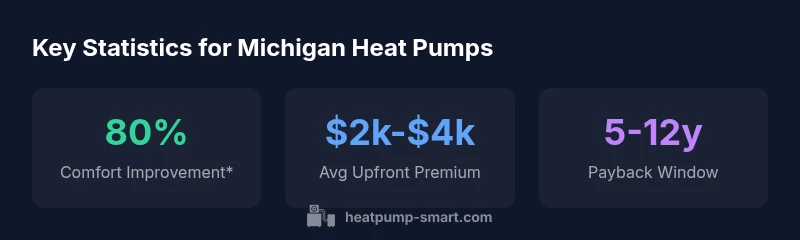
The cost story around heat pumps includes upfront equipment and installation, plus potential long-term savings on energy bills. In Michigan, the economics depend on several moving parts: upfront system cost, ductwork or installation complexity, electricity rates, insulation quality, and whether you pursue rebates or tax credits. While exact figures vary by home and contractor, homeowners can expect to compare a heat-pump installation against fossil-fuel alternatives with attention to total cost of ownership over 10-15 years. Federal incentives are available and may be combined with state or utility programs that offer subsidies or time-of-use rate plans. The significance of energy savings becomes clearer when you consider winter electricity costs and the relative price of gas or fuel oil if you are currently relying on combustion-based heating. The Heatpump Smart analysis emphasizes that the most reliable payback occurs when the home is well-insulated, the ducts are leak-tight, and the local utility offers favorable rates or rebates. Always obtain multiple quotes, verify equipment efficiency ratings, and confirm warranty coverage.
Real-world installation scenarios in Michigan
To illustrate the range of outcomes, consider several common home profiles. A vintage two-story with leaky attic air leaks and modest insulation often benefits most from a heat pump with sealing work and a backup heat source, especially in the main living zones. A newer, well-sealed ranch with a well-insulated attic may achieve good heat-pump performance with a smaller outdoor unit and optionally ductless zoning to tailor comfort to occupancy. A condo or townhouse presents an opportunity for a compact ductless system that minimizes ductwork while delivering consistent heat. Finally, a larger home with existing ductwork might use a central air-source system with a high-efficiency compressor and an integrated backup strategy to avoid noticeable temperature swings. Across these scenarios, the most influential factors are envelope tightness, duct integrity, thermostat zoning, and the presence of a skilled installer who understands Michigan's climate. The Heatpump Smart team sees steady adoption as homeowners weigh comfort, energy security, and resilience against winter price spikes.
Getting started: steps to evaluate and hire a pro
If you’re considering a heat pump project in Michigan, a structured process helps you avoid surprises. Start with a home energy audit and a professional load calculation to establish your baseline. Next, obtain multiple quotes from installers who have experience with cold-climate heat pumps and with your home type. Ask for model recommendations that emphasize the COP and HSPF under winter conditions, and verify backup heat options as part of a hybrid strategy. Review the installers' track record for duct sealing, refrigerant charging, and proper thermostat integration. Finally, examine warranties, maintenance plans, and anticipated maintenance costs. Practical steps include checking local incentives, scheduling a pre-installation inspection of your electrical panel, and budgeting for any necessary insulation or duct-work updates. The Heatpump Smart team recommends moving forward only after you have a clear, written plan that covers comfort targets, backup heat strategy, and a realistic timeline. With careful planning, Michigan homeowners can enjoy reliable heating, improved energy efficiency, and long-term value from a heat-pump investment.
Representative system types for Michigan homes
| System Type | Typical Use Case | Pros | Cons |
|---|---|---|---|
| Air-source heat pump | Most MI homes | Year-round heating & cooling | Performance drops in extreme cold |
| Hybrid (air-source + backup) | Cold climates with colder snaps | Reliability with backup heat | Higher upfront cost |
| Geothermal/ground-source | New construction with high ducting | Very high efficiency | Massive installation cost |
| Ductless mini-split | Zoned heating, retrofit friendly | Flexible placement | Limited for whole-home heating |
Your Questions Answered
Is a heat pump worth it in Michigan?
Yes for many homes when properly sized and paired with backup heat; expect improved winter comfort and potential energy savings with careful planning.
Yes. For many Michigan homes, proper sizing and a backup plan make heat pumps a practical choice.
What temperature do heat pumps stop being effective?
Performance varies by model; cold-climate units retain heat more effectively in low temperatures and typically rely on backup heat during extreme cold.
Performance varies by model; cold-climate units continue to perform in cold weather, with backup heat as needed.
Should I switch from gas to electric heat with a heat pump?
It depends on fuel prices, climate, and incentives. A hybrid solution often offers the best balance for Michigan homes.
It depends on energy prices and incentives; many homeowners choose a hybrid approach.
How do I determine if my home is heat-pump ready?
Get a professional load calculation, assess insulation and duct cleanliness, and verify electrical capacity and service conditions.
A professional load check, plus envelope and duct assessments, will show if you're ready.
What maintenance is required for a heat pump?
Annual coil cleaning, regular filter changes, and periodic system checks help maintain efficiency and reliability.
Annual maintenance, filter changes, and system checks keep it running well.
“"In Michigan's cold winters, the real value of a heat pump comes from correct sizing and a thoughtful backup plan."”
Top Takeaways
- Start with a professional energy audit and load calculation
- Choose a cold-climate heat pump with a well-planned backup
- Factor electricity rates and available incentives into the decision
- Seal ducts and upgrade insulation to maximize savings
- Work with a qualified installer for performance and warranty