Are Heat Pumps Easy to Install? A Practical Guide
Explore whether heat pumps are easy to install, what determines install difficulty, and how to plan, finance, and work with professionals for a smooth, efficient setup.


Are heat pumps easy to install? For most homeowners, installation is not a DIY task. A licensed HVAC pro should perform sizing, equipment selection, wiring, refrigerant connections, and outdoor/indoor unit placement. The process also often requires permits, ductwork adjustments, and electrical upgrades. With careful planning, a well-designed system can minimize disruption and maximize efficiency.
Understanding Installability: What makes heat pumps easier or harder to install
The ease of installing a heat pump largely comes down to system type, existing infrastructure, and local permitting. According to Heatpump Smart, homes with pre-existing ductwork and straightforward electrical panels generally see smoother installs, while ductless or geothermal configurations can add planning complexity. The best outcomes occur when planning begins early, with a professional team evaluating site constraints, load requirements, and optimal equipment placement. You’ll also find that heat pumps with simplified refrigerant runs and standardized outdoor units tend to reduce on-site time. In all cases, working with a qualified installer helps ensure proper equipment sizing, safe electrical connections, and compliance with local codes. Heatpump Smart Analysis, 2026, emphasizes the importance of tailoring the approach to your home’s layout and climate.
Ducted vs. Ductless: How installability changes
Ducted systems reuse or modify existing ductwork, which can lower material costs and shorten installation timelines when the ducts are in good condition. Ductless (mini-split) setups remove ductwork entirely, offering flexibility in retrofits and rooms with limited space, but require careful indoor unit placement and refrigerant line routing. Heatpump Smart notes that ductless configurations often reduce indoor air distribution challenges but introduce more indoor units and piping that must be neatly collapsed and mounted. When deciding between these, consider room zoning, comfort goals, and the complexity of any required indoor mounts.
Site readiness and planning: laying the foundation for a smooth install
A successful installation starts with a site assessment that identifies clearance requirements, noise considerations, and outdoor placement options. Outdoor condenser units need airflow and stable mounting surfaces, while indoor air handlers require stable, accessible spaces for maintenance. Permitting and inspections are frequently mandatory, varying by jurisdiction; your installer can guide you through the paperwork and scheduling. Prepare for some disruption during equipment delivery and mounting, especially if structural work or electrical upgrades are needed. Heatpump Smart highlights the importance of an upfront plan to minimize delays and ensure code compliance.
Sizing, efficiency, and system type: why these affect install ease
System size and efficiency ratings influence not just performance but installation complexity. Larger systems may require bigger electrical service, reinforced supports, and more refrigerant linework, while high-efficiency options often come with longer commissioning checklists. A properly sized unit reduces post-install energy use and compressor wear, while an oversized unit can cause short cycling and comfort issues. The installer will use load calculations to prevent over- or undersizing and will advise on the best match for your climate and home design. Heatpump Smart stresses that accurate sizing is a cornerstone of both comfort and installation practicality.
Permits, inspections, and contractor coordination
Most heat pump projects require local permits, electrical inspections, and refrigerant handling by licensed technicians. Your contractor can help assemble the permit package, schedule inspections, and coordinate with utility providers for any rebates or incentives. Clear communication reduces back-and-forth delays: confirm equipment models, mounting heights, and service clearances in writing before work begins. Heatpump Smart recommends you verify contractor credentials, insurance, and any warranty prerequisites tied to installation conditions.
Budgeting and timeline: what to expect during installation
Budget considerations include equipment cost, labor, electrical upgrades, refrigerant piping, and potential ductwork modifications. While prices vary by region and system type, plan for a multi-week timeline from planning to commissioning, especially if permitting or inspections add time. Financing options, rebates, and utility incentives can offset upfront costs. Heatpump Smart analysis shows that well-planned projects tend to stay closer to budget and complete on a predictable schedule when you align expectations with the installer from the start.
Practical takeaways for homeowners, builders, and property managers
If you’re weighing ease of installation, start with a clear site plan, select ducted or ductless based on existing infrastructure, and secure permits early. Always hire a licensed HVAC professional for sizing, refrigerant handling, and electrical work. Compile a simple checklists for space, noise, and maintenance access to keep the project on track. The Heatpump Smart team notes that the right planning and professional guidance significantly influence both installability and long-term performance.
Tools & Materials
- Ladder (extension)(for outdoor access and mounting work)
- Cordless drill and driver bits(for mounting brackets and fasteners)
- Wrench set(to tighten connections and mounts)
- Measuring tape(to plan clearances and reach)
- Level(to ensure level mounting and proper drainage)
- Voltage tester(to verify electrical readiness safely)
- Personal protective equipment(gloves, safety glasses, and footwear)
- Permits and documentation package(ready for submission and inspections)
Steps
Estimated time: 1-3 weeks
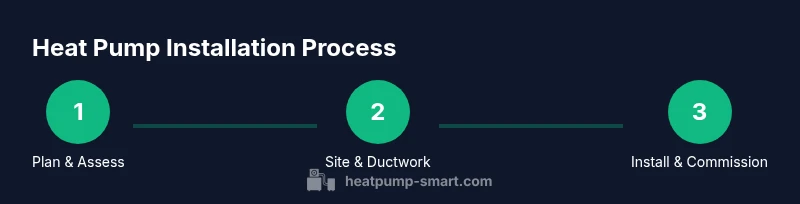
- 1
Assess needs and select system type
Begin with a homeowner assessment of comfort goals, climate considerations, and existing infrastructure. Decide between ducted or ductless options based on room layout, noise tolerance, and retrofit feasibility. This planning step sets the baseline for sizing and equipment choice.
Tip: Document room-by-room comfort targets and any architectural constraints to share with the installer. - 2
Hire licensed installer and secure permits
Engage a licensed contractor to perform load calculations, equipment selection, and site assessment. They should handle permit applications and coordinate inspections. Expect a written contract detailing scope, timelines, and warranty terms.
Tip: Ask for proof of licensing and recent references; confirm who will manage permit submissions. - 3
Plan site layout and ductwork (or ductless routing)
Review outdoor condenser placement for airflow and vibration concerns; map indoor unit locations with easy access for maintenance. If ducts exist, have them inspected for leaks and suitability; plan for sealing and insulation as needed.
Tip: Prioritize proximity to high-occupancy rooms and avoid obstructing windows or egress paths. - 4
Confirm electrical readiness and panel capacity
Have an electrician assess service size, circuit availability, and disconnect points. Verify that wiring routes meet code requirements and that electrical upgrades align with equipment specs. This reduces rework after equipment arrival.
Tip: Ask for a formal electrical load calculation and a written plan for any panel upgrades. - 5
Coordinate installation and placement of outdoor/indoor units
Schedule equipment delivery and installation windows; ensure outdoor unit mounting surface is level and weather-protected. Indoor units should be mounted securely with accessible filtration and service access. The installer should perform refrigerant line routing with proper insulation and leak checks.
Tip: Keep outdoor area free of debris and ensure nearby electrical outlets or power sources are protected. - 6
Inspect, test, and optimize performance
After connections are complete, the installer will charge refrigerant, check for leaks, and run a commissioning sequence. Validate thermostat integration, airflow, and zone controls. Document operating parameters and provide maintenance guidance.
Tip: Request a written start-up report and a maintenance schedule for the first year.
Your Questions Answered
Are heat pumps easy to install for a typical home?
Installation difficulty varies by system type and home layout. A licensed installer usually handles sizing, electrical work, and refrigerant connections. Retrofits may require ductwork changes or new mounting spaces.
Installation difficulty varies by system type and home layout; a licensed installer usually handles the critical steps and permits.
What is the typical timeline for a heat pump installation?
Planning, permitting, and installation can take one to several weeks depending on permits, ductwork, and electrical work. The timeline improves with clear scope, cooperative scheduling, and experienced contractors.
Planning and installation usually take a few weeks, depending on permits and scope.
Can I install a heat pump myself to save costs?
Most jurisdictions require licensed professionals for HVAC refrigerant handling and electrical work. DIY installations can void warranties and pose safety risks. Always consult local codes before proceeding.
DIY installation is usually not allowed for heat pumps due to safety and warranty reasons.
What permits are typically required for heat pump installation?
Permits typically cover electrical work, refrigerant handling, and structural changes. Your installer can file the necessary documents and coordinate inspections with local authorities.
Electrical, refrigerant, and sometimes structural permits are often required.
How does ductwork affect install ease and performance?
Existing ducts that are in good condition can simplify installation and improve performance. Leaky or damaged ducts increase costs and reduce efficiency, so sealing and testing are important.
Good ducts simplify installs and boost efficiency; leaky ducts complicate things and raise costs.
What about warranties after installation?
Most heat pump warranties require installation by a licensed professional and proper commissioning. Keep start-up and maintenance records to support warranty claims.
Warranties typically require professional installation; keep records.
Watch Video
Top Takeaways
- Assess home layout to choose between ducted and ductless.
- Hire licensed pros for sizing, wiring, and refrigerant work.
- Plan permits and inspections early to avoid delays.
- Proper sizing improves comfort and efficiency, reducing long-term costs.