Different Heat Pump Sizes: How to Choose the Right Size for Your Home
Explore how different heat pump.sizes affect performance, efficiency, and comfort. A data-driven guide to sizing, load calculations, and real-world considerations for homeowners.


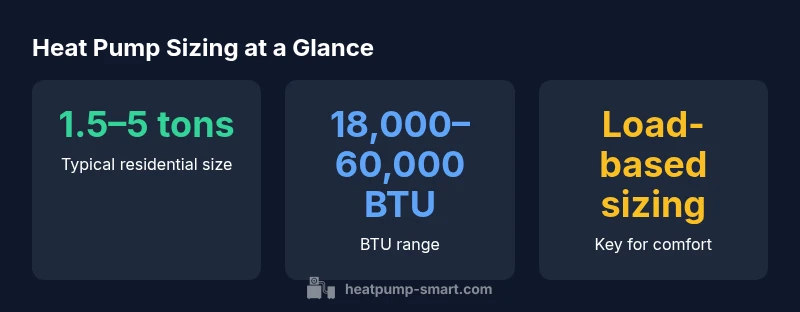
According to Heatpump Smart, the concept of different heat pump.sizes matters for efficiency and comfort. The right size is driven by climate, home insulation, and load calculations, not just square footage. In residential settings, typical sizes range from about 1.5 to 5 tons (18,000–60,000 BTU). Oversized or undersized units waste energy and cost more over time.
What "different heat pump.sizes" means for homeowners
When people talk about different heat pump.sizes, they are really discussing the capacity of the unit expressed in tons or BTU. Size determines how often the system runs, how quickly spaces reach comfort, and how effectively it handles peak loads in cold weather. The Heatpump Smart team emphasizes that size should be based on measured heating and cooling loads rather than guesswork. In practice, this means considering climate zone, insulation level, the presence of thermal bridges, and solar gains. The phrase "different heat pump.sizes" captures that there is no single correct number for every house. A modest, well-insulated bungalow in a mild climate will require a different size than a large, drafty home in a cold region. You should expect a range rather than a single value, and you should verify with a load calculation.
The basics: tonnage, BTU, and energy use
Heat pump size is most commonly described in tons, where 1 ton equals 12,000 BTU per hour. For residential homes, typical ranges run from about 1.5 tons (18,000 BTU) up to 5 tons (60,000 BTU) in colder climates. Translating this to performance helps homeowners understand energy usage: a unit sized to match the actual load tends to run more consistently and avoids the waste associated with frequent short cycling. The key is to view size as a lever on efficiency, rather than a fixed badge of power.
Climate and building envelope shape sizing decisions
Climate plays a decisive role in determining the appropriate heat pump size. Colder climates often demand larger capacities or supplemental heat sources to maintain comfort during extreme cold. Conversely, well-insulated homes in milder zones may get by with smaller units. In addition to climate, the building envelope — air leaks, insulation quality, windows, and shading — dramatically influences load. Even two homes with the same square footage can require different sizes due to envelope performance. Budget for the long term by selecting a size that matches current conditions and anticipated improvements (air sealing, insulation upgrades, better windows).
The load calculation method (Manual J) and why professionals matter
A precise sizing starts with a load calculation, commonly a Manual J analysis, which quantifies heating and cooling needs based on climate, occupancy, and building specifics. While rough rules of thumb exist, they can misstate true loads by significant margins. A licensed HVAC professional uses Manual J to estimate required capacity, then cross-checks with ductwork, ventilation, and system efficiency. This professional step is essential to avoid undersizing (comfort issues) or oversizing (short cycling and cost). Heatpump Smart recommends integrating this calculation into any sizing project.
Ductwork, airflow, and distribution influence size choice
Duct design matters just as much as unit capacity. Poorly designed or leaky ducts can render a correctly sized heat pump less effective. If ducts are undersized, airflow to rooms suffers, while oversized ducts can cause inefficient distribution and humidity control problems. Issues with duct sealing, dampers, and zoning can also alter the measured loads and necessitate adjustments to the initial sizing. In many cases, the right solution includes both a properly sized unit and improved duct performance to maximize comfort and efficiency.
Common sizing mistakes and how to avoid them
A frequent pitfall is basing size on room-by-room temperature setpoints without a holistic load assessment. Another mistake is selecting a unit based on peak winter days alone, ignoring cooling loads in summer. Both can lead to oversizing or undersizing. Avoid these by insisting on a full load calculation, considering future changes (renovations, attic insulation upgrades, window replacements), and planning for long-term energy savings. Always cross-check results with a qualified HVAC professional.
Step-by-step: how to determine the right size
- Gather home details: location, climate, size, insulation, windows, and occupancy. 2) Run a load calculation (Manual J) with a qualified professional. 3) Review ductwork and ventilation needs. 4) Compare efficiency ratings (SEER/HSPF) and climate-appropriate performance. 5) Plan for future changes and select a size that minimizes cycling and maximizes comfort. This method aligns with Heatpump Smart recommendations and reduces the risk of mis-sizing.
Real-world scenarios by home type
A small, tight apartment may only need 1.5–2.5 tons, while a typical 1,500–2,000 sq ft single-family home in a temperate climate often sits in the 2.5–3.5 ton range. A large, poorly insulated 3,000+ sq ft house in a cold climate might require 4–5 tons or more. These examples illustrate how size is driven by load, not just size. Always verify with a professional calculation tailored to your home and region.
Tools, calculators, and resources you can trust
Utilize reputable sizing tools and professional services to ensure accuracy. Look for software and calculators used in conjunction with Manual J or DOE guidelines. Resources from the U.S. Department of Energy (energy.gov) and accredited HVAC associations can guide you through best practices. Heatpump Smart also emphasizes verifying results with a licensed installer to confirm compatibility with existing ductwork and system efficiency.
Typical size guidance by home size
| Home Type | Estimated Size (tons) | Notes |
|---|---|---|
| Small apartment or condo (≤800 sq ft) | 1.5–2.5 | Tight envelope, limited space |
| Single-family home (1200–2000 sq ft) | 2.5–3.5 | Common mid-range sizing |
| Large house (>2000 sq ft) | 3.5–5 | Higher load; cooling/heating demand |
Your Questions Answered
What size heat pump do I need for a 1,500 sq ft home?
For a 1,500 sq ft home, sizing should be based on a load calculation; a typical range is 2–3 tons, but the exact size depends on climate, insulation, and airflow. Always have a professional perform the calculation to confirm.
For a 1,500 square foot home, use a load calculation to determine the 2 to 3 ton range, then confirm with a professional.
Do I need to resize ductwork when changing the heater size?
Yes. Ductwork must be evaluated to ensure adequate airflow for the new size. Improper duct sizing can undermine efficiency and comfort, potentially requiring upgrades or balancing.
Yes—ductwork should be checked to match the new size and maintain good airflow.
Is oversizing a heat pump harmful?
Oversizing can cause frequent short cycling, humidity issues, and higher upfront and operating costs. It reduces comfort and efficiency even if the unit feels powerful.
Yes. Oversizing leads to short cycling and higher costs, with little comfort benefit.
Can I size a heat pump myself?
Sizing should not be done by guesswork. A proper load calculation (Manual J) by a professional, plus duct considerations, ensures accuracy and avoids costly mistakes.
Sizing should be done by a professional with the right calculations.
How does climate affect heat pump size?
Colder climates often require larger capacities or supplemental heat, while milder climates may use smaller units. Regional load patterns guide sizing more than interior design alone.
Cold climates may need bigger units; milder areas can use smaller ones.
What are signs my unit is undersized?
Rooms struggle to reach setpoints, the system runs for long periods, or there are hot/cold spots. These indicate the unit can’t meet the load efficiently.
If rooms stay cold or the unit runs constantly, it may be undersized.
“Properly sized heat pumps reduce cycle frequency, improve comfort, and lower lifetime costs. Rely on load calculations rather than guesswork.”
Top Takeaways
- Assess climate and insulation before sizing
- Prefer load-based sizing over rough square-foot estimates
- Consider future changes and insulation upgrades
- Avoid oversizing; it increases energy waste and costs
- Consult a professional for Manual J sizing