How to Size Heat Pump: A Practical Guide
Learn how to size a heat pump for reliable comfort and energy efficiency. This step-by-step guide covers load calculations, inputs, and contractor best practices to ensure the right system for your home.


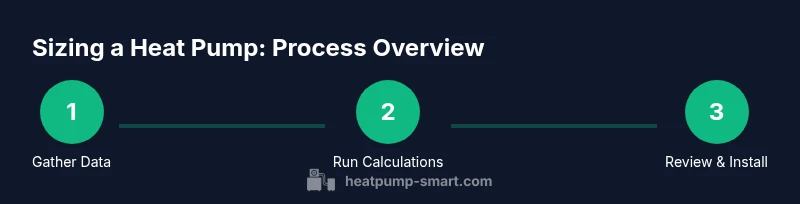
To size a heat pump correctly, start with a professional load calculation and confirm your local climate needs. Gather basic details about your home, insulation, windows, occupancy, and desired comfort, then compare potential systems against your goals. The Heatpump Smart team emphasizes precise sizing to ensure efficient operation and steady comfort.
What sizing a heat pump really means
Sizing a heat pump is about matching the unit’s capacity to the building’s heating and cooling loads. The goal is to choose a unit that can run long enough to remove heat effectively without cycling off too quickly. An appropriately sized system provides consistent indoor comfort, better humidity control, and higher overall efficiency. According to Heatpump Smart, the most reliable results come from a professional load calculation rather than rough rules of thumb. This section lays out the core ideas behind load-based sizing and why it matters for your climate, home construction, and daily usage patterns. You’ll learn how envelope quality, window performance, occupancy, and equipment distribution influence the final size and how to translate that into a practical specification for installation.
Step 1: Gather essential inputs
The first step in sizing a heat pump is collecting a complete set of inputs about the home and its operation. Document the total heated and cooled area, ceiling heights, insulation levels in walls and attic, the age and type of windows, shading, and sun exposure. Note typical occupancy and lifestyle patterns—how many people live in the house, how often doors and windows are opened, and whether rooms are regularly unused. Include the existing heating system type and any planned renovations. These inputs form the basis for a credible load calculation and help prevent over- or under-sizing from the start.
Step 2: Choose a sizing method
There are several ways to size a heat pump, ranging from simplified rules of thumb to formalized engineering methods. The most reliable approach uses a load calculation that accounts for structure, climate, and usage—typically a Manual J calculation conducted by a qualified HVAC professional. Some homeowners also request Manual S for equipment selection to ensure the chosen model matches the calculated load. If you’re pursuing DIY estimates, treat them as rough guides and verify with a professional before purchasing equipment.
Step 3: Consider climate and comfort goals
Climate drives the required capacity and equipment behavior. Colder climates usually demand a larger capacity for reliable heating, while very warm climates emphasize cooling efficiency and humidity management. Beyond climate, define comfort goals: steady temperatures, controlled humidity, minimal noise, and quick response to changing conditions. Understanding these preferences helps align the sizing outcome with your daily routines and energy goals, reducing the risk of uncomfortable hot or cold spots.
Step 4: Assess the home's envelope and distribution
Envelope quality—insulation, air leaks, and building tightness—directly affects how much heating and cooling the house needs. Ductwork plays a critical role in delivering conditioned air evenly; leaks or poor sealing can dramatically reduce apparent system size, causing larger units or more cycles than necessary. A thorough assessment includes testing for air leakage, checking duct sizes, and planning for sealing or upgrading ducts where needed. These envelope improvements can sometimes reduce the required size and improve overall efficiency.
Step 5: Compare system types and their sizing nuances
Different heat pump families behave differently with sizing. Air-source heat pumps often rely on outdoor temperature to determine capacity, while ductless mini-splits allow room-by-room control and may require separate sizing logic per zone. Geothermal systems depend on ground conditions and loop design, introducing a distinct set of sizing considerations. When evaluating options, ensure the selected system type aligns with your load calculations and distribution plan, and verify whether any zones or additions will need separate sizing decisions.
Step 6: Document results and get professional verification
After assembling inputs and selecting a sizing method, document the calculations clearly. Request a written load calculation and equipment schedule from your contractor, including the proposed unit size, efficiency ratings, and duct or ductless configurations. A professional should review the results, confirm there’s no bias toward a single model, and provide you with clear justification for the chosen size. This documentation becomes a reference for future maintenance and any upgrades.
Common sizing mistakes and how to avoid them
Common mistakes include using rough rules of thumb, ignoring envelope quality, and failing to account for future changes (rooftop additions, insulation upgrades, or shifts in occupancy). Oversizing can lead to short cycling, humidity control problems, and higher upfront costs, while undersizing results in inadequate warmth or cooling and excessive runtimes. Avoid these by prioritizing a formal calculation, performing duct testing, and validating results with a licensed professional before installation.
How to talk to your contractor about sizing
Open communication is essential. Share your inputs, climate considerations, and comfort goals, and ask for the exact load calculation method used. Request an equipment list with model numbers and corresponding capacities, and confirm how the distribution system will be balanced to achieve uniform comfort. If you have budget constraints, discuss trade-offs between upsizing for peak conditions and optimizing envelope improvements to achieve similar comfort with a smaller unit.
Tools & Materials
- Measuring tape (25 ft recommended)(Measure floor areas, wall lengths, and ceiling heights; record exterior dimensions for envelope assessment.)
- Notebook and pen(Capture inputs, observations, and calculations during site visits.)
- Clipboard or tablet(Use for organizing data on-site; helps keep inputs consistent.)
- Calculator or spreadsheet(For basic calculations and input tallies; a simple template helps avoid errors.)
- Floor plans or drawings(Useful for reference if available; not always required.)
- Infrared thermometer or thermal camera(Helpful to identify insulation gaps and temperature differences during survey.)
- Access to contractor load calculation software(Approval for professional software can streamline the process.)
Steps
Estimated time: 2-6 hours
- 1
Gather a detailed home profile
Collect inputs on home size, layout, insulation levels, window types, shading, and occupancy. Document any planned renovations and the current heating and cooling setup. This step establishes the baseline for accurate sizing and helps you avoid missing critical factors.
Tip: Have floor plans and recent energy upgrades ready before the survey. - 2
Inventory envelope and ductwork
Assess insulation quality, air leakage, and duct integrity. A leaky envelope or duct system can distort sizing results, so plan to test and seal leaks as needed before final sizing.
Tip: Ask the contractor to perform a duct leakage test and seal obvious gaps. - 3
Choose a sizing method
Decide on a formal load calculation (e.g., manual J) and, if possible, complement with equipment selection methods. This step ensures the calculated size reflects actual building loads and equipment compatibility.
Tip: Prioritize professional calculations over rough estimates. - 4
Incorporate climate and comfort goals
Factor in climate data and your comfort priorities, such as humidity control and steady temperatures. This helps shape whether a larger size is needed for peak conditions or if envelope improvements can reduce peak demand.
Tip: Define acceptable temperature ranges for different zones in the home. - 5
Compare system types and sizes
Evaluate ducted vs. ductless options, and consider how each affects sizing strategy. Different systems have unique distribution patterns and operating characteristics that influence the final size.
Tip: Ask for side-by-side capacity comparisons for equivalent models. - 6
Document the results and plan verification
Require a written load calculation and proposed equipment schedule from the contractor. This should explain the chosen size, efficiency, and how the distribution will be balanced.
Tip: Keep the document as a reference for future maintenance or upgrades.
Your Questions Answered
Why is proper sizing important for a heat pump?
Proper sizing ensures comfort, humidity control, and efficient operation. An oversized or undersized unit can lead to short cycling, poor dehumidification, and higher energy use. A professional load calculation helps prevent these issues by matching capacity to the home’s needs.
Sizing matters because it affects comfort, humidity, and efficiency. A professional calculation stops short cycling and wasted energy.
Can I size a heat pump myself without a pro?
You can gather inputs and perform rough estimates, but a professional load calculation is strongly recommended for accuracy and long-term performance. DIY estimates may miss envelope or usage factors that drive true capacity needs.
You can estimate inputs, but a professional calculation is the safer route for accuracy.
What happens if the system is oversized?
An oversized unit often short cycles, leading to inefficiency and poor humidity control. It may feel warm initially but struggle to maintain steady comfort and can cause higher upfront and ongoing costs.
Oversized systems cycle on and off quickly, wasting energy and reducing comfort.
What is Manual J and why do I need it?
Manual J is a standards-based load calculation method used to determine home heating and cooling requirements. It ensures sizing accounts for building specifics, climate, and usage patterns, providing a solid foundation for selecting equipment.
Manual J is the standard method to calculate your home’s true load for proper sizing.
How does climate influence sizing?
Local climate shapes how much capacity is needed for heating and cooling, influencing decisions about efficiency, backup heating, and humidity control. Colder climates may require more heating capacity, while hot, humid regions emphasize cooling and dehumidification needs.
Climate dictates how much capacity the heat pump needs to maintain comfort year-round.
How long does the sizing process take?
Timing varies with home size and project complexity. A contractor may complete the formal calculation within a few days of a site visit, followed by equipment recommendations and installation scheduling.
Sizing usually takes a few days after a site visit, depending on complexity.
Watch Video
Top Takeaways
- Start with a professional load calculation.
- Inputs include insulation, windows, occupancy, and climate.
- A properly sized heat pump improves comfort and efficiency.
- Work with licensed contractors for verification.