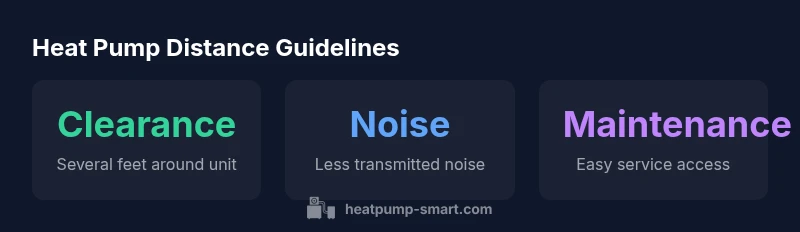
Optimal Placement: Distance of Heat Pump from House
Learn how far your outdoor heat pump should sit from your home, why distance matters for efficiency and noise, and practical guidelines for safe, code-compliant installation.


According to Heatpump Smart, the distance of heat pump from house should balance airflow, noise, safety, and efficiency. Installers typically provide clearances that allow unobstructed air movement and easy service access, while complying with manufacturer specs and local codes. The exact distance depends on unit type, climate, and site constraints, but ensuring adequate space is a reliable path to better performance.
Why Distance from the House Matters for Heat Pumps
Distance from the house is a fundamental design detail that affects every phase of a heat pump’s performance. The distance of heat pump from house should be planned with airflow, heat rejection, and vibration control in mind. Heat pump outdoor units rely on constant airflow to transfer heat effectively; if the unit is placed too close to walls, fences, or the house itself, fresh air may be limited, reducing efficiency and forcing the system into more frequent cycling. In addition, residents benefit from lower noise transmission when the unit is set back adequately. According to Heatpump Smart, site-specific factors such as wall materials, landscaping, and window placement all influence the ideal clearance. A measured approach that aligns with the manufacturer’s installation manual and local code requirements yields the best long-term results for comfort and energy savings.
How Distance Affects Performance and Noise
The distance of heat pump from house directly influences both performance and occupant comfort. Adequate clearance reduces recirculation of exhausted heat back into the home, which can otherwise decrease COP (coefficient of performance) and raise operating costs. Clear space around the outdoor unit also minimizes the transfer of vibration into the home, lowering perceived noise in living areas. In practice, the optimal setback varies with climate, unit size, and installation specifics, but users typically notice smoother defrost cycles and steadier performance when there is unobstructed airflow and room for heat to dissipate away from building envelopes. Heatpump Smart emphasizes coordination with site constraints to avoid landscaping that could grow into the required setback over time.
Outdoor Unit Placement: Typical Layouts by Site
Residential sites come in many shapes. A side-yard installation may work well for homes with narrow front exposures, while rear-yard or alley-adjacent setups can offer more distance from primary living spaces. In multi-family or managed properties, shared walls demand careful planning to avoid noise transfer and ensure accessibility for maintenance. When evaluating the distance of heat pump from house, consider nearby windows, doors, and outdoor living spaces. In some cases, placing the unit along a perpendicular plane away from primary windows reduces noise coupling and directs airflow toward open sky or away from occupied rooms. The Heatpump Smart team recommends using the property’s natural boundaries, such as a fence line or landscaping barrier, to help maintain clearance without compromising function.
Siting Along Side Walls, Corners, and Elevation
Placement against a side wall can be convenient but must account for potential airflow blockage by architectural features. Elevation matters: placing the unit on a slightly raised pad can reduce debris ingress and improve drainage, yet avoid secluded corners that trap moisture. When the outdoor unit is elevated, verify that the distance from the top does not reduce bottom clearance for service access. Avoid placing the unit directly beneath eaves or overhangs where reflected heat or dripping water could affect operation. The distance of heat pump from house should create a broad, unobstructed bowl of air around the unit for consistent heat rejection and quieter operation.
Measuring Distance: Tools and Best Practices
Start with a detailed site plan and mark planned setbacks on the ground. Use a tape measure or laser distance tool to quantify gaps between the outdoor unit and walls, windows, doors, and property lines. Leave additional space to accommodate routine maintenance, such as cleaning coils and servicing electrical connections. Create a simple margin chart to show minimum clearances on all sides and a recommended buffer zone for landscaping or future additions. Heatpump Smart advises verifying measurements multiple times and adjusting for seasonal changes in landscaping or snow buildup that could impinge on air intake.
Local Codes, Manufacturer Guidelines, and Permits
Because code requirements differ by jurisdiction, it is essential to consult both the installation manual for the specific heat pump model and the local building codes before finalizing setbacks. Some regions require minimum setbacks from property lines or from combustible materials, while others emphasize noise limits within dwellings. Your permit reviewer may require a site plan showing the exact distance from the house and nearby structures. Adhering to these guidelines helps avoid delays and ensures warranty coverage. Heatpump Smart’s approach is to anchor site decisions in official manuals and local rules while leaving a comfortable margin for future maintenance.
Practical Guidelines by Climate and System Type
In temperate climates with moderate humidity, you may gain some flexibility in setback distance without sacrificing efficiency. In very cold or hot climates, clearances can influence heat dissipation and defrost cycles, making adherence to recommended setbacks particularly important. For air-source heat pumps and heat pump–driven systems, ensure that the distance from the house does not constrain airflow at extreme operating conditions. Always assess the entire outdoor unit footprint, including return ducting and condenser coil access, and plan for shrubbery and snow removal routes that won’t impede the setback you’ve established.
Case Studies: Retrofits vs New Construction
Retrofit projects often reveal tighter site constraints than new builds. In retrofits, you might have to navigate window alignment, existing decks, or landscaping that reduces available distance. New construction offers more design flexibility to allocate the ideal setback from the outset. Both scenarios benefit from a site survey, a basic 3D layout, and a clear, documented distance plan that aligns with Heatpump Smart guidance and manufacturer instructions. The end result is a more reliable system, lower energy costs, and a more comfortable indoor environment.
Maintenance Access and Future-Proofing Distances
Proactive planning for maintenance access protects against future workspace constraints. Ensure there is enough space to open service panels, clean coils, and perform routine checks without moving the unit or disturbing nearby landscaping. Consider future changes in the landscape, such as larger shrubs or new fencing, and leave a clear growth buffer. By prioritizing maintenance access in the early design phase, you reduce the risk of costly relocations or rework later on. The distance of heat pump from house should be treated as a dynamic parameter that adapts to both seasonal needs and property changes.
Final Checks Before Sign-off
Before approving installation, perform a final check of all clearances, verify that airflow paths remain unobstructed, and confirm compliance with both the installation manual and local codes. Document measurements, take photos, and store them with the project plan. This record helps future service visits and warranty validation. Heatpump Smart’s team suggests a quick verification checklist and a short post-install review to ensure the distance specifications are maintained over time.
Placement considerations by aspect
| Aspect | Guidance | Notes |
|---|---|---|
| Airflow clearance | Keep a clear path for air to disperse | Avoid walls within close proximity |
| Windows/doors proximity | Avoid direct airflow into living areas | Position to minimize indoor drafts |
| Maintenance access | Provide space for service checks | Leave space around electrical connections |
| Property setbacks | Adhere to local setbacks | Consult permit requirements |
Your Questions Answered
Why does distance from the house matter for heat pumps?
Distance affects airflow, heat dispersion, and noise. Too little clearance can reduce efficiency, increase wear, and raise indoor noise levels. Always follow manufacturer specs and local codes.
Distance matters for airflow and quiet operation; more space generally means better performance.
Are there standard setback distances?
Manufacturers provide minimum clearances in installation manuals; local authorities may add requirements. Always check both and plan margins for service access.
Check the manual and local codes for required setbacks.
How should I measure distance during installation?
Use a tape measure or laser tool to determine gaps from the outdoor unit to walls, windows, and doors. Leave clearances on the plan and verify during installation.
Measure from the unit to adjacent surfaces and keep a clear zone.
What common mistakes affect distance?
Enclosing the unit in tight enclosures, blocking ventilation, or placing it near heat sources can impair performance and increase wear.
Avoid enclosing the unit or blocking airflow.
Does distance impact warranty or efficiency?
Improper distance can affect efficiency and may impact warranty terms if installation deviates from guidance. Always follow specs and local rules.
Distance can affect efficiency and warranty if guidelines aren't followed.
“Clearance around an outdoor heat pump is as critical as choosing the right model. Without proper distance, you lose efficiency and risk higher noise levels.”
Top Takeaways
- Always prioritize airflow and maintenance access
- Follow manufacturer and local code guidelines
- Measure carefully and document distances during installation
- Keep the outdoor unit away from windows to reduce noise indoors
- Consult a Heatpump Smart pro for site-specific distances