Geothermal Heat Pump Installation: A Step-by-Step Guide
Learn how to plan, size, install, and maintain a geothermal heat pump system. This expert guide from Heatpump Smart covers site assessment, loop options, permits, installation steps, and cost-saving maintenance.


Geothermal heat pump installation is a multi-step process that starts with a precise load calculation and site assessment, followed by loop field design, equipment placement, and system commissioning. Plan for permits, trenching or boreholes, and professional installation to ensure long-term efficiency and reliability. A certified technician should verify ground conditions and local codes before any excavation.
Understanding Geothermal Heat Pump Installation
According to Heatpump Smart, geothermal heat pump installation leverages the earth's stable underground temperatures to provide efficient heating in winter and cooling in summer. The core components are a closed-loop or open-loop ground loop, a geothermal heat pump unit, and a distribution system that delivers conditioned air or water to your home. Compared with conventional HVAC, geothermal systems rely less on outside air temperatures and more on ground temperatures, which can deliver more consistent comfort and lower energy bills over time. The installation requires careful coordination among site assessment, loop design, equipment placement, and proper commissioning to maximize efficiencies and prolong equipment life. As temperatures vary seasonally, a well-designed system also minimizes auxiliary heating, reducing peak demand and improving energy performance. Heatpump Smart’s guidance emphasizes planning and professional execution as the keys to reliable operation and sustained savings.
Geothermal heat pump installation is not a one-size-fits-all task; it involves selecting the right loop type, sizing the unit accurately, and integrating controls with your home’s existing distribution network. Early decisions about loop depth, trench length, and borehole placement will influence performance, noise, and maintenance needs for years to come. This section lays the groundwork for the more technical planning and execution steps that follow in this guide.
Planning and Sizing: How to Determine System Capacity
Sizing a geothermal heat pump installation starts with a detailed load calculation that accounts for climate, insulation, windows, air leakage, and hot-water needs. A properly sized system avoids short cycling and ensures consistent comfort. The Heatpump Smart team highlights the importance of modeling thermal loads rather than relying on rough rules of thumb. When selecting a unit, consider its COP (coefficient of performance) and HSPF (seasonal performance factor) under your local conditions. Ground loop design must match the loop field’s ability to extract or reject heat without excessive pumping power. In practice, engineers compare several equipment options and loop designs to find the best match for your home. A well-sized geothermal system also integrates with smart thermostats and zoning to maximize efficiency across rooms and usage patterns.
Site Assessment and Soil/Geology Considerations
Before breaking ground, a site assessment evaluates soil composition, bedrock depth, groundwater levels, and available space for the loop field. The choice between horizontal trenching or vertical boreholes depends on soil conditions, lot size, and local permitting. Soil with high conductivity improves loop efficiency, while rocky or shallow soils may favor vertical boreholes. Access to utilities, drainage, and nearby trees or foundations can complicate installation and affect future maintenance. A thorough survey helps prevent costly rework and ensures the loop field remains protected from damage and soil movement. Heatpump Smart emphasizes documenting soil tests and regulatory requirements to simplify permits and inspections later in the project.
Closed-Loop vs Open-Loop and Loop Styles
Geothermal installations typically use closed-loop systems, where a continuous loop circulates a heat-transfer fluid; open-loop systems draw groundwater directly. Within closed-loop designs, horizontal loops run long trenches, while vertical loops use boreholes. Each style has trade-offs: horizontal loops require more land but are generally less expensive to install; vertical loops save space but demand specialized drilling. Pipe materials are typically high-density polyethylene (HDPE) rated for underground use. The choice affects heat transfer efficiency, maintenance access, and installation time. Heatpump Smart notes that the loop choice should align with site constraints and long-term maintenance expectations.
Equipment and Components You Need
A geothermal heat pump installation involves the heat pump unit, a closed-loop or open-loop system, distribution equipment (ductwork or radiant piping), pumps, valves, and control systems (thermostats and zoning). The loop field uses durable HDPE piping, connectors, and appropriate backfill materials. Electrical service must match the unit’s requirements, and a dedicated disconnect and proper grounding are essential. Some installations include a buffer tank for domestic hot water or a hot-water coil for integrated hydronic heating. Commissioning tools and test gauges ensure refrigerant charge, airflow, and loop pressure meet manufacturer specifications. Heatpump Smart stresses choosing components rated for your climate and ensuring compatibility with future upgrades.
Permits, Codes, and Contractor Selection
Geothermal installations require adherence to electrical and building codes, as well as local permits for trenching, drilling, and mechanical work. Working with a licensed HVAC contractor who has geothermal experience improves reliability and warranty coverage. Ask for prior project documentation, a detailed schematic, and a written contract outlining scope, milestones, and responsibilities. Expect site visits, boring trials, and pressure tests during the permit process. A clear contract helps prevent scope creep and ensures the project aligns with code compliance and safety standards. Heatpump Smart recommends interviewing multiple qualified installers and verifying licenses and insurance before signing.
Installation Steps Overview
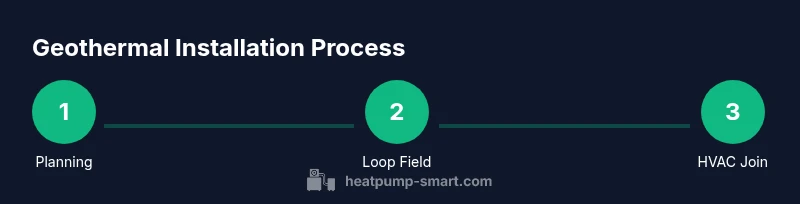
The installation sequence typically proceeds from planning to commissioning, with clear handoffs between excavation, loop installation, and mechanical hookup. Ground loop installation can involve trenching or drilling, backfilling, and gravity or mechanical compaction depending on soil conditions. The heat pump unit is placed in a serviceable location with easy access for maintenance and future service. Electrical connections must be performed by a licensed electrician, with proper grounding and a safe disconnect in place. After assembly, technicians perform pressure tests, refrigerant checks, and control calibrations to verify efficient operation and proper heat transfer.
Operating Costs, Efficiency, and Maintenance
A geothermal heat pump installation is designed to deliver low operating costs and high efficiency when properly sized and installed. While upfront costs are higher than conventional systems, long-term energy savings and reduced maintenance expenses often offset the initial investment. Regular maintenance includes annual checks of refrigerant charge, loop integrity, pump operation, and thermostat calibration. Clean, well-sealed ducts and good insulation further enhance efficiency. Heatpump Smart’s analysis shows that correctly installed geothermal systems typically achieve high COPs in a wide range of climates, making them a compelling long-term energy solution for homeowners, builders, and property managers. Proactive maintenance helps prevent surprises during peak heating or cooling seasons.
Common Challenges and How to Avoid Them
Geothermal installation challenges include improper loop design, insufficient trench depth, or inadequate system commissioning. Inadequate load calculations can lead to temperature swings or excessive cycling. Poor duct sealing or mismatched thermostats reduce comfort and increase energy use. To avoid these issues, choose a qualified installer, request a detailed design, and insist on commissioning tests. Documenting the installer’s methodology and warranty terms also helps with future service and potential rebates.
Tools & Materials
- Ground loop piping (HDPE, rated for underground use)(Size and layout depend on loop design (horizontal vs vertical); ensure fittings match loop connectors)
- Geothermal heat pump unit(Match to load calculation and COP ratings for climate)
- Loop field trenching equipment or borehole rig(Horizontal trenches or vertical boreholes require specialized equipment and trained operators)
- Grout/backfill material for boreholes(Per manufacturer specs; ensures good heat transfer and stabilizes boreholes)
- Antifreeze/corrosion inhibitors for loop fluid(Propylene glycol or similar fluid; check local codes and manufacturer guidance)
- Dedicated electrical service and disconnect(Conforms to local electrical codes; requires a licensed electrician)
- Thermostats and zoning controls(Smart controls help optimize efficiency and comfort)
- Permitting documents and contractor contract(Keep copies for inspections and future maintenance)
Steps
Estimated time: 2-5 days
- 1
Perform a professional load calculation
Begin with a detailed assessment of your home's heating and cooling needs, insulation, windows, and occupancy patterns. Use a recognized energy model to determine the system size and loop requirements. This ensures the geothermal installation delivers consistent comfort and efficient performance.
Tip: Document all findings and keep copies of the model outputs for permit applications. - 2
Choose loop field design and equipment
Select horizontal trenches or vertical boreholes based on soil, space, and budget. Decide closed-loop vs open-loop configurations and pair with the appropriate heat pump and controls.
Tip: Ask for several design options and compare long-term maintenance implications. - 3
Obtain permits and hire a qualified installer
Submit plans to the local authority and select a contractor with geothermal experience, licenses, and strong references. Review the contract, milestones, warranties, and scope.
Tip: Verify insurance coverage and request previous project contacts for reference checks. - 4
Prepare the site and install the loop field
Create trench lines or boreholes per design, install HDPE loop pipe, and secure with backfill material. Maintain clean spacing and avoid sharp bends to reduce pressure losses.
Tip: Mark utilities before excavation to prevent accidental damage. - 5
Install the heat pump and connect hydraulics
Place the heat pump in a serviceable location, connect the loop field, refrigerant lines, and the distribution system. Ensure proper mounting and vibration isolation.
Tip: Keep a clear path for future service and avoid obstructing access panels. - 6
Electrical hookup and controls
Have a licensed electrician wire the unit with a dedicated disconnect and a compatible thermostat or zoning system. Verify grounding and emergency shut-off features.
Tip: Label circuits clearly for future maintenance and safety checks. - 7
Charge, calibrate, and test
Check refrigerant charge, verify heat transfer, and run a full system commissioning with performance testing. Confirm COP and heating/cooling balance across zones.
Tip: Document test results and save the commissioning report for warranty validation. - 8
Plan maintenance and monitor performance
Set up regular inspections, clean ducts, verify insulation, and review energy performance over seasons. Schedule annual checks for loop integrity and system controls.
Tip: Create a maintenance calendar and keep records for rebates and warranties.
Your Questions Answered
What factors influence the cost of geothermal heat pump installation?
Costs depend on climate, loop type (horizontal vs vertical), soil conditions, system size, and local labor rates. While upfront costs are higher than conventional systems, long-term energy savings and rebates can improve value over time.
Costs depend on climate, loop type, soil, system size, and local labor rates. Long-term energy savings and rebates can improve value.
How long does a geothermal heat pump installation take?
A typical project may take from a few days to about a week, depending on loop depth, site access, and permitting. More complex boreholes or multi-zone systems can extend the timeline.
Most installations take several days to a week, depending on site conditions and permits.
Do I need permits for geothermal installation?
Yes. Most jurisdictions require electrical, mechanical, and sometimes piping permits for geothermal installations. Your installer can guide you through the local process and ensure inspections are completed.
Yes, permits are usually required; your installer will guide you through inspections.
What maintenance does a geothermal system require?
Regular checks include refrigerant charge, loop integrity, pump operation, and thermostat calibration. Duct sealing and insulation improvements can enhance performance and reduce energy use.
Expect annual checks of the refrigerant, loops, and controls, plus duct sealing and insulation as needed.
Is a DIY geothermal installation advisable?
Geothermal installations involve high-pressure systems and underground work. It is strongly recommended to hire licensed professionals to ensure safety, code compliance, and warranty coverage.
It's best to hire licensed professionals; DIY is not advised due to safety and warranty concerns.
Watch Video
Top Takeaways
- Start with accurate load calculations to size correctly.
- Choose loop design based on site constraints and future access.
- Hire experienced installers and secure permits early.
- Schedule commissioning and ongoing maintenance for peak efficiency.