Heat Pump 2300 sq ft: Sizing, Efficiency, and Cost Guide
Size, install, and optimize a heat pump for a 2300 sq ft home. Learn load basics, efficiency tips, typical costs, and financing options to guide your project.


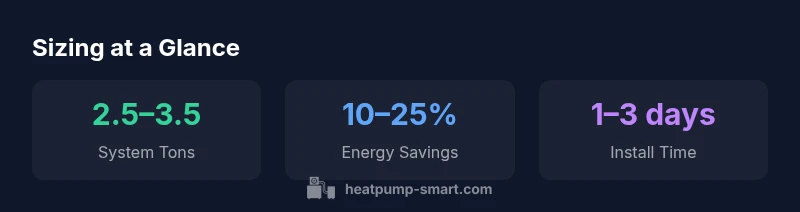
For a heat pump serving a 2300 sq ft home, aim for roughly 2.5–3.5 tons (about 30k–42k BTU) depending on climate, insulation, and airflow. A Manual J load calculation by a qualified contractor is essential to confirm the exact size. Proper sizing reduces short cycling and improves comfort and efficiency.
Sizing Fundamentals for a 2300 sq ft Home
Sizing a heat pump begins with assessing the home’s heat load, envelope efficiency, occupants, and daily usage. For a 2300 sq ft residence, climate plays a decisive role: milder areas may do well with smaller capacity, while harsher regions demand more even heating and cooling. According to Heatpump Smart, a well-sized system saves energy, reduces humidity swings, and minimizes short cycling. The first rule is to avoid a system that is too large or too small for the space, as both extremes undermine comfort and efficiency. A properly sized unit maintains stable temperatures without overworking the compressor, which translates to lower electricity use and longer equipment life.
In practice, you should consult an HVAC professional who can run a Manual J load calculation, rather than relying on rules of thumb alone. A 2300 sq ft home often benefits from a two-stage or variable-speed heat pump because these units adjust output to changing conditions, providing steady comfort with less energy waste. Always verify duct leakage and ceiling heights, as leaks and high ceilings can materially change heat loss and required capacity.
Step-by-step Sizing Approach for a 2300 sq ft Home
Sizing a heat pump for this scale involves a structured process. Step one is to gather essential data: climate zone, insulation levels, window types, usable floor area, and typical occupancy. Step two is to perform a Manual J calculation, ideally with input from a licensed contractor, to determine precise heating and cooling loads. Step three translates the load into a practical system size, often expressed in tons or BTU per hour. Step four compares the calculated load to equipment charts that show performance at various outdoor temperatures. Step five is validating results with a zone-by-zone assessment if the home uses multiple living areas. Finally, plan for future changes, such as added insulation or new windows, to ensure the chosen size remains appropriate over time.
Efficiency and Performance Considerations that Influence Size
Efficiency ratings such as SEER (Seasonal Energy Efficiency Ratio) and HSPF (Heating Seasonal Performance Factor) directly affect how much heating and cooling you get per dollar. For a 2300 sq ft home, selecting a high-efficiency model can allow a slightly smaller system to meet comfort goals while reducing energy usage. Inverter-driven compressors—common in modern heat pumps—adjust output smoothly, reducing temperature swings and nuisance cycling. Climate controls, such as smart thermostats and humidity management, enhance perceived comfort even when the unit runs at lower output. The Heatpump Smart team notes that the combination of advanced controls and appropriately sized equipment yields the best long-term energy savings, especially in transitional seasons.
Ductwork, Zoning, and Airflow Considerations for a 2300 sq ft Home
Duct design and sealing exert a major influence on the effective capacity of a heat pump. Leaky ducts can rob a system of efficiency, making the true load larger than the scale suggests. Proper zoning can optimize comfort in large or multi-story homes by avoiding over-conditioning spaces that aren’t used regularly. For a 2300 sq ft residence, it’s common to see a mix of open-plan living zones and narrower bedrooms: this can be ideal for zoning if the layout supports it. Ensure duct runs are well insulated and that supply registers are positioned to promote balanced air distribution. If you’re upgrading from a less efficient system, consider duct sealing and insulation as a parallel improvement to optimize sizing outcomes.
Cost Considerations and Payback for a 2300 sq ft System
Costs vary by climate, equipment features, and installation complexity. A high-efficiency heat pump for a 2300 sq ft home may involve higher upfront costs but typically delivers greater energy savings and a shorter payback period when rebates and incentives are available. The Heatpump Smart analysis suggests that incentives can meaningfully affect overall economics, lowering the effective cost of upgrading. Rather than focusing on sticker price alone, evaluate long-term operating expenses, potential maintenance needs, and the impact of taxes or rebates on the total cost of ownership.
Installation Timeline, Contractor Qualifications, and Inspections
A typical installation for a 2300 sq ft home can take 1–3 days, depending on ductwork, electrical upgrades, and refrigerant line work. Start by validating contractor credentials, experience with heat pumps, and a clear project plan. Ask for load calculations, equipment specs, and a site-specific refrigerant charge estimate. After installation, ensure a commissioning run checks airflow, electrical connections, thermostat integration, and performance across a range of outdoor temperatures. A careful handover to the homeowner with maintenance guidance is essential for sustained efficiency.
Maintenance and Follow-up to Preserve Sizing and Efficiency
Maintain sizing integrity with seasonal checkups and preventive maintenance. Regular filter replacements, coil cleaning, and refrigerant diagnostics help preserve system balance and performance. Insulation improvements or weatherization can extend the life of the unit by reducing heat gain or loss, supporting the originally intended load. Establish a simple maintenance schedule that aligns with manufacturer recommendations and local climate patterns. Heatpump Smart recommends annual professional inspection to verify duct performance, refrigerant stability, and control system firmware updates.
Quick-start Checklist for Homeowners
- Confirm the home meets basic insulation and air-sealing standards.
- Request a Manual J (and possibly Manual D) sizing assessment from a licensed pro.
- Discuss zoning options to optimize comfort across rooms.
- Explore rebates and financing options to improve overall economics.
- Plan for duct sealing and air distribution verification during installation.
- Set up smart controls and humidity management for better comfort.
Sizing and performance tiers for heat pump setups at ~2300 sq ft
| Model Tier | Typical Efficiency | Avg Noise | Typical Installation Complexity |
|---|---|---|---|
| Budget | SEER 14–16 | 55–60 dB | Simple install, mostly retrofit |
| Mid-range | SEER 17–18, HSPF 8–9 | 50–55 dB | Standard install with moderate ductwork |
| Premium | SEER 19–22, HSPF 9–12 | 40–45 dB | Complex install with advanced zoning |
Your Questions Answered
What does 'ton' refer to in heat pumps and how does it relate to square footage?
Tons describe cooling/heating capacity; one ton equals 12,000 BTU per hour. For a 2300 sq ft home, sizing typically falls in the 2.5–3.5 ton range depending on climate and insulation. A Manual J calculation confirms the exact tonnage for your house.
A ton measures capacity; for your home, expect about 2.5 to 3.5 tons, but get a manual calculation to be sure.
Can I size a heat pump for a 2300 sq ft home in cold climates?
Yes, but cold-climate performance requires careful selection of high-efficiency models and proper installation. In colder areas, heat pumps may need larger outdoor units or supplemental heat strategies to maintain comfort.
Yes, but cold climates often need higher efficiency and careful installation for reliable comfort.
How does insulation affect heat pump sizing?
Better insulation reduces heat loss and allows a smaller system to meet the same comfort level. If your home is well insulated, the load may be lower, which can influence a smaller-size unit with better efficiency.
Insulation lowers the load, which can allow a smaller, more efficient heat pump.
What should I look for in a sizing calculation?
Ensure the assessment uses a Manual J method, accounts for windows, insulation, air leakage, occupancy, and future changes. Ask for documentation and a comparison against equipment curves at typical outdoor temperatures.
Look for a Manual J-based assessment with complete inputs and a clear explanation.
Are rebates or incentives available for heat pumps?
Many regions offer rebates or incentives for high-efficiency heat pumps. Check with local utilities and regional programs; the exact amount varies by location and system efficiency.
Yes—rebates exist, but availability varies by location.
How important is duct sealing in sizing results?
Duct sealing is critical. Leaky ducts can undermine sizing by increasing the actual load, causing over- or under-sizing. Combine sizing with a duct sealing and balancing plan for best results.
Duct sealing is key to ensuring the sized system actually delivers the expected performance.
“Accurate sizing using a Manual J load calculation is the foundation of reliable comfort and energy savings for any home. Properly sized heat pumps reduce cycling, improve humidity control, and maximize efficiency.”
Top Takeaways
- Start with a proper load calculation before selecting equipment.
- A heat pump sized for 2300 sq ft should balance climate, insulation, and airflow.
- Efficient models and smart controls improve comfort and cut energy use.
- Duct sealing and zoning dramatically affect real-world performance.
- Budget for rebates and maintenance to optimize long-term value.