What Size Heat Pump for 1300 Sq Ft: A Practical Guide
Learn how to size a heat pump for a 1300 sq ft home. This guide covers rough sizing, climate and insulation factors, and steps to get an accurate load calculation for energy efficiency and comfort.


How heat pump sizing works for 1300 sq ft homes
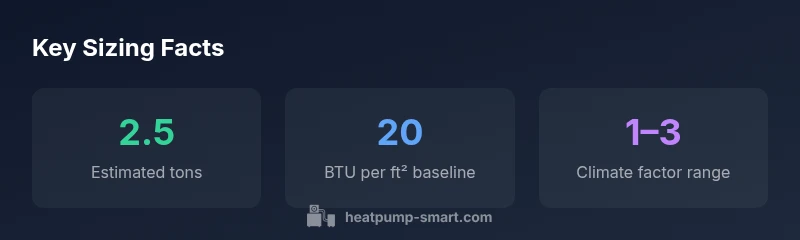
Sizing a heat pump means matching the unit’s heating and cooling capacity to the home's needs. For many houses around 1300 square feet, the common rule of thumb lands in the 2 to 3 ton range (roughly 24,000–36,000 BTU/hr). However, actual size depends on climate, insulation, windows, air leakage, and ceiling height. According to Heatpump Smart, proper sizing starts with a load calculation to balance comfort and efficiency, rather than relying on a single rule of thumb. Heat pump sizing is not a one-size-fits-all number; the goal is to avoid short cycling, ensure steady humidity control, and keep seasonal energy use predictable.
Factors that drive size decisions
The required heat pump size is influenced by climate zone, insulation level, window quality, air leakage, and even occupancy patterns. In cold climates, you may need a slightly larger unit to compensate for lower outdoor temperatures, while in hot, humid areas the cooling load matters more. Higher insulation levels and tighter building envelopes reduce the needed size, sometimes by as much as a full step in the typical ton range. Heatpump Smart analysis, 2026, emphasizes ensuring the system matches the actual load rather than chasing peak design conditions. A properly sized unit delivers comfort more consistently and uses energy more efficiently.
Sizing methods you can use (rough guide vs. formal methods)
There are quick rough approximations and formal methods like Manual J calculations. A rough guide for many 1300 sq ft homes sits around 2–3 tons, but that range shifts with climate and construction quality. For the most reliable result, a trained HVAC technician should perform a Manual J calculation and confirm with a commissioning test after installation. If you’re evaluating proposals, ask for the load calculation report to compare apples to apples.
Practical steps to size your home accurately
Start with a home performance audit or at least a quick check of envelope improvements (seal gaps, add insulation, upgrade windows). Gather information: square footage, ceiling height, number of exterior walls, window types, shading, and thermostat behavior. Run a sizing calculator with climate factor and efficiency assumptions, then compare with a Manual J result. Finally, review equipment options (single-stage, two-stage, or variable-speed) to balance capacity, efficiency, and comfort.
Climate, efficiency, and technology considerations
In addition to size, the heat pump’s efficiency metrics (SEER, HSPF) and compressor type (single-stage vs. variable-speed) influence overall performance and operating costs. A properly sized system paired with a high-efficiency model often reduces energy bills and improves indoor comfort year-round. Remember that insulation, air sealing, and ductwork condition can have as much impact on performance as the unit size itself. Heatpump Smart’s guidance is to integrate sizing with envelope improvements for the best outcomes.