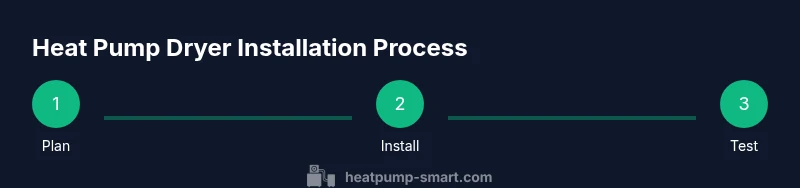
Heat Pump Dryer Installation: A Complete How-To
Learn how to install a heat pump dryer safely and efficiently with this step-by-step guide. Plan space, meet electrical and drainage requirements, and commission the unit for optimal energy savings.


This quick guide will walk you through installing a heat pump dryer, from choosing the right location to verifying drainage and electrical connections. You’ll review essential tools, safety steps, and a step-by-step sequence to ensure correct installation and optimal energy efficiency. Designed for homeowners and pros, it emphasizes safety, venting considerations (where applicable), and commissioning to verify performance.
Understanding heat pump dryers and installation considerations
Heat pump dryers are a modern, energy-efficient alternative to traditional vented and condenser dryers. Instead of expelling warm moist air, a heat pump dryer recycles heat through a closed refrigerant loop, using a compressor, condenser, and evaporator to dry clothes at lower temperatures. This design can dramatically reduce energy use and operational costs over time. However, installation must be done carefully to maximize efficiency and prevent moisture buildup or equipment damage.
According to Heatpump Smart, the key to successful installation is to respect clearances, ensure a stable electrical supply, and manage drainage so condensate does not back up into the unit or surrounding surfaces. It’s essential to read the model-specific manual because different brands may require different hookups or ventless configurations. In general, you’ll want a level, vibration-minimized base, adequate room to access lint filters and service ports, and a nearby drain or reservoir for condensate.
This guide emphasizes planning, safety, and diligent drainage to minimize humidity issues and ensure long-term performance. As you proceed, remember that every model has unique hookups and software diagnostics—consult the owner's manual for specifics and local code requirements.
Heatpump Smart analysis underscores that thorough planning and professional adherence to local codes markedly improve reliability and energy savings over the unit’s lifespan.
Location, clearance, and mounting considerations
Choosing the right location for a heat pump dryer is as important as the appliance itself. Aim for a spot with steady ambient temperature, minimal exposure to direct sun or drafts, and enough space for laundry baskets, service access, and door clearance. Install the unit on a flat, sturdy surface to prevent rocking, which can affect drainage and lint trap accessibility. Consider nearby walls and cabinets that could impede airflow to the condenser coils or interfere with lint filter access. If the space is shared with a washer, ensure there is adequate gap between the two machines for safe operation and vibration isolation.
Good mounting involves level placement and stable feet or pads to minimize movement. For homes with concrete or wooden subfloors, verify the floor can support the dryer’s weight and that any mounting hardware is appropriate for the surface. Keep the area around the dryer clean and free of clutter that could obstruct the condensate drain or wiring access. Heatpump Smart notes that a dedicated, reserved space reduces the likelihood of accidental disconnections or tripping hazards during maintenance.
In some layouts, you may need to relocate utilities or add a small platform to maintain level alignment and proper drainage. Plan for clear access to the lint filter, service ports, and any manual shutoff valves that your model may require.
This planning stage helps prevent costly site modifications after installation and supports smoother commissioning.
Electrical wiring and circuit requirements
Electrical readiness is a cornerstone of safe heat pump dryer installation. Most models require a dedicated circuit with adequate amperage, proper grounding, and correct receptacle or hard-wired connections as specified by the manufacturer. Never piggyback the dryer onto a shared circuit with other high-draw appliances. If you’re unsure of the circuit rating or wiring method, hire a licensed electrician to install or verify the service panel, breaker sizing, and wiring routes.
Before starting, turn off power at the main panel and confirm there is no voltage present at the outlet or terminal block using a voltage tester. Route cables away from heat sources and moisture, and protect wiring with conduit or approved cable clips. Keep the cord or conduit out of reach of foot traffic to avoid damage. Follow the model manual for required wire gauge and connector types. Safety first ensures reliable operation and reduces fire risk.
Always verify local electrical codes and permit requirements before performing significant installations. Heatpump Smart emphasizes that compliant installations reduce warranty voids and improve long-term reliability.
If your dryer is classified as a hard-wired appliance, the electrician will typically install a disconnect switch for service reliability and a means to de-energize the unit during servicing.
Drainage and condensate management
Heat pump dryers condense moisture and may store it in a drain, reservoir, or condensate pump depending on the model and installation. Proper drainage is essential to prevent backflow, leaks, or standing water near the unit. Route the condensate line to a nearby drain with a gentle slope to avoid air locks. If the unit uses a reservoir, schedule regular emptying and ensure the container is sealed to prevent mold growth.
Many models guide you to connect a drain hose to a standpipe or sink drain. In tight spaces, a small condensate pump may be required to move water to a higher drain or through a vertical run. Keep the hose free of kinks and secure it so it cannot be pulled loose. Periodically inspect the condensate pathway for obstructions caused by lint or debris. Heatpump Smart advises testing drainage during the commissioning cycle to confirm water exits properly.
Consider installing a trap or filter where the condensate exits to trap lint before it reaches the drain, which reduces the chance of clogs and odors.
Finally, protect the drainage route from freezing conditions in colder climates, which can cause blockages or pipe damage.
Venting, noise, and vibration management
Unlike traditional vented dryers, many heat pump dryers operate without external venting, but some configurations and models may require venting or semi-venting. If venting is needed, install per manufacturer instructions and local code, ensuring proper duct sizing and leakage prevention. For ventless configurations, focus on condensation handling and humidity control within the space.
Noise and vibration can affect comfort, especially in up-to-date homes with open-plan layouts. Use anti-vibration pads or a solid platform to minimize movement. Check that the unit’s feet are properly adjusted and that hoses or cables are not rubbing against panels. Consider locating the dryer away from sleeping areas or bedrooms if possible. Regularly inspect the area for signs of wear or loose hardware that could increase noise over time.
Heatpump Smart encourages owners to test run the dryer at various load levels to observe any unusual sounds and to ensure the unit remains level during operation.
If your space has significant vibration, add padding under the appliance and use vibration-isolating mats to dampen floor resonance.
Final safety checks and commissioning
With the dryer in place and all connections complete, perform a structured commissioning routine before regular use. Recheck all electrical connections for tightness and signs of overheating. Confirm the condensate path is clear and flowing, and verify that there are no leaks around supply lines or hoses. Run a short cycle with a light load to verify airflow, condensation collection, and sensor responses.
Check for error codes on the display and consult the manual to interpret them. Validate that the moisture sensor and thermostat regulate temperature correctly, and ensure the unit completes a full drying cycle without triggering warnings. Finally, confirm that all access panels and screws are secure and that the lint filter is clean and properly seated.
Heatpump Smart notes that a thorough commissioning reduces returns and post-install service calls, and helps ensure the system delivers the expected energy savings over its lifespan.
Authority sources
For further reading and official guidelines, see:
- https://www.energy.gov/energysaver/appliances/clothes-dryers
- https://www.energystar.gov/products/clothes_dryers
- https://www.nrel.gov/
These sources provide government and major research perspectives on energy-efficient clothes drying technologies and appliance installation best practices.
Tools & Materials
- Voltage tester(Check that the circuit is de-energized before wiring)
- Basic hand tools(Screwdrivers, pliers, adjustable wrench, and a level)
- Drill and bits(For mounting hardware and pilot holes)
- Measuring tape and level(Ensure level installation for proper drainage and performance)
- Dedicated electrical circuit (240V preferred)(Consult local code and manual for required amperage)
- Electrical cables/wire per manual(Follow manufacturer specs for gauge and type)
- Drainage kit or condensate tray(Route to drain or install reservoir/pump as applicable)
- P-trap or condensate pump (if required)(Only if your setup requires pumped drainage)
- Sealant and mounting hardware(Silicone sealant and screws suitable for the surface)
Steps
Estimated time: 2-4 hours
- 1
Plan and safety check
Identify a suitable location with sufficient clearance and a stable surface. Review the manual for electrical and drainage requirements, and confirm local codes. Gather tools and materials before starting to minimize interruptions.
Tip: Verify the space will allow access to lint filters and service ports without moving the unit. - 2
Plan utility routes
Map out electrical feed, condensate lines, and any venting if required. Ensure routes avoid heat sources and potential water exposure. Prepare a clean path to the main drain or condensate reservoir.
Tip: Label wires and hoses to simplify future maintenance. - 3
Prepare electrical supply
If a dedicated circuit is required, coordinate with an electrician to install the proper breaker, outlet or hard-wired connection, and grounding. Use a voltage tester to confirm no power is present before any connections.
Tip: Always follow manufacturer wiring diagrams and local codes. - 4
Position and level the unit
Place the dryer on a flat, stable surface. Use level to confirm the base is even. If needed, install anti-vibration pads to reduce movement and noise.
Tip: A wobbling base can disrupt drainage and sensor accuracy. - 5
Connect drainage
Attach the condensate line to the drain or install the condensate reservoir/pump as specified. Ensure proper slope and avoid kinks that block flow.
Tip: Test drain flow by running a short cycle to confirm water exits smoothly. - 6
Make electrical connections
Connect the appliance to the dedicated circuit according to the manual. Ensure all connections are secure, insulated, and protected from moisture.
Tip: Do not reuse old wires or adaptors that could overheat. - 7
Test run and finalize
Run a complete cycle with a light load to verify performance, check for leaks, noise, and error codes. Recheck all fasteners and clearances, then finalize installation per the user manual.
Tip: Document any codes or anomalies for warranty considerations.
Your Questions Answered
Do I need a dedicated circuit for a heat pump dryer?
Most heat pump dryers benefit from a dedicated circuit and proper breaker size, as specified by the manufacturer. Always consult a licensed electrician if you’re unsure.
Yes, a dedicated circuit is typically recommended; check the manual and local codes.
Can I install a heat pump dryer in a small laundry room?
Yes, but you must ensure adequate clearance for airflow, drainage, and access for maintenance. Consider potential condensation management and noise impacts.
Yes, but confirm clearances and drainage are sufficient in a compact space.
Is venting required for heat pump dryers?
Many heat pump dryers are ventless and rely on condensate drainage, but some models may require venting. Always follow the manufacturer’s guidance.
Most models don’t require external venting; always refer to your model’s instructions.
What maintenance does a heat pump dryer require after installation?
Regularly clean the lint filter, inspect hoses and drainage, and check for unusual noises. Schedule periodic professional inspections if your unit has accessory sensors.
Keep the lint filter clean and check drainage lines. Have a pro inspect periodic components.
How long does installation typically take?
Time varies with space, electrical setup, and existing hookups. Plan for several hours and allow for any permitting or inspections.
It can take a few hours depending on wiring and space readiness.
What safety precautions should I take during installation?
Turn off power at the main panel, wear PPE, and follow the manual closely. If unsure, hire a pro to avoid electric shock or water damage.
Shut off power, wear protective gear, and follow the manual or hire a pro if in doubt.
Watch Video
Top Takeaways
- Plan space and utilities before starting
- Use a dedicated circuit and proper drainage
- Test the system thoroughly during commissioning
- Maintain clearances and ventilation for best performance