How to Choose a Heat Pump: A Homeowner's Guide to Efficiency
Learn how to select the right heat pump for your home—sizing, efficiency ratings, types, and installation considerations in a practical, step-by-step guide from Heatpump Smart.


With heat pump how to choose as your goal, this guide walks homeowners through sizing, efficiency, and installation considerations. You’ll learn how to compare SEER/HSPF/COP metrics, choose between air-source, geothermal, and ductless options, and avoid common pitfalls. By the end, you’ll have a clear, actionable path to selecting a reliable heat pump for your home.
Why heat pump selection matters
Choosing a heat pump is more than picking a model; it's about comfort, efficiency, and long-term operating costs. If you're wondering about the heat pump how to choose, start here by understanding the core reasons to get it right. A properly sized, well-matched system distributes heat evenly, reduces peak loads, and minimizes unnecessary cycling. According to Heatpump Smart, selecting the wrong size or type can lead to uncomfortable rooms, higher energy bills, and more frequent repairs. The Heatpump Smart team found that the biggest mistakes come from underestimating load, ignoring climate nuances, or skipping professional verification. By prioritizing correct sizing, appropriate COP choices, and installation readiness, you set a solid foundation for reliable performance across seasons. In this section, you’ll learn how to frame your decision, what constraints matter, and how to balance upfront costs with long-term savings.
How a heat pump works (at a glance)
A heat pump transfers heat from one place to another using a refrigerant cycle powered by electricity. In heating mode, it concentrates ambient heat from outdoors and releases it inside your home; in cooling mode, it reverses. This efficiency comes from moving heat rather than creating it, which typically delivers more comfort with less energy than traditional heating systems. For the heat pump how to choose journey, note that performance depends on outdoor temperature, humidity, and airflow, so expectations vary by climate. Modern systems can include auxiliary heating to cover extreme cold, but best results come from a well-sized core unit and a compatible thermostat.
Sizing your system: why it matters
Sizing a heat pump correctly ensures even temperatures, avoids short cycling, and minimizes wear on components. An oversized unit heats spaces quickly but leaves humidity unaddressed and creates uncomfortable drafts; an undersized unit runs constantly and struggles during peak cold snaps. The sizing process should use a formal load calculation (manual J) and consider insulation, window quality, and occupancy. Collaborative work with a licensed contractor helps translate measured loads into a capable unit. When you’re evaluating options, aim for models with an appropriate balance of cooling and heating capacity, and verify that ductwork and electrical circuits can support the chosen system.
Energy efficiency: SEER, HSPF, and COP explained
Efficiency ratings quantify how well a heat pump converts energy into usable heating or cooling. SEER measures cooling efficiency, HSPF measures heating efficiency, and COP (coefficient of performance) reflects operation under standard conditions. Higher numbers generally mean lower operating costs, but real-world performance depends on climate, system design, and maintenance. In your selection, prioritize equipment with high SEER and HSPF values and a favorable COP at your typical operating temperatures. Remember that efficiency often comes with higher upfront costs, so balance immediate price with long-term savings.
Heat pump types: air-source, ducted, ductless, geothermal
The main choices are air-source (outdoor condensing unit), geothermal (ground-loop), and ductless mini-split configurations. Air-source units are common in many homes and work well with existing ductwork; ductless options are ideal for add-ons or zones without ducts; geothermal systems offer excellent efficiency but require more space and upfront investment. Each type has pros and cons related to climate, installation complexity, noise, and maintenance. When comparing options, assess how well each fits your home layout, insulation, and future plans for remodeling.
Climate considerations: cold climates and performance
In colder climates, heat pump performance hinges on outdoor temperatures and auxiliary heat integration. Look for models with reliable cold-weather performance and proper defrost cycles. The goal is comfort consistency rather than maximum outdoor efficiency. The Heatpump Smart team found that choosing an appropriate auxiliary heat strategy can reduce indoor temperature swings and ensure reliable operation during frosty nights. Consider climate data, your tolerance for longer runtimes, and how often you’re willing to engage backup heat during deep cold spells.
Installation and space requirements
Before finalizing a heat pump, verify space for the outdoor unit, indoor air handlers, and ducting or piping routes. Adequate clearance, noise considerations, and weather exposure should be evaluated. Electrical service capacity and breaker sizing must align with the unit’s requirements, and permits may be required in your area. Plan for a professional installation to ensure refrigerant handling, electrical safety, and proper refrigerant charge. A cautious approach reduces post-installation issues and ensures the system delivers as expected.
Cost considerations and rebates
Total costs include equipment price, installation, ductwork, electrical upgrades, and potential permits. While higher-efficiency models can reduce operating costs, the upfront investment varies by region and contractor. Check for available rebates or tax credits that can offset a portion of the expense; these incentives differ by locale and eligibility. Heatpump Smart analysis shows that budgeting for maintenance and periodic refrigerant checks helps preserve performance and efficiency over the system’s life.
How to compare models: a practical checklist
Use a side-by-side comparison of each model’s SEER, HSPF, COP, noise levels, warranty, and installation requirements. Verify compatibility with your existing thermostat and ductwork, and confirm lead times for installation. Create scenarios for typical winter and shoulder-season use to gauge running costs. Don’t rely on price alone; factor reliability, service availability, and contractor qualifications into your decision. This practical checklist helps you move from research to a confident purchase.
Tools & Materials
- House climate data (local weather patterns)(Use recent 12-month climate data to inform load expectations)
- House plan or measurements(Floor plan, room sizes, and window layout for load and ductwork considerations)
- Thermostat compatibility info(Check compatibility with intelligent thermostats and zoning if used)
- Energy bills and usage records(Help anchor load calculations and expected savings)
- Manufacturer spec sheets (SEER, HSPF, COP)(Side-by-side comparisons of shortlisted models)
- Licensed HVAC contractor contact(Needed for formal load calculation and installation planning)
Steps
Estimated time: 2-4 hours
- 1
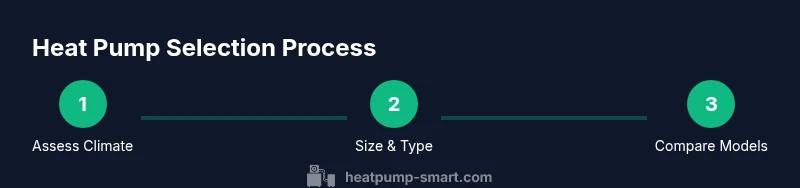
Assess climate and heating needs
Evaluate local climate, insulation, and comfort goals. Gather energy bills and note seasonal temperature swings to inform sizing decisions.
Tip: Collect 12 months of utility data to understand usage patterns. - 2
Calculate heating load and space requirements
Have an HVAC pro perform a formal load calculation (manual J). Include insulation, windows, and occupancy to estimate required capacity.
Tip: Ask for a written load calculation and model recommendations. - 3
Choose heat pump type and efficiency targets
Decide among air-source, geothermal, or ductless options based on space and budget. Set target SEER/HSPF/COP ranges that balance upfront cost and long-term savings.
Tip: Prioritize higher efficiency for lower annual operating costs. - 4
Check compatibility and space for installation
Ensure the chosen system fits your ductwork, outdoor space, and electrical system. Check thermostat compatibility and refrigerant charges.
Tip: Plan for room for service access and outdoor clearances. - 5
Compare models and budget scenarios
Create a shortlist with 3-5 models, compare efficiency ratings, warranties, and installed costs. Run energy savings versus upfront expense scenarios.
Tip: Request written quotes with itemized installation costs. - 6
Plan installation and permits
Coordinate with a licensed contractor for permits, refrigerant handling, and inspection. Schedule timing to minimize disruption and ensure proper commissioning.
Tip: Ask about the startup and commissioning process.
Your Questions Answered
What is the most important factor when choosing a heat pump?
Sizing and climate compatibility are critical; a mis-sized unit can ruin efficiency and comfort.
Sizing and climate compatibility are the key factors.
What is the difference between SEER, HSPF, and COP?
SEER measures cooling efficiency, HSPF heating efficiency, and COP reflects real-time efficiency. Higher values imply better efficiency but real-world results depend on usage.
SEER, HSPF, and COP are efficiency metrics; higher numbers mean more efficiency.
Should I choose air-source or geothermal heat pumps?
Air-source is common and easier to install; geothermal offers high efficiency but requires more space and upfront cost.
Air-source is popular and simpler; geothermal is efficient but more expensive.
How long does installation take?
Installation time varies with system size and existing ductwork; plan for a few days from prep to commissioning.
It usually takes a few days depending on your setup.
Do heat pumps work well in cold climates?
Modern cold-climate models perform better in low temperatures, though auxiliary heat may be needed during deep cold snaps.
They can work well in cold weather, often with supplemental heat.
Are rebates or tax credits available for heat pumps?
Rebates and credits vary by region; check local programs and utilities for incentives to reduce upfront costs.
Yes, there are rebates in many areas; check local programs.
Watch Video
Top Takeaways
- Size the system with a formal load calculation.
- Prioritize SEER, HSPF, and COP values for climate fit.
- Account for installation costs and rebates in total cost.
- Work with a licensed pro for sizing and installation.