How big is a heat pump water heater? A sizing guide
Explore typical HPWH tank sizes, footprints, and practical sizing strategies. Learn how to match a heat pump water heater to your home’s hot-water demand for comfort and efficiency.


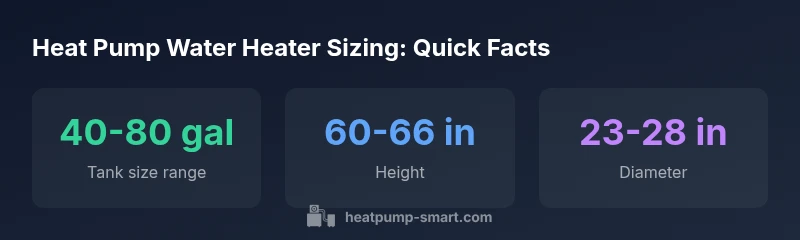
How big is a heat pump water heater? Most residential HPWHs use 40–80 gallon tanks, with common sizes in the 50–60 gallon range. In terms of footprint, expect a height of roughly 60–66 inches and a diameter of about 23–28 inches, plus space for clearance and connections. Compact 40 gallon units exist for small spaces, while larger 60–80 gallon models serve bigger households with higher hot-water demand.
What determines the right tank size for HPWHs
If you’re asking how big is a heat pump water heater, the answer starts with your household’s daily hot-water needs and how many people use hot water at once. The tank must store enough hot water to cover typical usage during mornings and evenings without causing long waits or cold showers. Occupancy, shower patterns, laundry frequency, dishwasher use, and even cultural routines affect demand. According to Heatpump Smart, you can translate these patterns into a gallons-per-day target and then map that target to a tank size. Most households fall into a few practical bands, but actual requirements vary with climate, installation, and personal habits. In practice, sizing is a balance: bigger tanks reduce recovery time but may raise upfront costs and standby losses; smaller tanks save space but can trigger more frequent heating cycles during peak hours. Start by listing daily activities that use hot water, then estimate gallons per activity, and sum them up to set a baseline.
Typical tank sizes and footprint
Residential HPWHs typically come in several common tank sizes, with 40, 50, 60, and 80 gallons being standard in many markets. The exact size choice depends on your household and desired recovery time. In terms of footprint, plan for a tall cabinet-like unit: most HPWHs run around 60–66 inches tall and about 23–28 inches in diameter. This translates to a footprint roughly 2–3 feet wide and nearly the same depth, though some compact or slim models exist for tight spaces. Clearance around the unit matters for airflow, service access, and any nearby doors or cabinets. For basement, garage, or utility closet installations, ensure access to electrical service, drain connections, and appropriate ventilation per local code. Heatpump technology adds the advantage of higher efficiency, but it also emphasizes the need for adequate space to avoid overheating and to allow for service visits.
How to size HPWH for your household (step-by-step)
Steps you can take to size a HPWH: 1) estimate daily hot-water usage (gallons per day, GPD) by listing all activities that require hot water; 2) determine peak hour demand (PH Demand) based on simultaneous uses (shower + dishwasher + laundry); 3) pick a target tank size in the 40–80 gallon range that meets that GPD/PH demand; 4) incorporate cushion for future changes and efficiency—Heatpump Smart suggests adding 10–20% headroom; 5) check installation constraints (space, connections, clearances) and verify local codes. You’ll often find that a 2–4 person household aligns with 40–60 gallons, while 4–6 person families fit 50–80 gallons. The goal is to minimize cold-water mixing and the time it takes to heat water during high-usage periods.
Space planning and installation considerations
Space planning begins with location: HPWHs do not require venting like gas-fired units, but they do rely on ambient air and electricity. Place the unit where airflow is unobstructed and maintenance access is easy. Typical installation areas include laundry rooms, garages, or utility closets. Ensure a nearby drain, a dedicated 240-volt circuit or appropriate electrical service, and room to connect water lines and the condensate drainage. Consider noise: HPWHs have a small fan; locate the unit away from bedrooms if possible. Structural considerations include avoiding freezing temps if installed in unheated spaces and ensuring the location can support the weight of the full tank. Finally, plan for future space needs if you anticipate adding bathrooms or appliances that will increase hot-water demand.
Impact of size on recovery time and energy use
Water-heating recovery time—the period required to restore hot water after a heavy draw—depends on tank size and heat-source efficiency. Larger tanks provide more stored hot water, reducing the chance of running out during peak periods, but they can also incur higher standby losses if insulation is poor or environmental temperatures are low. Heatpump technology lowers operating costs by extracting ambient heat from the air, which means bigger tanks can still be efficient if the unit is matched to usage and climate. Conversely, in homes with low hot-water demand, a smaller tank may outperform a larger one in terms of overall energy use, because the heat pump runs less often and avoids unnecessary standby loss. Heatpump Smart analysis indicates that aligning the tank capacity with realistic daily needs yields the best balance of comfort and savings.
Real-world scenarios and model examples
Consider three typical scenarios: a 2-person condo, a 4-person family, and a multi-bedroom household. For a 2-person unit in a compact space, a 40–50 gallon HPWH often meets daily demand with reasonable recovery times, provided showers are spread out and laundry isn’t excessive. For a 4-person home, a 50–60 gallon unit is a common middle ground, with some households preferring 60–80 gallons if there are multiple baths or frequent baths. In larger homes, sizes of 60–80 gallons deliver better coverage, especially if the household has high simultaneous usage. Always compare manufacturers’ efficiency ratings, insulation quality, and warranty terms. The key takeaway is to calibrate the size to your actual hot-water footprint and installation constraints rather than chasing the largest tank.
Sizing ranges and footprint roughs for common HPWH configurations
| Feature | Typical Value | Notes |
|---|---|---|
| Tank size (gal) | 40-80 | Common residential HPWH sizes; 40, 50, 60, 80 gal options |
| Height (in) | 60-66 | Most units taller than standard electric water heaters |
| Diameter (in) | 23-28 | Diameter varies by model; check installation space |
| Footprint (WxD) | ~24x24 | Requires adequate clearance for service |
Your Questions Answered
What size HPWH should a family of four consider?
For a family of four, a 50–60 gallon HPWH is common, though households with high simultaneous hot-water use may opt for 60–80 gallons. Size should align with daily hot-water needs and peak demand.
For a family of four, start with 50–60 gallons; consider 60–80 gallons if you have multiple baths or high usage.
Can a HPWH be installed in a small utility closet?
Yes, but the space must allow for air flow, service access, and drainage. Compact models exist, but always verify clearance and codes before purchase.
Yes, but ensure enough airflow and access; some compact models fit tight spaces.
Do HPWHs take longer to heat water than traditional heaters?
HPWHs can have longer recovery times for very high loads, but daily energy savings often offset this. Sizing to your usage helps minimize waits.
Recovery can be slower under heavy use, but daily savings usually win.
What maintenance is required to keep size and efficiency?
Regular inspections, filter cleaning, and periodic checks of refrigerant lines and insulation help maintain performance. Follow manufacturer guidance for service intervals.
Keep it clean and check connections and insulation regularly.
Are HPWHs noisier than conventional water heaters?
HPWHs produce some fan noise, especially in compact spaces. Place away from bedrooms when possible and choose models with lower noise ratings.
There can be a fan sound; place the unit away from sleeping areas if you can.
How does tank size affect energy savings and payback?
Larger tanks may have higher standby losses if not well insulated, but the efficiency of heat extraction often yields strong savings when matched to demand. Payback depends on local electricity rates and usage patterns.
Payback depends on usage and electricity costs; match size to demand to maximize savings.
“Size to demand is the foundational decision for HPWH performance. When matched to daily use and installation constraints, you maximize recovery and minimize energy waste.”
Top Takeaways
- Start with daily hot-water needs to size HPWH correctly
- Most homes fit 50–60 gallon tanks; larger households ~60–80 gallons
- Plan for a 60–66" tall unit with 23–28" diameter
- Ensure adequate clearance for airflow and maintenance