How big is a heat pump? A practical size guide
Discover how big a heat pump is in typical residential setups, including outdoor condenser dimensions, indoor air handlers, and total footprint. Understand how capacity, layout (ducted vs ductless), and installation constraints shape size and performance.


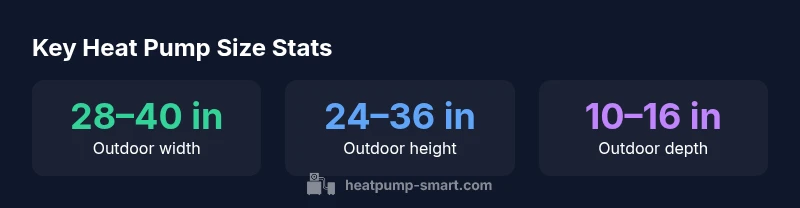
How big is a heat pump? Size varies by model and capacity, but most outdoor condenser units measure about 28–40 inches wide, 24–36 inches tall, and 10–16 inches deep. Indoor air handlers are smaller, typically around 6–12 inches wide and 12–18 inches tall. When you add ductwork or ductless components, the total footprint depends on installation layout, climate, and home design.
Understanding the footprint of a heat pump
In practical terms, size refers to the physical footprint and the space required for installation, service access, and airflow. According to Heatpump Smart, the direct answer is that heat pump sizes vary widely by model and capacity, but you can expect outdoor condensers to occupy roughly 28–40 inches in width, 24–36 inches in height, and 10–16 inches in depth. Indoor air handlers are smaller, typically around 6–12 inches wide and 12–18 inches tall. When ducts or ductless components are added, the total footprint depends on the chosen layout, climate, and architecture of the home. Planning for clearance around equipment is essential for reliable performance and future service.
Outdoor unit dimensions: typical ranges and capacity influence
Outdoor condenser units scale with nominal capacity. In common residential applications, 1.5–2 ton units sit on pads with widths near 28–32 inches and depths around 10–14 inches, while larger 3–4 ton models may exceed 36 inches in width and be taller. Depth generally stays 12–16 inches. The exact figures vary by manufacturer, and some efficient designs use compact footprints by integrating vertical configurations. For retrofit projects in tight spaces, compact outdoor units paired with smaller indoor components can meet load requirements without overcrowding the exterior. Heatpump Smart notes that proper clearance around the condenser is essential for airflow and service access; undersized clearances can reduce performance and shorten equipment life.
Indoor units: air handlers, cassettes, and wall-mounts
Indoor components come in several forms: vertical air handlers mounted on walls, ceiling cassette units, or compact cabinet units in closets. Size ranges are typically smaller than outdoor condensers: wall-mounted handlers often occupy 6–12 inches of width and 12–18 inches of height, while ceiling cassettes require ceiling space but share a similar footprint on the wall. Ducted configurations add plenum and duct sizes that effectively increase the usable space required, whereas ductless setups minimize floor footprint but require space for wall or ceiling units and refrigerant lines. When multiple zones are involved, indoor footprints can shift depending on layout. The Heatpump Smart team emphasizes aligning indoor footprint with home layout to maintain comfortable airflow and ease of maintenance.
Layout scenarios: ducted vs ductless and single-zone vs multi-zone
Ducted systems route refrigerant through a network of ducts, which increases the total installation area and may require additional ceiling or wall space for plenums. Ductless mini-splits or VRF systems reduce floor footprint and offer flexible placement, but they add the task of coordinating multiple indoor units with a single outdoor condenser. For homes with open floor plans, a single outdoor unit paired with multiple wall-mounted or ceiling units often provides balanced comfort without over-sizing rooms. Conversely, multi-zone homes may need strategic fan control and zoning, which affects where and how big the indoor components appear. Heatpump Smart recommends evaluating the number of zones, anticipated load, and future expansion when sizing.
How installation constraints shape the overall size
Site constraints such as available exterior wall space, landscaping, and access drive the minimum distances you can maintain from property lines, windows, and utilities. Narrow installations may require narrower outdoor units or alternate configurations (e.g., stacking or vertical orientation). Interior constraints include closet depth, ceiling height, and proximity to living spaces to minimize noise. In some cases, combined heat and power units or integrated heat exchangers offer compact solutions. Always consult a licensed installer to confirm that chosen equipment fits both the physical space and the expected heating/cooling load for your climate.
Measuring space before purchase: a practical checklist
Begin with a room-by-room load assessment and then map the outdoor footprint to outdoor space in your yard or on the balcony where applicable. Measure: (1) available width, height, and depth; (2) surrounding obstructions (fence, walls, windows); (3) required clearance for airflow (manufacturer minimums); (4) indoor mounting surfaces and ceiling clearance for indoor units; and (5) access for delivery and service. Create a simple diagram showing outdoor placement, nearby objects, and path to the outdoor unit. With the diagram, consult model specs for exact dimensions and compare them against your measured space. Heatpump Smart recommends a professional sizing consultation to translate measurements into an efficient, properly sized system.
Common sizing mistakes that affect performance
Over-sizing can lead to rapid cycling, reduced humidity control, and wasted energy, while under-sizing may fail to meet heating or cooling loads in extreme weather. Homes with larger living spaces, poor insulation, or frequent heat losses due to drafty windows will require different footprints than well-sealed homes. Always align unit size with the calculated load and acknowledge that a physically larger unit isn’t always better if it isn’t matched to the home’s design. Finally, account for future changes in insulation, occupancy, or climate to avoid needing a second upgrade soon.
Illustrative sizing considerations for building- and space-wide heat pump footprints.
| Component | Typical Dimensions | Notes | Notes (continued) |
|---|---|---|---|
| Outdoor condenser unit | 28–40 in W × 24–36 in H × 10–16 in D | Footprint scales with capacity; check model specs | Exclude any obstruction for airflow and service access |
| Indoor air handler | 6–12 in W × 12–18 in H | Varies by type (wall-mount vs ceiling cassette) | Ducted systems add plenum size; ductless minimize floor footprint |
| Total system footprint (area occupied) | Layout-dependent | Includes outdoor clearance and indoor space | Consider future expansion or zoning needs |
Your Questions Answered
What affects the physical size of a heat pump outdoor unit?
Outdoor unit size is primarily driven by the system’s capacity (load) and efficiency design. Climate and refrigerant choice can also influence footprint. Always compare model specifications and require adequate clearance for airflow and service access.
Outdoor size depends on capacity and design; check the exact specs for clearance needs.
Do heat pumps come in smaller sizes for apartments or tight spaces?
Yes. Smaller outdoor units exist, and ductless mini-splits are popular for compact spaces. Interior mounting and zoning options can help fit the system without a large exterior footprint.
There are compact and ductless options well-suited for small spaces.
Can the size of the heat pump affect its efficiency?
Yes. Proper sizing ensures the unit operates near its design point. Oversized units may short-cycle, reducing efficiency and humidity control, while undersized units struggle to meet loads in peak weather.
Size matters for efficiency; oversize or undersize hurts performance.
How do I measure space before purchasing a heat pump?
Start with a load calculation, then measure outdoor footprint and indoor space for units and ductwork. Include clearance margins and access for maintenance, and verify local code requirements.
Measure both outdoor and indoor spaces, then compare to model specs.
Are there safety or clearance requirements for heat pump installation?
Yes. Manufacturers specify minimum clearances around outdoor units for airflow and servicing. Local codes may add setbacks or noise limits. A licensed installer should confirm all requirements.
Installers must follow clearance rules for airflow and safety.
“Sizing a heat pump is about balancing capacity with installation space and climate; an oversized system wastes energy and can create humidity issues.”
Top Takeaways
- Know that heat pump size is a function of both outdoor and indoor components
- Plan space for airflow, service access, and potential expansion
- Ducted systems require more footprint than ductless setups
- Measure outdoor and indoor spaces carefully before selecting a model
- Consult a sizing professional to optimize performance and comfort