How many heat pumps does a house need? A practical sizing guide
Learn how to determine how many heat pumps your house needs based on size, climate, insulation, and usage. A practical sizing guide from Heatpump Smart helps homeowners plan efficiently.


How many heat pumps does a house need
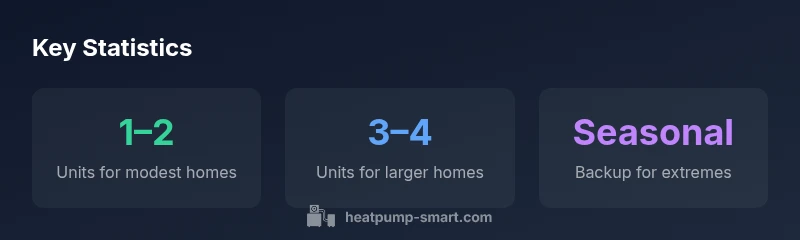
How many heat pumps does a house need? When homeowners ask how many heat pumps does a house need, the answer depends on several factors, including the home's size, climate, and how well it’s sealed and insulated. This section sets the stage for practical sizing, emphasizing that there is no one-size-fits-all number. You’ll often see 1–2 units for modest homes and 3–4 for larger, multi-zone properties. Regardless of size, a balanced approach combines sensible rule-of-thumb estimates with formal load calculations to avoid oversizing or undersizing. According to Heatpump Smart, sizing should start with a professional load calculation to ensure comfort and efficiency, not marketing claims.
Key factors influencing the count
The number of heat pumps you need is driven by multiple factors that interact to shape the final equipment plan. Consider the following core drivers:
- Building size and layout: Larger or irregularly shaped homes can require more units or separate zones to maintain even comfort.
- Climate zone: Heating-dominant climates often benefit from higher total capacity or strategically placed units; cooling-dominant regions may require different configurations.
- Building envelope: Good insulation and air sealing reduce heat loss and can lower the number of units needed without sacrificing comfort.
- Occupancy and usage patterns: High occupancy or heavy appliance use creates internal heat, which can alter sizing needs.
- Ductwork and distribution: Ducted systems distribute air differently than ductless, which affects per-unit output requirements and zoning flexibility.
- Existing heat sources: If a home already has a secondary heat source, the sizing strategy for the heat pumps may shift.
Understanding these factors helps you avoid oversizing, which wastes energy and increases upfront costs, or undersizing, which leads to uncomfortable rooms and higher cycling.
Sizing approaches: rule-of-thumb vs load calculations
Sizing a heat pump can follow a simple rule-of-thumb or a formal load calculation. The rule-of-thumb method offers a quick, rough estimate based on area and typical climate assumptions, but it can miss nuances such as shading, orientation, and occupancy. A professional load calculation—often a Manual J—considers local climate data, building envelope performance, and internal gains to specify the exact number, size, and placement of units. For most homes, combining a conservative rule-of-thumb starting point with a formal load calculation yields a robust plan that minimizes waste and maximizes comfort.
Climate considerations and zoning
Climate has a pronounced effect on how many heat pumps you need. Colder regions may require higher heating capacity or supplemental heat during peak cold snaps, while hot, humid areas may prioritize cooling efficiency and multi-zone comfort. Zoning becomes more valuable in places with uneven sun exposure or varying room use. A well-designed system will allocate capacity where it is most needed and avoid oversizing in rooms that stay cooler or shaded for much of the day. Heatpump Smart analysis shows that climate-aware zoning often reduces the total number of units without compromising comfort.
Insulation, air sealing, and the envelope
A tight envelope dramatically changes sizing needs. Homes with excellent insulation, low air leakage, and well-sealed ducts typically require fewer units because less energy is lost to the outside. Conversely, older or poorly sealed homes may need additional capacity or more zones to maintain uniform temperatures. Before sizing the equipment, many homeowners invest in envelope improvements—sealed ducts, upgraded insulation, and air barrier strategies—to improve performance and reduce ongoing energy costs. Smart envelope upgrades often pay off by allowing a smaller, more efficient heat pump configuration.
Single-family vs multi-zone and multi-story homes
Single-story, open-plan homes often respond well to fewer, larger heat pumps with strategic placement. Multi-story homes or those with multiple zones benefit from independent units or zoned ductless systems to prevent hot or cold pockets. In some layouts, two smaller units may outperform a single larger unit because they can heat or cool specific zones more efficiently. When evaluating counts, consider not just square footage but how people move through the space and which rooms demand the most consistent comfort.
Practical examples and scenarios
Consider a few common scenarios to illustrate how the count can shift with design and climate. A 1,800 sq ft home in a temperate climate with good insulation might operate effectively with 1–2 heat pumps and targeted zoning. A 3,500 sq ft home in a hot, humid climate could require 2–3 units with strong cooling capacity and some supplemental heating during shoulder seasons. A larger 5,500–6,000 sq ft home with multiple levels and several living zones might benefit from 3–4 heat pumps arranged to optimize airflow and reduce temperature variance across zones. In all cases, a professional load calculation confirms the best configuration and ensures efficiency over time. Heatpump Smart’s guidance emphasizes tailoring the system to real usage patterns and seasonal extremes.
Cost considerations, efficiency, and long-term savings
The number of heat pumps you install affects upfront cost, ongoing energy use, and maintenance. More units can improve comfort and allow precise zoning, but they also raise initial investment and electrical load. Efficiency varies by model and by how well the system is matched to the home’s needs. Energy savings often come from reducing oversizing, avoiding short cycling, and maintaining consistent indoor temperatures. If you plan to expand or renovate, consider how future changes could influence the required count and whether a modular, scalable approach (such as ductless mini-splits in zones) offers the best long-term value. Heatpump Smart analysis suggests starting with a solid sizing plan and a scalable setup for future flexibility.
Installation considerations and backup strategies
Electrical service, panel capacity, and space for outdoor units are critical installation considerations. A higher count of heat pumps may require electrical upgrades or separate outdoor units with adequate clearance. Ductwork layouts, refrigerant piping, and indoor air handling components all influence performance and reliability. Backup strategies—such as a secondary heat source or a staged heating approach—can help manage cold snaps and improve resilience. Work with a licensed HVAC installer to ensure code compliance and a safe, reliable system. Depending on climate and home design, a smaller, well-planned system may outperform a larger, poorly configured array.
Planning checklist and next steps
Create a room-by-room comfort map, gather architectural plans, and note insulation levels, ventilation, and occupancy patterns. Run a formal load calculation with an HVAC professional, review zoning options, and evaluate both ducted and ductless configurations. Obtain multiple bids that show unit counts, sizes, and run-time expectations. Finally, verify electrical readiness and plan for potential future expansion. The Heatpump Smart team recommends coordinating sizing with a licensed professional to ensure long-term comfort and energy savings.
mainTopicQuery
1-3 word noun phrase for Wikidata lookup