How big is a heat pump for a house? A sizing guide for homeowners
A practical guide to determining the right heat pump size for your home, with ranges, load calculations, and tips to avoid undersizing or oversizing.


Most single-family homes typically require a heat pump sized in the 24,000–48,000 BTU/h range (2–4 tons) to meet heating and cooling loads in common climates. The exact size depends on climate, home size, insulation, air leakage, and ductwork. For precise sizing, a professional load calculation is essential.
How big is a heat pump for a house? Why size matters
According to Heatpump Smart, sizing a heat pump for a house starts with a proper load calculation and climate-adjusted expectations. The Heatpump Smart team found that a correctly sized unit delivers steady comfort, efficient operation, and fewer service calls, while oversized equipment cycles on and off, wastes energy, and reduces humidity control. In heating-dominated climates, the size is driven by peak winter load; in cooling-dominated areas, the peak summer load matters just as much. Heat pump size is expressed in BTU per hour (BTU/h) or tons, where 1 ton equals 12,000 BTU/h. For most single-family homes, the sizing range commonly falls in the mid-20,000s to mid-40,000s BTU/h, but the exact number depends on climate, insulation, airtightness, window quality, and the efficiency of the duct system. The goal is to meet peak winter and peak summer loads without overshooting. Professionals use formal load calculations, not rough estimates, to determine the right size.
Key factors that influence heat pump size
Several building and usage factors determine the right size. First, total heated and cooled area matters, but so do the building’s insulation levels, air leakage, window quality, and orientation. A well-insulated 1,500-square-foot home in a moderate climate may require a smaller unit than a 1,500-square-foot home in a cold climate with drafty walls. Climate zone, house design, and comfort expectations (rapid heating, humidity control) influence sizing decisions. Ductwork plays a critical role: leaky or undersized ducts can make a unit feel undersized, while oversized ducts can waste energy and increase noise. Heat pumps also interact with auxiliary heat and system controls, which can affect perceived size needs when extreme temperatures occur.
How load calculations guide size decisions
Size is driven by heat load—how much energy is required to maintain comfort at design conditions. The standard method is a professional load calculation, often performed using Manual J software, which accounts for envelope characteristics, windows, insulation, solar gains, occupancy, and internal heat sources. In many jurisdictions, an accredited contractor may also perform testing like blower door assessments to quantify air leakage. The results translate into a BTU/h target that guides equipment selection. Simple room-by-room guesses are not reliable; the aim is to match peak loads with a unit that can sustain comfort without excessive cycling. For reference, the Energy Department and industry groups emphasize formal sizing for long-term efficiency.
Typical size ranges by home size and climate
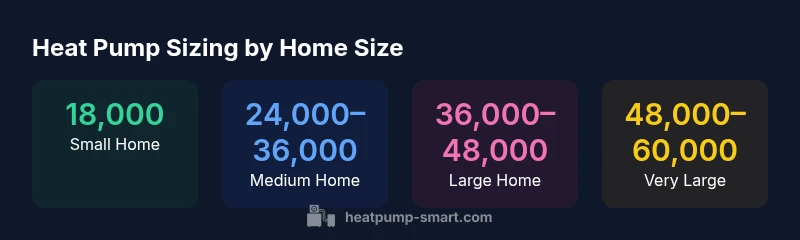
House size and climate are the primary levers for sizing. A compact, well-insulated home in a mild climate may be well served by a smaller unit, while larger, older homes in cold climates often require larger systems. A general, non-binding rule of thumb is about 6,000–12,000 BTU/h per 1,000 square feet in mixed climates, but real-world results vary. For example, an 800–1,200 sq ft residence might use an 18,000–24,000 BTU/h unit, a 1,200–1,800 sq ft home often fits 24,000–36,000 BTU/h, and a 1,800–2,500 sq ft dwelling may need 36,000–48,000 BTU/h. Larger homes or harsh winter climates can push demand toward 48,000–60,000 BTU/h or more.
Ductwork and distribution: why oversizing or undersizing matters
Duct design directly affects how a heater or heat pump performs. Oversized equipment causes short cycling, which reduces humidity control and increases wear. Undersized systems run longer, consuming more energy and often failing to reach set temperatures. Proper sizing considers duct capacity, supply and return air paths, and static pressure. In some cases, upgrading or sealing ducts is as important as choosing the right outdoor unit. A well-designed distribution system ensures that the installed unit operates near its rated efficiency and that zones with different heating or cooling needs are satisfied.
How to approach sizing in practice: a homeowner’s step-by-step guide
If you’re planning a heat pump, follow a disciplined process. Step 1: request an official load calculation (Manual J) from a licensed HVAC professional. Step 2: assess the building envelope—insulation levels, air leaks, window performance, and shading. Step 3: evaluate ductwork conditions and potential air-sealing improvements. Step 4: consider future needs, such as home additions or changes in occupancy. Step 5: compare unit efficiency metrics (SEER for cooling, HSPF for heating) and warranty coverage. Step 6: verify that the contractor will perform post-install checks to ensure the system operates near the predicted capacity.
Energy efficiency, operating costs, and comfort
Sizing influences efficiency and long-term operating costs. A system matched to load reduces cycling, improves humidity control, and minimizes energy waste. High-efficiency heat pumps with good seasonal energy efficiency ratio (SEER) and heating seasonal performance factor (HSPF) ratings provide better year-round performance, especially in variable climates. The balance between upfront cost and long-term savings should factor into the decision, as a correctly sized unit reduces wear and improves comfort without excessive runtime. Heatpump Smart’s analyses suggest that aiming for a close load match yields the best combination of comfort and energy savings.
Common myths about heat pump size
Myth 1: Bigger is always better. Reality: Oversized systems waste energy, wear out compressors faster, and struggle with humidity control. Myth 2: A larger heat pump will heat or cool a space faster. Reality: After a brief ramp-up, the system’s capacity is underutilized; you get more cycling and less precise comfort. Myth 3: All homes need the same size. Reality: Homes vary widely in insulation, air leakage, windows, and occupancy; one size does not fit all. Myths persist because rough estimates are easy, but precise sizing requires a load calculation and professional assessment.
Real-world sizing scenarios (case studies)
Case A: A compact, well-insulated 950 sq ft home in a temperate climate. The load calculation points to a 18,000–24,000 BTU/h unit. The contractor confirms ductwork is near ideal and suggests a modest future expansion plan. This example shows how good insulation and airtightness can keep sizing on the smaller end of the spectrum. Case B: A 2,400 sq ft home in a cold climate with drafty walls and older windows. The load calculation indicates a 48,000 BTU/h unit, with duct sealing and insulation upgrades recommended to maximize efficiency. These scenarios illustrate how climate and envelope quality shift the sizing curve.
Estimated heat pump size by home size
| Home size (sq ft) | Estimated heat pump size (BTU/h) | Notes |
|---|---|---|
| 800-1200 | 18,000–24,000 | Small, well-insulated |
| 1200-1800 | 24,000–36,000 | Average climate, moderate insulation |
| 1800-2500 | 36,000–48,000 | Larger home or cooler climate |
| 2500+ | 48,000–60,000 | Very large or harsh climates |
Your Questions Answered
What is BTU/h and why does it matter for heat pumps?
BTU/h stands for British Thermal Unit per hour and measures heating or cooling output. Correctly sizing BTU/h ensures the system can meet peak loads without excessive cycling, improving comfort and efficiency.
BTU/h is the unit of output. A properly sized heat pump can maintain comfort without wasted energy or frequent cycling.
Can I size a heat pump myself?
Sizing should be done by a licensed HVAC professional using a load calculation. DIY methods rarely capture envelope details and climate effects.
It’s best to have a pro calculate the right size based on your home’s specifics.
What happens if the heat pump is undersized?
An undersized unit runs longer, struggles to reach set temperatures, and can fail to remove humidity effectively, leading to discomfort and higher energy use over time.
If it’s too small, it runs more and never keeps up.
What happens if it’s oversized?
An oversized unit short-cycles, wastes energy, and loses humidity control. It can also increase wear and noise and raise upfront costs.
Too big means it keeps starting and stopping, wasting energy.
How often should sizing be reassessed?
If you remodel, add space, or improve insulation, have a professional recheck sizing to ensure continued efficiency.
Consider rechecking size after big changes or renovations.
Do ducts affect heat pump size?
Yes. Poorly sized or leaky ducts can make a correctly sized unit perform poorly. Duct improvements can alter the effective sizing needs.
Ducts matter as much as the outdoor unit for real-world performance.
“Proper heat-pump sizing is the cornerstone of comfort and efficiency. The Heatpump Smart Team recommends professional load calculations to avoid under-sizing or oversizing, which waste energy and compromise comfort.”
Top Takeaways
- Start with a formal load calculation, not room guesses
- Know BTU/h and ton concepts (1 ton = 12,000 BTU/h)
- Ductwork quality dramatically affects sizing accuracy
- Climate and insulation are major drivers of size
- Proper sizing improves comfort and long-term energy savings