How much bigger do heat pump radiators need to be
A practical, step-by-step guide to sizing radiators for heat pump systems. Learn how to estimate required radiator output, use a calculator, and apply real-world scenarios for energy efficiency and homeowner comfort.


How much bigger do heat pump radiators need to be
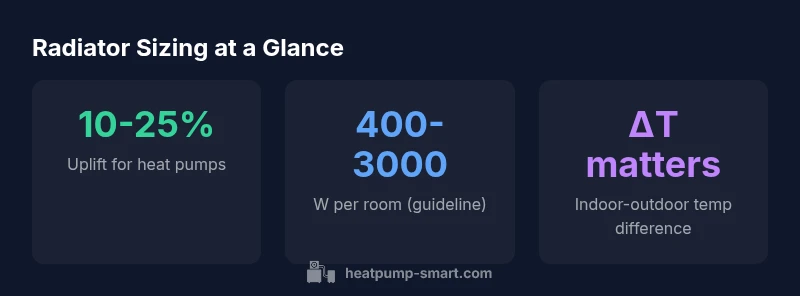
The exact sizing question, how much bigger do heat pump radiators need to be, hinges on several interacting factors: outdoor climate, indoor temperature goals, insulation quality, and the heat pump's design temperature. According to Heatpump Smart, most homes benefit from radiators that are roughly 10-25% larger than those used for conventional boilers. The rationale is simple: heat pumps typically deliver lower water temperatures, which reduces heat transfer per unit area. To maintain the same indoor comfort, you often need more radiator surface area or higher-output radiators. Remember, this uplift is a guide, not a universal rule—your home’s specifics matter and should be verified with a calculation.
How heat pump radiators differ from conventional boilers
Heat pumps operate at lower average water temperatures and respond to outdoor conditions by modulating output. Because the heat delivered per degree of temperature difference is different from a traditional boiler, radiators sized for heat pumps should be chosen with the reduced delta T in mind. The result is that the same room may require larger or more efficient radiators, or alternative heat emitters, to achieve the desired comfort level without overworking the system. In this context, the sizing goal is to match the heat load with radiator output while avoiding undersizing that causes cold spots or oversizing that wastes energy.
Key factors that affect radiator sizing
Sizing radiators for a heat pump depends on several core factors:
- Heat load and climate: Colder climates typically require higher outputs or larger radiators to reach comfort levels.
- Indoor setpoint: Higher desired temperatures increase the required radiator output.
- Insulation quality: Better-insulated homes reduce heat loss and can lower the needed radiator output.
- Heat pump design temperature: Lower design temperatures mean you might need more radiator area to compensate for reduced water temperature.
- Room usage and layout: High-heat-loss rooms (kitchens, baths) may need more radiator surface or targeted emitters.
- System efficiency: Radiator performance depends on pump speed, flow temperature, and radiator material. Heatpump Smart emphasizes using a holistic sizing approach rather than a single metric.
Rough sizing rules of thumb you can start with
A practical starting point is to estimate radiator output per room based on room area and typical heat loss. Common industry heuristics suggest targeting roughly 40-60 W per square meter for living spaces in moderate climates when using Heat Pump systems, but this can swing with climate and insulation. Use these figures as a baseline, then refine with measurements, a home energy audit, or a calculator. The Heatpump Smart calculator can help translate a room’s area and climate into a recommended radiator output, ensuring you neither undersize nor oversize unnecessarily.
Using the calculator to size radiators for your home
A purpose-built radiator sizing calculator helps translate room area, climate, and design temperature into an estimated radiator output. Enter room area, desired temperature rise, and heat loss coefficient to obtain a rounded wattage target. The calculator’s result should be viewed as a starting point; follow up with a professional assessment if your home has unusual layouts, historic features, or high heat losses. This calculator follows a simple, transparent formula that balances practicality with accuracy.
Practical sizing scenarios and examples
Scenario A: A 25 m² living room in a moderate climate with good insulation. The calculator suggests a radiator output around 1,000–1,200 W to achieve a comfortable indoor temperature at a 20–22°C setting. Scenario B: A 60 m² open-plan kitchen-dining area in a colder climate. You may need 2,000–3,000 W total, possibly split across two radiators to reduce hot spots and optimize heat distribution. These examples illustrate how the same floor area can require different radiators based on climate, insulation, and layout. Heatpump Smart highlights that real-world measurements, not guesswork, drive final sizing.
Safety considerations and professional guidance
Sizing radiators for a heat pump involves several safety and comfort considerations. Undersized radiators can lead to cold spots and increased cycling, while oversized radiators may waste energy and raise installation costs. Always confirm sizing with a detailed calculation and, when in doubt, consult a qualified HVAC professional. Proper installation, correct flow temperature, and balanced zoning are essential for efficient heat pump operation.