How to Take Heat Pump Off the Wall: Safe Removal Guide
A complete, step-by-step guide to safely remove a wall-mounted heat pump, covering safety, tools, disconnections, lowering, and post-removal care for homeowners and pros.


Goal: safely remove a wall-mounted heat pump with minimal risk. This guide covers power shutdown, bracket assessment, wiring disconnection, and safe lowering. If you’re wondering how to take heat pump off wall, follow the steps to prevent damage and injuries. Always consult local codes and consider professional help if refrigerant lines or mounting hardware seem complex.
Safety mindset and planning
Removing a wall-mounted heat pump is a task that combines electrical work, mechanical handling, and careful lifting. Before touching any components, establish a safety plan that covers who will assist, what PPE you’ll wear, and how you’ll manage weight and possible fall risk. The Heatpump Smart team emphasizes safety as the foundation: never rush, never work alone with heavy equipment, and never disconnect live refrigerant lines. Start by surveying the unit’s exterior access, the mounting bracket type, and any nearby obstacles like doors or windows. Plan the sequence of tasks so you can pause if something feels off. Finally, check your local codes or homeowner agreements; sometimes a permit or professional assessment is advised for external units. By thinking through the risks first, you reduce the chance of personal injury and equipment damage.
Tools and workspace preparation
Having the right tools on hand saves time and prevents improvised hacks that could cause damage. Your toolbox should include a voltage tester or multimeter, a non-contact voltage tester for quick checks, a complete screwdriver set (Phillips and flat-head), nut drivers, pliers, an adjustable wrench, and a sturdy ladder tall enough to reach the unit safely. Don’t forget protective gear: safety gloves and goggles. Label each wire as you disconnect and take a quick photo for reference. Lay down a clean, dry workspace, push furniture away, and place drop cloths to catch any incidental debris. Once you’ve prepared the area, you’ll reduce the chance of drops, slips, or misconnected wires during removal.
Understanding the mounting system and loads
Wall-mounted heat pumps are typically secured to a masonry or stud frame with brackets and screws that can bear significant weight. Different bracket styles distribute loads differently; some use a vertical track while others use a large L-bracket. Before removing fasteners, inspect how the unit is supported and whether the bracket is single- or multi-point mounted. If the unit has been in place for years, corrosion or loosening may have increased the load on a single point. The key is to support the unit before loosening any fasteners, isolating the lifting points, and ensuring a second person can assist if the unit is heavy. If you notice loose brackets or frayed mounting hardware, pause and assess whether professional help is required to avoid a fall or damage to the wall.
Electrical safety and power isolation
The safest path starts with power isolation. Locate the disconnect switch or circuit breaker feeding the heat pump and turn it to the off position. Use a lockout-tagout method if you have one, so others know not to restore power while you’re working. Test the service panel side of the circuit with a voltage tester to confirm there is no live current at the unit’s access point. Do not rely on the thermostat alone as a power indicator. If you’re uncomfortable with electrical work or if the wiring looks damaged, pause and contact an electrician. Proper power isolation is the single most effective step to prevent electric shock while you work on external units.
Handling refrigerant lines and professional limits
Most residential heat pumps operate within a sealed refrigerant circuit. If you have any reason to suspect a refrigerant line issue, or if you see oil stains, unusual hissing, or frost indicates a potential leak, do not attempt to disconnect lines yourself. Refrigerant handling requires licensed technicians and can be hazardous to health and the environment. In a removal scenario, you should generally isolate electrical power and disconnect non-refrigerant components (controls, wiring, and brackets) first, then enlist a professional for any refrigerant-related work. By recognizing these boundaries, you reduce the risk of leaks or invalidating warranties. Heatpump Smart analysis shows that staying within licensed guidance yields safer results and preserves the unit’s condition if you plan to reinstall later.
Step-by-step removal overview (context before you begin)
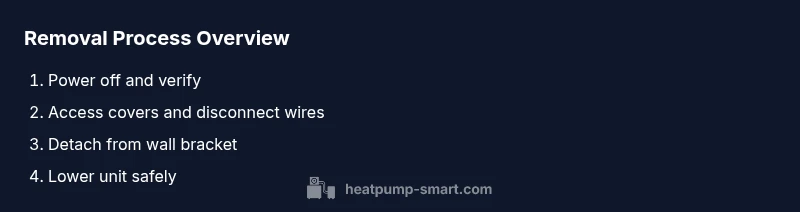
With the unit isolated and safely supported, you’ll approach removal in a structured sequence: unfasten exterior covers and access panels, label and disconnect wiring, detach from the wall bracket, and lower the unit to a safe staging area. Remember to communicate with your helper throughout and to recheck the environment after each detachment. This overview helps you stay organized and prevents accidental drops or miswiring. Heatpump Smart recommends performing a quick post-removal inspection to ensure the wall is clear of hex bolts, gasket residue, or sharp edges that could cause injury later.
Removing the unit from the wall and lowering safely
When you’re ready to detach the unit, confirm you have a stable two-person lift and a clear drop zone to avoid hitting windows or the ground. First, remove any remaining exterior fasteners and slide the unit slightly away from the mounting surface so you can access the bracket screws. Have your helper hold the unit’s base while you retract the screws and slowly lower the unit onto a protective mat or pallet. Inspect the mounting surface for damage as you go and set the unit aside on its temporary stand. Once removed, close up any openings or reseal the wall if you plan to leave the opening temporarily. This careful approach reduces the risk of injuries and wall damage.
Post-removal care and storage
After the heat pump is safely removed, take time to store the unit and hardware properly if you intend to reinstall later. Keep screws and brackets organized in labeled bags and photograph each step of the removal for future reference. If you’re planning a future replacement, consider sealing the wall opening to prevent drafts or water intrusion, then recheck brackets and wall studs for integrity. Clean the work area, dispose of any removed materials according to local guidelines, and document any wall repairs needed. By finishing with a tidy, documented space, you’ll streamline any future reinstallation and minimize ongoing maintenance issues.
Tools & Materials
- Safety gloves(Grip protection and cut resistance)
- Safety goggles(Eye protection from debris)
- Non-conductive pry tool(Use for delicate cover removal)
- Screwdriver set (Phillips and flat-head)(For screws on covers and brackets)
- Nut drivers(For bracket hardware)
- Pliers(Grip and twist wire nuts)
- Adjustable wrench(Loosen nuts and connectors)
- Voltage tester / multimeter(Verify power is off)
- Non-contact voltage tester(Quick checks without contacts)
- Ladder tall enough to reach unit(Stable access to height)
- Tape and labels(Label wires and connections)
- Wire nuts / electrical tape(Cap and insulate disconnected wires)
- Marker or camera smartphone(Record wire colors and layouts)
- Assistant/helper(Weight support and safety)
Steps
Estimated time: 45-75 minutes
- 1
Power off and verify
Locate the circuit breaker or disconnect for the heat pump and switch it OFF. Use a voltage tester to confirm there is no live current at the service panel or unit access point.
Tip: Lockout-tagout if possible and double-check with a tester before touching wires. - 2
Prepare the workspace
Clear the area, set up the ladder, and have your assistant ready. Place protective coverings on the ground and ensure footwear is dry and sturdy.
Tip: Keep a clear drop zone and avoid loose cords that could trip you. - 3
Access exterior cover and panels
Unscrew and remove the exterior cover to access mounting bolts and electrical connections. Keep screws organized and untouched for reinstallation.
Tip: Take photos of the interior layout before disconnecting anything. - 4
Label and disconnect wiring
Label each wire by function and color, then unscrew or unplug connectors. Cap exposed conductors with wire nuts and wrap with electrical tape.
Tip: Do not tug on wires; work at the connector and avoid friction on insulation. - 5
Detach from wall bracket
With two people, gently release the unit from the mounting bracket, keeping it level as you separate it from the wall.
Tip: Support the base while releasing top fasteners to prevent tilting. - 6
Lower to staging area
Lower the unit slowly onto a mat or pallet, ensuring no pinched fingers or impact with the ground.
Tip: Keep eyes on the path and communicate clearly with your helper. - 7
Inspect mounting area
Check the wall and studs for damage or looseness. If you reinstall later, consider reinforcing the opening and re-securing brackets.
Tip: Document any wall repairs needed for future reference. - 8
Store or prepare for reinstallation
Store hardware in labeled containers and keep the unit in a safe, dry location. If you plan to reinstall later, review local codes and permits.
Tip: Keep a reinstallation plan on hand in case you revisit the project.
Your Questions Answered
Do I need a professional to take a heat pump off the wall?
For most homeowners, removing the exterior unit is doable with proper planning and safety care. However, any work involving refrigerant lines or unknown wiring should be performed by a licensed technician. If you’re unsure about your skill level or encounter damaged components, hire a pro to avoid hazards.
In most cases, homeowners can remove the unit safely, but contact a licensed technician for refrigerant or wiring issues.
Is it safe to disconnect power myself?
Yes, after turning off the circuit breaker and verifying there is no electric current with a tester, you can proceed. Do not proceed if you see damaged insulation or exposed wires. Always confirm the power is fully off before touching any components.
Yes, once you’ve cut power and confirmed there’s no current, you can continue. If in doubt, wait and call a pro.
What about refrigerant lines—can I detach them myself?
Do not detach refrigerant lines yourself. Refrigerant handling requires licensed technicians and proper recovery equipment. Focus on disconnecting electrical connections, mounting brackets, and non-refrigerant components only.
Don’t try to disconnect refrigerant lines. It requires a licensed technician and proper recovery.
Will removing the unit affect future reinstallation?
Removing the unit typically preserves the option for reinstallation if you retain mounting hardware and keep track of wiring layouts. Follow a documented process and store all parts safely. You may need to update permits or comply with new codes when reinstalling.
Removing now can still allow reinstall later if you keep track of parts and codes.
How should I dispose of the old mounting hardware?
Dispose of hardware according to local regulations. If the bracket is still usable, set it aside for reuse; otherwise recycle metal components as permitted by your locality. Label and store small fasteners so nothing gets lost.
Recycle or reuse parts as allowed, and follow local disposal rules.
Watch Video
Top Takeaways
- Plan safety first before any removal.
- Isolate power and verify no live current.
- Label wires and document the layout for reinstallation.
- Do not disconnect refrigerant lines yourself.
- Use two-person lifting to prevent injuries.