What Do You Need to Install a Heat Pump: A Practical Guide
Learn the essential tools, permits, and steps to install a heat pump safely and efficiently. This Heatpump Smart guide covers site assessment, electrical work, refrigerant handling, and commissioning.


By following this guide, you’ll determine what you need to install a heat pump and complete a compliant, safe installation. You’ll gather essential tools, obtain local permits, and follow a step-by-step process for electrical work, refrigerant piping, duct connections, and system commissioning. This approach minimizes risk and ensures energy-efficient performance from day one.
What do you need to install a heat pump
Installing a heat pump starts with clear planning and the right mix of equipment, permits, and know-how. The direct question, what do you need to install a heat pump, has a straightforward answer: a structured approach that ensures safety, code compliance, and long-term efficiency. According to Heatpump Smart, the most successful installations begin with a site assessment, correct sizing, and a documented plan. This guide walks homeowners through the essentials so you can participate confidently, protect your investment, and avoid common pitfalls. You’ll learn how to verify space for outdoor and indoor units, prepare for electrical work, and coordinate with licensed technicians as needed. A well-prepared project reduces downtime and future service calls, while maximizing energy savings over the life of the system.
Prerequisites and site assessment
Before you buy equipment or hire help, perform a thorough site assessment. Determine load requirements using a recognized method, confirm climate considerations, and map sightlines for outdoor condenser placement. Check clearance from walls, doors, and vegetation, and plan duct routes and indoor unit locations. A proper assessment reduces cooling and heating imbalances and helps you select a system that fits your home’s layout and insulation. Keep notes of measurements, potential obstacles, and noise considerations to share with your installer. A thoughtful design reduces retrofit complexity and keeps installation on schedule.
Electrical, permits, and safety considerations
Electrical work and safety are critical for any heat pump install. Plan a dedicated 240V circuit with appropriate protection, install a local disconnect near the outdoor unit, and confirm grounding. Check local permitting requirements and ensure the project complies with building codes and manufacturer instructions. This stage is a good time to evaluate electrical panel capacity and future expansion needs. Safety should guide every decision, from lockout-tagout procedures to proper refrigerant handling and duct sealing. A compliant setup protects occupants and preserves warranty eligibility.
Tools, materials, and professional requirements
Gather essential tools and materials before you start. You’ll need a level surface for the outdoor unit, refrigerant lines and insulation, a compatible thermostat, ductwork components, and basic HVAC hand tools. Keep protective equipment on hand and ensure all materials match the unit’s specifications. Depending on your location, some tasks require a licensed technician for refrigerant work or electrical connections. Always verify local rules and follow manufacturer installation guides to maintain warranties.
Planning for permits, codes, and warranties
Permits and codes are not optional extras; they protect you and your home. Check local building departments for permit requirements, then prepare drawings or documentation your inspector may request. Review warranty terms to see what installation conditions must be met, such as professional refrigerant charging or system pressure tests. Planning ahead minimizes code violations and ensures your warranty remains valid after installation.
The installation journey: steps at a glance
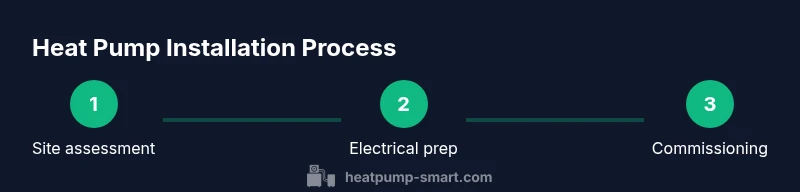
A heat pump installation is a staged project. Start with site assessment, secure electrical provisions, mount outdoor and indoor units, connect refrigerant lines and ducts, perform electrical and refrigerant tests, and complete commissioning. Each phase builds on the previous one, and timely inspections help catch issues early. The process benefits from clear communication with the installation team and a documented work log.
Tools & Materials
- Dedicated 240V circuit breaker and wiring(Size determined by unit nameplate; typical range 40-60A)
- Thermostat compatible with heat pump system(Smart/programmable model recommended)
- Refrigerant lineset and insulation(Match length to outdoor unit; use proper insulation)
- Outdoor condenser mounting pad or slab(Level surface with adequate drainage)
- Drainage components (condensate line, trap)(Ensure proper slope and trap as required)
- Electrical conduit, fittings, and sealant(Per code; use weatherproof connections)
- HVAC vacuum pump, gauges, and refrigerant scale(For evacuation and charging per service manual)
- Personal protective equipment (PPE)(Safety glasses, gloves, hearing protection)
- Duct sealing and insulation materials(Helpful for airflow efficiency)
Steps
Estimated time: 6-12 hours
- 1
Assess site and system layout
Evaluate the home’s floor plan, identify zones to heat or cool, and determine the best indoor and outdoor unit placements. Verify clearances from walls, doors, and vents, and map duct routes. This planning sets the foundation for efficient airflow and service access.
Tip: Capture measurements with photos and label each zone for future reference. - 2
Prepare electrical supply and safety disconnects
Plan and verify a dedicated 240V circuit with proper breaker rating. Install a local disconnect near the outdoor unit and confirm grounding. Shut off power during work and follow lockout/tagout practices.
Tip: Coordinate with an licensed electrician if you're not trained in electrical work. - 3
Mount outdoor unit and route refrigerant lines
Place the condenser on a level pad, secure mounting, and run refrigerant lines with proper bends and insulation. Keep lines protected from weather and ensure a clean, short run where possible.
Tip: Avoid sharp bends and ensure a straight, accessible path for service. - 4
Install indoor air handler and connect ductwork
Mount the indoor unit in the chosen location, connect refrigerant lines, condensate drain, and ensure duct connections are sealed and insulated. Check airflows and confirm access for future service.
Tip: Seal ducts with mastic or foil tape and test for leaks before charging. - 5
Electrical connections and thermostat integration
Wire the thermostat and control board according to the manufacturer diagram. Confirm power is off while wiring and test control signals after power is restored. Calibrate basic settings like mode, fan, and temperature limits.
Tip: Double-check wire colors and tighten connections to avoid arcing. - 6
Charge refrigerant and perform commissioning
Have the system evacuated and charged to the manufacturer’s specifications. Verify pressures, test cooling/heating, and balance airflow. Complete final inspections and ensure documentation is up to date.
Tip: Use accurate gauges and document final charge for warranty.
Your Questions Answered
Do I need a permit to install a heat pump?
Most jurisdictions require a building or mechanical permit for heat pump installations. Check local codes and submit drawings or specifications as requested. Permits help ensure safety and future resale value.
Yes, most places require a permit. Check with your local building department and follow the process.
Can a homeowner install a heat pump without a licensed technician?
Some simple parts of the installation may be doable by careful, informed homeowners, but refrigerant handling, electrical work, and system charging typically require licensed professionals. This protects safety and warranty.
DIY is limited; refrigerant and electrical work usually require a licensed pro.
What is required for proper refrigerant charging?
Refrigerant charging must follow the unit’s label and AHRI/industry standards, using calibrated gauges and correct pressures. Improper charging can damage the compressor or reduce efficiency.
Charging must follow manufacturer specs and codes; improper charging is risky.
How long does installation typically take?
A standard residential installation often spans 1-2 days, depending on home layout, ductwork changes, and permitting. Complex retrofits can take longer.
Most jobs take one to two days, with possible longer timelines for retrofits.
Do I need ductwork modification?
Ductwork should be assessed for leaks, size, and sealing. Improperly sized or leaky ducts reduce efficiency and comfort.
Yes, ductwork often needs balancing and sealing for optimal performance.
Watch Video
Top Takeaways
- Define layout before equipment selection.
- Electrical, refrigerant, and ductwork must meet code.
- Obtain required permits to protect warranties.
- Test and document system commissioning for performance.