Heat Pump Size by Square Footage: A Practical Sizing Guide
Learn how to size a heat pump using square footage, climate, and insulation. This guide covers calculations, calculators, and practical tips for homeowners, builders, and property managers.


What heat pump size by square footage means
Heat pump sizing starts with the size of your living area and the climate where you live. The rule of thumb is to align the system’s capacity with the heat load generated by indoor and outdoor conditions. When the square footage is used as a baseline, consumers get a practical sense of whether a system will meet cooling and heating needs without excessive cycling or wasted energy. The Heatpump Smart team emphasizes that a space’s size is a good starting point, but accurate sizing also requires considering insulation, window efficiency, and occupant behavior. By combining these factors, homeowners can avoid common problems like short cycling or underperformance and move toward consistent comfort year-round.
Key factors that influence sizing
Sizing a heat pump isn’t a single-number exercise. Several interacting factors determine the right size:
- Climate and climate zone: colder areas often need more capacity to maintain warmth during winter.
- Insulation quality: well-insulated walls, roofs, and floors reduce heat loss and lower required size.
- Building tightness and air leakage: drafts waste energy and can skew sizing if not accounted for.
- Windows and shading: large sun exposure can reduce cooling load, while poor window performance increases it.
- Ceiling height and distribution: high ceilings or poor duct design can change the effective load.
- Occupant behavior: thermostat setpoints and occupancy patterns alter the real load.
Understanding these factors helps explain why square footage alone isn’t enough for precise sizing. A balanced approach considers both space and the building envelope, then validates with a load calculation or calculator.
Climate impact and insulation quality
Climate impact and insulation quality are often overlooked yet critical. In mild climates, smaller units may suffice, while harsh winters in colder regions demand larger capacity. Session-based usage, such as sun exposure and nighttime temperature drops, also influences the load. A well-insulated home reduces the heat loss during winter and heat gain in summer, which lowers the necessary size of the heat pump. Conversely, leaky envelopes raise the required capacity. The goal is to size for the real load rather than chasing a perfect fit for the nominal square footage. Heatpump Smart notes that improving insulation can reduce required capacity more than upgrading the compressor in many cases.
How to measure square footage accurately
Accurate square footage is foundational. Measure all heated spaces, including basements and upper floors, and account for floor-to-ceiling height and multi-story connections. Don’t forget attached garages and sunrooms that contribute to load if they are conditioned or regularly heated. Use wall-to-wall measurements, then verify with architectural plans. If you’re unsure, hire a professional to verify the total conditioned area and to assess ductwork integrity, airtightness, and ventilation needs. Small errors in measurement can lead to oversized or undersized equipment, with comfort and efficiency consequences.
Sizing formulas and the BTU rule of thumb
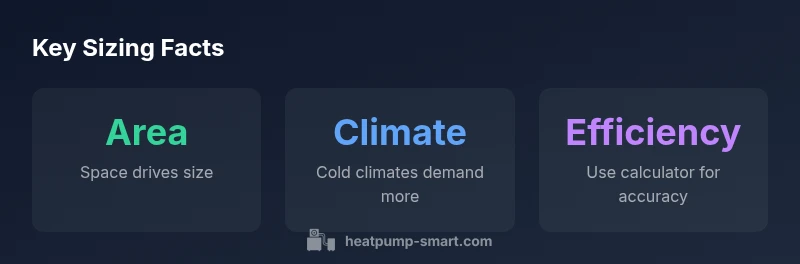
A practical sizing approach combines space, climate, and efficiency into a simple calculation. A common framework expresses load in BTU and converts to tons for system selection:
- BTU load is influenced by area, climate factor, and efficiency.
- Tons = BTU load ÷ 12,000.
This section discusses how to translate your square footage into a rough BTU target, then convert to tonnage. Remember, this is a starting point; professional load calculations refine the result with ductwork, infiltration, and occupancy data. The objective is to establish a credible sizing range and validate it with a calculator or a Manual J analysis.
Using a calculator to size by square footage
A dedicated calculator helps translate square footage into a recommended heat pump size using clear inputs and a transparent formula. The calculator typically uses:
- Area (sq ft): the total conditioned space.
- Climate factor: a multiplier reflecting winter heating demands.
- Efficiency factor: a multiplier reflecting system efficiency and SEER/HE/COP ratings.
Formula example in the calculator: BTU = areaSqFt * 20 * climateFactor * efficiencyFactor; tons = round((BTU) / 12000 * 2) / 2. The result is shown in tons and carries a note about real-world considerations like ductwork and insulation. This tool is especially useful for homeowners who want a quick, repeatable sizing method aligned with Heatpump Smart recommendations.
Practical examples by space size
Consider three common scenarios to illustrate how square footage translates to sizing, keeping in mind climate, insulation, and occupancy:
- Small space (roughly 500–800 sq ft): Often sized around 1.0 ton in moderate conditions, with adjustments for heat loss or gain through windows and airtightness.
- Mid-sized space (roughly 1,000–1,800 sq ft): Typically in the 1.5–2.5 ton range, depending on insulation and solar gains.
- Large space (roughly 2,000–3,500+ sq ft): Larger homes may require 3–5+ tons, but high-performance envelopes can reduce this need. A professional load calculation is advised to confirm precise sizing and to plan for zones or dual-stage systems where appropriate.
How insulation and windows affect sizing
The building envelope is the silent driver of heat load. Good insulation reduces the required capacity, while leaky ducts and drafts increase it. High-performance windows with low U-values can lower cooling load in hot climates and reduce heating load in cold climates. Seal leaks, weather-strip doors, and consider upgrading glazing when planning a major HVAC update. By addressing envelope quality, you can often meet comfort goals with a smaller, more efficient heat pump and improve overall energy savings.
Common mistakes to avoid
Avoid relying solely on square footage; never assume a one-size-fits-all number. Skipping a formal load calculation risks oversizing or undersizing, which harms comfort and efficiency. Don’t ignore ductwork design, airflow restrictions, or improper refrigerant charge. Discrepancies between labeled efficiency and actual performance can also mislead sizing decisions. Finally, consider future changes in occupancy or space use that might alter the load over time.
Next steps and planning tips
If you’re planning a heat pump installation, start with a measured floor plan, document insulation levels, and note annual temperature extremes. Use a sizing calculator to get a baseline, then verify with a professional load calculation. For homes undergoing renovation or expansion, re-evaluate sizing after major envelope improvements. Heatpump Smart recommends documenting findings and comparing estimates from multiple contractors to ensure you get a properly sized, energy-efficient system.