Where is Heat Pump: Practical Placement Guide for 2026
Learn where heat pumps belong in your home, with outdoor condenser placement tips, indoor air handler locations, and installation best practices for energy efficiency in 2026.


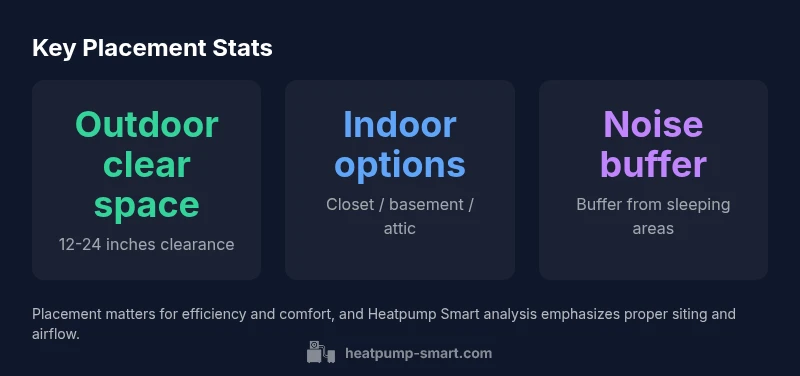
Where is heat pump typically located? A heat pump's outdoor condenser sits on a stable pad outside the home, usually against an exterior wall, with at least 12-24 inches of clearance for airflow and service access. Inside, the air handler or furnace space houses the indoor evaporator and duct connections. For ductless systems, indoor units mount on walls or ceilings.
Outdoor placement: the home’s exterior footprint
A heat pump outdoor unit belongs on a stable pad, typically on the home's exterior wall near a solid foundation. Place it away from doorways and parking areas to minimize debris intrusion and vibration transfer. Respect local codes for setbacks and ensure at least moderate airflow around the unit. Provide a level surface, with shade or a small cover to protect from direct sun where appropriate. The outdoor unit must be accessible for service, with clear space for seasonal maintenance. Consider nearby vegetation, irrigation, and snow drift risk in winter. Coordinate refrigerant line routing to keep maximum slope for condensate drainage and minimize line length to preserve efficiency. In colder climates, wind exposure and snow accumulation patterns should influence siting decisions. Heat pumps perform best when outdoor placement allows consistent airflow and predictable service access.
Indoor placement: where the air handler and ducts live
Indoor components live in a conditioned space or dedicated mechanical area. In a typical ducted system, the air handler sits in a closet, basement, or utility room with return and supply duct connections sized to balance airflow. Attic installations require insulation and ventilation to protect equipment and ensure efficient heat exchange. For ductless setups, indoor units mount on walls or ceilings in living zones to address comfort directly. Plan for filter changes, coil cleaning, and refrigerant piping routing, aiming to shorten line length and minimize sharp bends to reduce pressure losses. Proper indoor placement also keeps noise away from sleeping or reading rooms and reduces direct airflow on occupants.
Ducted vs. ductless: placement implications
Ducted systems use a central indoor air handler connected to a network of ducts, which means layout decisions center on duct routing, returns, and zoning. Ductless systems rely on individual indoor units near living zones, offering flexibility in retrofit and smaller homes. Each option has placement constraints: maintain adequate clearance around all equipment, ensure service access, and position units to optimize airflow paths. In retrofits, consider future expansion and the potential need to reconfigure ducts or add additional indoor units as spaces change over time.
Noise, climate, and regulatory considerations
Noise is a common concern with heat pump placement. Outdoor units generate compressor and fan noise that travels through walls and windows; siting away from bedrooms and providing buffering elements (fencing, landscaping) helps. In harsh climates, wind protection and snow considerations become important, especially in exposed yards. Compliance with local electrical and building codes is essential, including required setbacks and clearances around vents and combustible materials. Review manufacturer warranty requirements, as some installers must follow precise clearance guidelines to maintain coverage. A thoughtful siting plan reduces service calls and keeps performance high over the system’s life.
Getting ready for installation: a practical site assessment
Before installation, evaluate space for outdoor pad, electrical supply, refrigerant piping, and condensate drainage. Confirm access to a licensed installer, plan for seasonal variations in humidity, and determine the best indoor placement relative to living zones and return air paths. Create a simple schematic showing outdoor unit location, indoor air handler, duct routes (or ceiling/wall positions), and return-air flow. Conduct a practical site survey to minimize missteps, speed up installation, and improve overall performance and comfort.
Placement overview for heat pump configurations
| Aspect | Placement | Notes |
|---|---|---|
| Outdoor condenser | Exterior wall, on a concrete pad | Maintain airflow clearance and service access |
| Indoor air handler | Basement/utility closet or attic | Ensure proper duct connections and access |
| Ductless indoor units | Walls or ceilings in living zones | Place near target rooms for best comfort |
Your Questions Answered
Where should I place the outdoor heat pump unit?
Place the outdoor unit on a level pad outside, near an exterior wall, with adequate clearance for airflow and service access. Ensure the unit is away from direct foot traffic and protected from debris. Check local codes for setback requirements and maintain convenient access for maintenance.
Place the outdoor unit on a level pad outside near the exterior wall, with space for airflow and service access. Follow local setback rules and keep it accessible for maintenance.
Can heat pumps be installed indoors?
Standard air-source heat pumps require an outdoor condenser; indoor components are the air handler or ductless indoor units. Some configurations like ductless mini-splits place indoor units inside, but the outdoor condenser remains a core part of the system.
No, typical heat pumps need an outdoor condenser. Indoor units are part of ducted or ductless setups, but the outdoor unit is essential.
How far should the outdoor unit be from bedrooms?
Keep outdoor units away from bedrooms to minimize perceived noise. Follow local setback rules and use buffers like fencing or landscaping to reduce noise transmission.
Keep the outdoor unit away from bedrooms to reduce noise, and use buffers as allowed by codes.
Ducted vs. ductless: placement differences?
Ducted systems require space for ducts and a central indoor air handler, with routing focused on returns and supply lines. Ductless systems place multiple indoor units closer to living zones, offering flexibility for retrofit projects.
Ducted uses a central air handler and ductwork; ductless uses individual indoor units near living spaces.
What factors influence placement beyond noise?
Climate, wind exposure, snow load, shade, accessibility for service, and future expansion plans all influence siting decisions. A site survey helps balance performance, comfort, and maintenance needs.
Climate, wind, snow, shade, and future plans all shape where you place a heat pump.
“Placement decisions directly affect heat pump performance, efficiency, and long-term reliability. A thoughtful site assessment upfront saves energy and reduces service calls.”
Top Takeaways
- Place outdoor units on a level pad with clear airflow
- Choose indoor space that supports returns and duct routing
- Ducted vs. ductless affects layout and flexibility
- Prioritize noise reduction and service accessibility
- Plan installations with future expansion in mind