Frozen Heat Pump Troubleshooting: Quick Fixes and Safe Steps
Urgent guide to diagnose and fix a frozen heat pump quickly. Learn thaw steps, airflow checks, defrost issues, and when to call a licensed pro to protect comfort and efficiency.


A frozen heat pump is usually caused by ice buildup from restricted airflow or a defrost failure. Thaw the outdoor unit, clear debris, check thermostat settings, and verify the condensate drain. If the frost returns, contact a licensed HVAC tech for a professional assessment.
Why a Frozen Heat Pump Happens
According to Heatpump Smart, frost forms when outdoor airflow is blocked or the defrost cycle fails, causing ice to accumulate on the outdoor coil. In cold weather, even small obstructions—like snow buildup, leaves, or a blocked grille—can tip the balance toward frost. A frozen heat pump struggles to extract heat from the outside air, making indoor temps drop and the system work harder, which wastes energy and increases costs. Understanding the common drivers helps homeowners act fast without risking safety or equipment damage. Regular maintenance and timely airflow checks are your best defense against recurring icing. Heatpump Smart analysis shows that the two most frequent culprits are restricted airflow and a malfunctioning defrost sensor or timer. By addressing these, you can often thaw and restore normal operation without professional intervention.
Key takeaway: Frost is a symptom of an airflow or defrost issue, not a standalone fault. Begin with the simplest checks before diving into complex repairs.
Immediate Signs of Ice Buildup
When a heat pump freezes, you’ll notice visible ice on the outdoor unit, reduced output from the indoor vents, and a longer run time as the system tries to meet your set temperature. Some systems run through a defrost cycle, but if that cycle fails, ice will accumulate quickly. Listen for unusual noises from the outdoor unit, such as grinding or screeching, which can indicate a blocked fan or debris. If you have a thermostat that shows auxiliary heat or emergency heat engaging frequently, it can signal the heat pump is struggling to reach temperature due to icing. Early detection helps you thaw safely and prevents compressor damage. Heatpump Smart recommends acting quickly but safely to avoid further ice buildup and potential refrigerant issues.
Tip: Check for ice accumulation during routine outdoor inspections after storms or heavy snowfall.
Common Causes of Freezing
There are multiple pathways to a frozen heat pump. The most common cause is restricted airflow due to a dirty filter, blocked outdoor grille, or debris around the outdoor unit. A second frequent cause is a malfunctioning defrost control or sensor, which prevents the outdoor coil from shedding ice during cold cycles. Less common but serious causes include refrigerant leaks leading to improper pressure and freezing, or thermostat missettings that bypass the heat pump’s defrost process. By methodically evaluating these possibilities, you can identify the root cause without unnecessary repairs. Heatpump Smart emphasizes checking airflow first, then defrost function, and finally refrigerant status if icing persists.
Note: Do not ignore ice; prolonged icing can cause compressor damage and reduce heat output even when temperatures rise.
Safety First: What Not to Do
Never chip or hammer ice off the outdoor coil; you can bend fins and puncture refrigerant lines. Avoid running the unit if a thick layer of ice is present, as this can strain the compressor. Don’t use high-pressure water or harsh chemicals to remove ice; these can damage components and void warranties. If water splashes into electrical connections, it can create a shock risk. Always cut power at the breaker before inspecting or touching any part of the system. If you suspect a refrigerant leak, do not attempt a DIY repair—refrigerant handling requires a licensed technician.
Safety tip: Turn off power to the outdoor unit before any inspection.
Safe, Quick Checks You Can Do Today
To start, turn off the heat pump at the thermostat and at the outdoor disconnect to thaw ice safely. Clear the outdoor area of snow, leaves, and other debris blocking airflow. Inspect the indoor air filter and replace if dirty. Ensure the outdoor unit is free of snow and obstruction and that surrounding vegetation isn’t blocking airflow. After thawing, slowly restore power and monitor if the defrost cycle runs normally. If ice returns within 24 hours, you likely have a defrost or refrigerant issue that requires a professional.
Important: Only perform checks you’re comfortable with; when in doubt, call a pro promptly.
Preventive Maintenance to Avoid Future Freezes
Schedule seasonal maintenance to keep coils clean and airflow unobstructed. Replace indoor filters every 1-3 months during heating season, depending on use and household conditions. Keep the outdoor unit clear of snow and debris and trim nearby vegetation. Inspect for ice buildup during cold snaps and perform a quick outdoor visual check after storms. A proactive maintenance routine reduces the likelihood of icing and helps your heat pump operate at peak efficiency. Heatpump Smart recommends annual professional inspections to catch issues like blocked coils or faulty defrost controls before they cause a freeze.
Takeaway: Regular maintenance and prompt attention to early signs dramatically reduce icing incidents and energy waste.
When to Call a Professional
If the outdoor unit remains frosted after thawing, or ice recurs frequently, contact a licensed HVAC technician. Ongoing icing can indicate a refrigerant leak, a failing defrost control, or a clogged coil that requires specialized tools and refrigerant handling. A tech can perform a leak test, verify refrigerant charge, inspect electrical connections, and test the defrost system. For homeowners, warm seasons—like spring—are ideal for scheduling such service before winter returns. In urgent situations, if you smell refrigerant or hear buzzing from the unit, call emergency service immediately.
Bottom line: When in doubt, seek professional help to prevent damage and ensure safe, reliable operation.
Steps
Estimated time: 45-75 minutes
- 1
Power down and secure area
Turn off the heat pump at the thermostat and shut off the outdoor disconnect. This prevents startle shocks and lets ice thaw safely. Clear people and pets from the area, and gather safety gear such as gloves. Allow 15-30 minutes for initial thawing before inspection.
Tip: Never poke ice with tools; you may damage fins or refrigerant lines. - 2
Check airflow and outdoor unit
Inspect the outdoor unit for snow, leaves, or ice buildup around the grille. Remove obstructions carefully and ensure fins are not bent. Verify that the indoor air filter is clean and that there is unobstructed airflow to the indoor unit.
Tip: Keep at least 2 feet of clearance around the outdoor unit. - 3
Inspect defrost function
If safe to access, listen for the defrost cycle and check for ice on the outdoor coil. A non-functioning defrost control often causes repeated icing. Reset the thermostat if needed and ensure the system is in heat mode.
Tip: If the defrost board or sensor seems faulty, do not attempt repairs—call a pro. - 4
Thaw and test
Restore power after thawing and run the system in heat for 15-20 minutes. Check indoor temperatures and outdoor coil for new ice formation. If frost forms again quickly, stop the test and seek professional diagnosis.
Tip: Document symptoms and times to share with the technician. - 5
Plan professional evaluation
If icing recurs or there’s suspected refrigerant loss, contact a licensed HVAC technician for leak checks and defrost system repair. Schedule a service window during milder weather if possible.
Tip: Professional checks may include refrigerant testing and electrical inspection.
Diagnosis: Outdoor frost on the heat pump and reduced indoor heating performance
Possible Causes
- highRestricted airflow from dirty filter, blocked grille, or debris around outdoor unit
- highDefrost cycle not activating due to sensor/tan issue or control fault
- mediumLow refrigerant pressure from a leak
- lowThermostat settings bypassing defrost or emergency heat engaged
Fixes
- easyTurn off at thermostat and disconnect power to thaw safely; clear outdoor area and replace indoor filter if dirty
- easyInspect outdoor grille for obstructions and clean fins; ensure no debris blocks airflow
- hardIf frost persists after thaw, schedule professional refrigerant check or defrost system inspection
Your Questions Answered
What causes a heat pump to freeze up?
Ice buildup usually results from restricted airflow or a malfunctioning defrost cycle. Other factors include refrigerant leaks and thermostat issues. Identifying the root cause helps determine whether a thaw is enough or a repair is needed.
Ice buildup usually comes from blocked airflow or a failing defrost cycle. Leaks or thermostat issues can also cause icing. Identifying the cause helps decide between a thaw or a repair.
Is a frozen heat pump dangerous?
A frozen heat pump isn’t immediately dangerous, but prolonged icing can damage the compressor and reduce efficiency. Avoid attempting risky DIY refrigerant work and call a pro if icing recurs.
A frozen heat pump isn’t instantly dangerous, but it can damage components if it persists. Don’t try refrigerant work yourself—call a pro if it keeps icing.
Can I thaw ice without turning off the system?
It’s safer to power down and thaw manually to prevent electrical shorts or damage. After thawing, test the system in stages and monitor ice formation.
Safer to power down and thaw manually. Then test gradually and watch for new ice.
How long does a defrost cycle take?
Defrost cycles vary by model, but most complete within 5-15 minutes. If ice returns after defrost, the system may have a defrost control fault or refrigerant issue.
Defrost usually takes 5-15 minutes. If ice returns, you likely have a defrost control fault or refrigerant issue.
Should I call a technician for a frozen heat pump?
Yes, especially if icing recurs after thaw or you notice refrigerant scent or audible faults. A licensed HVAC tech can diagnose leaks, test pressures, and repair defrost controls.
If icing recurs or you smell refrigerant or hear faults, call a licensed HVAC tech for a proper diagnosis.
How can I prevent freezing in cold climates?
Keep filters clean, clear the outdoor unit, schedule regular maintenance, and ensure proper thermostat settings. Pre-winter checks help prevent ice buildup and energy waste.
Prevent icing by keeping filters clean, clearing the outdoor unit, and scheduling maintenance before winter.
Watch Video
Top Takeaways
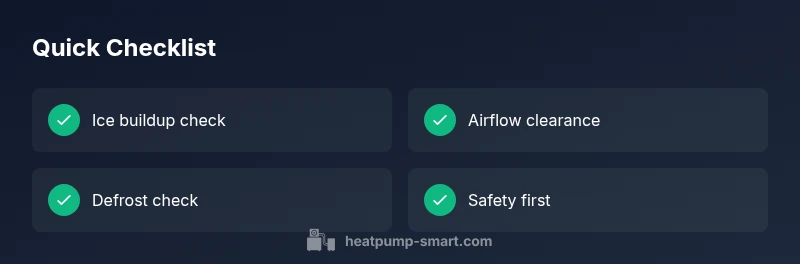
- Identify ice buildup as a sign of airflow or defrost failure
- Prioritize outdoor area clearance and filter health
- If icing recurs, a refrigerant check may be required
- Never DIY refrigerant work—call a licensed pro
- Maintain a seasonal maintenance routine to prevent freezes