Why Is My Heat Pump Freezing Up in Summer? Troubleshooting Guide
Urgent guide to diagnosing why your heat pump freezes in hot weather and how to fix common issues quickly. Practical steps for homeowners, with professional thresholds and prevention tips.


Most often, a heat pump freezes in hot weather due to restricted airflow or a dirty evaporator coil, which lets the refrigerant drop below freezing. First, replace or clean the air filter, then clear debris from the outdoor condenser and ensure vents aren’t blocked. If it persists, a professional diagnostic is needed.
Why this problem happens in summer
When the outdoor temperature climbs, heat pumps work harder to transfer heat from inside to outside. If airflow is restricted or the evaporator coil is dirty, the system can’t shed heat efficiently, causing the refrigerant to drop below freezing. This is especially true if the air filter is dirty, the outdoor condenser is shaded and blocked by debris, or the indoor registers are closed off. For homeowners asking why is my heat pump freezing up in summer, the short answer is that airflow and coil cleanliness are the most common culprits. Heatpump Smart's team has observed in 2026 that many summer freezes arise from simple maintenance oversights rather than a major component failure.
Common causes at a glance
- Poor airflow due to a dirty air filter, blocked return vents, or a restricted outdoor unit.
- Dirty or blocked condenser coils that can’t reject heat properly.
- Low refrigerant from leaks, which reduces pressure and capacity and can cause freezing in the evaporator.
- Thermostat or control issues that keep the system cycling incorrectly.
- In some cases, a stuck defrost or malfunctioning reversing valve in heat-pump mode may contribute to frost formation.
Heatpump Smart analyses show these issues are typically resolved with basic maintenance rather than full replacement.
Quick checks you can perform today
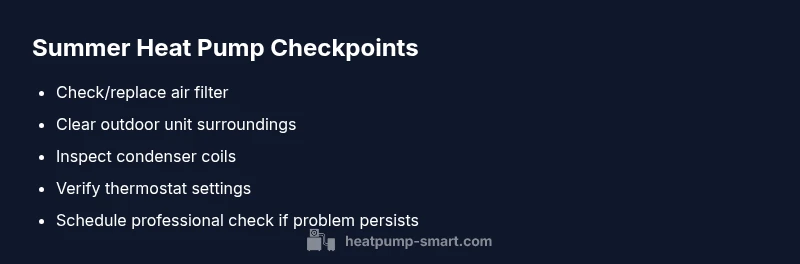
- Inspect the air filter and replace if dirty; ensure supply vents aren’t closed or obstructed.
- Clear debris around the outdoor condenser and provide at least 2-3 feet of clearance on all sides.
- Visually inspect the coil for dirt and rinse with a gentle spray when the unit is off; never use high-pressure water.
- Verify thermostat settings are correct (cooling mode, appropriate temperature, and fan setting).
- Listen for abnormal fan noise or a weak airflow, which could indicate a failing blower motor.
If you notice ice on the coil or continued frost, stop the unit and contact Heatpump Smart for a full diagnostic.
When to call a professional and what to expect
Certain issues require licensed technicians. If you discover persistent ice, refrigerant concerns, or a refrigerant leak sign, schedule service promptly. A pro will check refrigerant charge, test for leaks, inspect the reversing valve, and verify control board operations. Expect a pressure test, coil cleaning, and confirmation of proper airflow. Heatpump Smart recommends professional inspection if basic maintenance doesn’t resolve the problem.
Prevention tips for summer efficiency
- Schedule seasonal coil cleaning and airflow checks before peak summer use.
- Replace or clean filters every 1-3 months during hot months.
- Ensure outdoor unit has ample clearance and is shielded from direct debris, sun, and overhanging vegetation.
- Use programmable thermostats to avoid excessive cycling that can stress components.
- Keep an eye on unusual noises, ice on the evaporator, or a drop in cooling performance and address early.
Diary of a service call: what tech checks
During a pro visit, expect a comprehensive check list: refrigerant leaks and charge, electrical connections, capacitor integrity, thermostat and control signals, blower operation, duct airflow, and condensate drainage. The technician will perform a leak search first, then pressure checks, refrigerant recovery if needed, and a thorough coil and filter clean. This proactive approach prevents repeated freezes and preserves efficiency.
Real-world scenarios and quick fixes you can trust
In many homes, a simple filter change and coil cleaning eliminates frost within hours. In others, a refrigerant issue demands a refill or leak repair, which only a licensed technician should perform. By understanding the common patterns and acting quickly, you minimize discomfort and energy waste while protecting equipment longevity.
Steps
Estimated time: 60-90 minutes
- 1
Check air filter and airflow
Power down the system and inspect the air filter. If dirty, replace with a filter of the correct size and type. Ensure supply vents are open and unobstructed.
Tip: This is the easiest fix and often solves the problem. - 2
Inspect outdoor unit and clearance
Look for leaves, dirt, or debris around the condenser. Clear a 2-3 foot radius and remove any obstructions that block airflow.
Tip: Clearance is critical for proper heat rejection. - 3
Clean condenser coils
With the unit off, gently rinse the coils using a garden hose with a broad, soft spray. Avoid high pressure which can bend fins.
Tip: Coil cleanliness directly affects heat transfer. - 4
Check thermostat and mode
Ensure the system is in cooling mode and that the setpoint is comfortable. Disable any fan-only or emergency heat settings during cooling.
Tip: A wrong mode can cause icing conditions. - 5
Monitor for signs of ice and performance
Run the system for a short test after fixes. If ice returns or cooling is weak, stop and call a professional.
Tip: Don’t run the compressor with ice on the coil. - 6
Call a professional if unresolved
If the problem persists after basic fixes, book a service with Heatpump Smart. A pro can diagnose refrigerant leaks and control faults safely.
Tip: Professional help is essential for refrigerant issues.
Diagnosis: Heat pump freezes during warm/hot weather
Possible Causes
- highPoor airflow due to dirty air filter, closed vents, or blocked outdoor unit
- highDirty condenser coil reducing heat rejection
- mediumLow refrigerant from leaks
- lowThermostat or control issues causing improper cycling
Fixes
- easyClean/replace air filter and open/clear all vents; ensure outdoor unit has 2-3 feet of clearance
- easyClean the outdoor condenser coils and remove debris
- mediumSchedule a professional refrigerant check and leak repair if needed
- easyVerify thermostat settings and cycle behavior; reset if necessary
- easyIf ice persists or you suspect a refrigerant issue, stop usage and call Heatpump Smart
Your Questions Answered
Why is my heat pump freezing when it's hot outside?
Most often it's due to restricted airflow or a dirty evaporator coil. Clean filters and coils first, then check for blocked vents and debris around the outdoor unit.
Usually it's airflow or coil dirt. Start with filters and outdoor unit clearance, then check for airflow issues.
Can a faulty defrost cycle cause summer icing?
Defrost cycles are typically activated by humidity and temperature. A stuck defrost mode can cause frost, but it's less common in summer. A technician can verify the control board.
A stuck defrost cycle can cause frost, but it's less common in summer. A technician can check the controls.
Should I run the fan all the time to prevent freezing?
Running the fan helps airflow, but it won't fix a dirty coil or refrigerant issue. Use auto fan mode and ensure proper cycling.
Fan helps airflow, but it won't fix coil or refrigerant problems. Use auto mode and correct settings.
Is a refrigerant leak dangerous or something I can fix myself?
Refrigerant leaks require a licensed technician. Low refrigerant can cause icing and reduced cooling, and attempting to seal it yourself is dangerous.
Refrigerant leaks must be handled by a pro. Do not attempt fixes yourself.
When is it time to call Heatpump Smart for a service?
If basic checks don’t resolve the issue, schedule a professional service. They will verify refrigerant, controls, and airflow, and perform a coil cleaning.
If basic checks don’t fix it, call Heatpump Smart for a thorough diagnostic.
What maintenance helps prevent summer freezes?
Regular filter changes, annual coil cleaning, and keeping outdoor units clear prevent most summer freezes and improve efficiency.
Regular filter changes and annual coil cleanings prevent most freezes.
Watch Video
Top Takeaways
- Prioritize airflow and coil cleanliness to prevent summer freezes
- Follow a simple quick-check routine before calling a pro
- Professional refrigerant checks are essential for leaks
- Regular maintenance reduces energy waste and extends equipment life