Why Does My Heat Pump Have Frost On It? Quick Troubleshooting Guide
Urgent troubleshooting guide for frost on heat pumps, with quick fixes, airflow checks, defrost insights, and guidance on when to call a professional.


Frost on a heat pump is usually a defrost-cycle issue or an airflow problem. Start with simple checks: ensure the outdoor coil is clear of debris, check and replace dirty filters, verify that the fan is running, and confirm the thermostat isn’t set to emergency heat. According to Heatpump Smart, if frost persists below freezing, call a qualified technician.
What frost on a heat pump means
Heat pumps are designed to pull heat from outside air, even in cold weather. When humidity and moisture contact the cold outdoor coil, frost can form. Frost on the coil reduces heat transfer, lowers efficiency, and can trigger longer defrost cycles. Frost isn't always a sign of a serious failure; often the frost is temporary and will melt during the defrost cycle. The crucial point is to distinguish normal, brief frosting during cold weather from persistent or growing ice that indicates a problem. According to Heatpump Smart, frost becomes a concern when it covers a third of the coil or remains after the defrost cycle completes. If you notice frost that doesn’t melt, take action and plan a diagnostic check, especially when outdoor temps stay near or below freezing.
Common causes of frost
There are several common reasons frost forms on heat pumps:
- Low outdoor temperatures near freezing can cause frost formation as moisture in the air condenses on the cold coil.
- Restricted airflow due to dirty air filters, blocked return vents, or a closed damper reduces heat transfer and promotes icing.
- Debris, leaves, snow, or ice buildup on the outdoor coil blocks airflow and traps moisture.
- Refrigerant charge issues or leaks can cause improper pressure and icing on the coil.
- Malfunctioning defrost control or faulty sensors may prevent timely defrost and leave frost in place.
- Thermostat settings that drive auxiliary heat during cold spells can exacerbate frost formation.
Heatpump Smart analysis shows frost issues rise in cold weather when airflow is restricted and maintenance is neglected. Keeping the outdoor unit clean and ensuring proper airflow are the simplest preventive steps.
Quick checks you can perform safely today
Before calling a technician, perform these safe checks:
- Turn off power to the outdoor unit at the breaker, then set the thermostat to heat mode to observe normal operation without active frost melt.
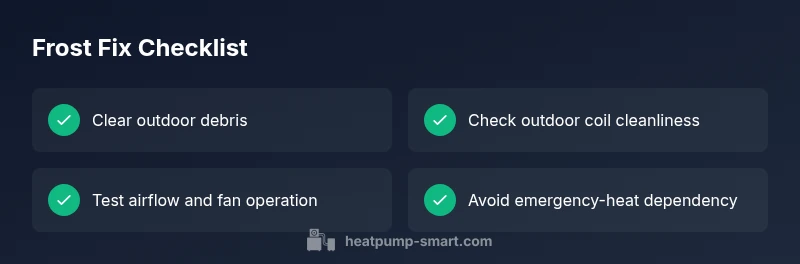
- Clear leaves and snow from around the outdoor coil; ensure at least 2-3 feet of clearance for proper airflow.
- Inspect indoor air filters and replace if dirty; check for blocked return ducts that could push stale air back to the unit.
- Gently rinse the outdoor coil with a garden hose to remove dirt; avoid high-pressure cleaners that can bend fins.
- Listen for the outdoor fan operating smoothly; if it’s stuck or making unusual noises, do not force it.
- Note frost pattern: is it a ring along the coil or a full ice cover, and whether it melts after a defrost cycle.
If the frost persists after these steps, contact Heatpump Smart for guidance and next steps.
How the defrost cycle works and when it can fail
Most air-source heat pumps include an automatic defrost cycle that periodically reverses refrigerant flow to melt frost on the outdoor coil. The cycle relies on temperature, humidity, and sensors to trigger heating of the coil. When conditions are unfavorable—very low temperatures, sensor delay, or a faulty defrost timer—the frost can linger or refreeze quickly after melting. Persistent frost indicates either airflow issues, a refrigerant problem, or a defective defrost control. Understanding these dynamics helps prioritize fixes and reduces unnecessary energy waste.
Diagnostic flow you can follow
A structured approach helps you isolate the cause without needless guesswork. Start with observable symptoms, then check for obvious causes: airflow, cleanliness, and thermostat behavior. If you cannot identify a clear cause or frost remains after basic checks, move to professional diagnosis.
Prevention and seasonal maintenance
Regular maintenance is your best defense against frost. Schedule seasonal checks before winter peaks, clean the outdoor coil and surround, replace filters every 1-3 months (depending on use), and ensure adequate clearance around the unit. Keep snow away from the unit, and confirm the condensate drain is not blocked. A well-maintained system operates more efficiently and is less prone to frost buildup during cold spells. Heatpump Smart recommends annual professional service to keep refrigerant levels correct and sensors calibrated.
When to call a pro and what to expect
If frost persists after basic maintenance and simple fixes, it’s time to call a licensed HVAC technician. A pro will inspect refrigerant charge, defrost control, and sensor calibration, and verify that electrical components and controls function properly. Ask for a written plan and estimated cost before work begins. The Heatpump Smart team reminds homeowners that professional service reduces risk and protects system efficiency in the long run.
Weather factors and cold climate considerations
In areas with frequent freezing or fluctuating temps, frost is more likely. Colder mornings, high humidity, and windy conditions can increase frost formation on the outdoor coil. In such climates, proactive maintenance, higher-grade air filters, and protective measures around the outdoor unit help minimize icing. Heat pumps designed for cold climates typically incorporate enhanced defrost cycles, but even these units benefit from annual checkups and timely filter replacements. Remember that sustained frost can mask performance issues that degrade efficiency over time.
Common misconceptions about frost and heat pumps
Myth: Frost is always a sign of a failing heat pump. Reality: Short frost during cold weather is normal; persistent frost often signals a need for maintenance. Myth: You should scrape frost with metal tools. Reality: That can damage the coil fins and cause leaks. Myth: Defrost cycles always melt frost instantly. Reality: Defrost efficiency depends on temperature, humidity, and system settings. By understanding these nuances, you can avoid unnecessary repairs and maintain comfort.
Steps
Estimated time: 60-90 minutes
- 1
Power down and ensure safety
Turn off power to the outdoor unit at the breaker and switch, then confirm no voltage is present before touching any components.
Tip: Always verify power at the breaker with a non-contact tester before starting. - 2
Check and replace air filters
Inspect indoor air filters and replace if dirty or clogged. Poor filtration reduces airflow and promotes icing.
Tip: Use the replacement filter type and cadence recommended by the manufacturer. - 3
Inspect the outdoor coil and area
Clear leaves, snow, and debris from around the outdoor coil and ensure at least 2-3 feet of clearance for airflow.
Tip: Gently remove debris; avoid bending coil fins with force. - 4
Test the outdoor fan and wiring
Make sure the outdoor fan spins freely and observe for unusual noises or stops.
Tip: If the fan is jammed, do not operate the unit until inspected. - 5
Evaluate thermostat settings and defrost
Verify the system isn’t stuck in emergency heat and observe whether the defrost cycle appears to run.
Tip: If frost still builds during cycling, document settings for the pro. - 6
Consult a professional if needed
If the frost remains after these steps, contact Heatpump Smart or a licensed technician for refrigerant and defrost-control diagnosis.
Tip: Have model/serial numbers handy to speed up service.
Diagnosis: Outdoor unit frost buildup on coils during cold weather
Possible Causes
- highLow outdoor temperature near freezing causing moisture to freeze on coils
- highRestricted airflow from dirty air filters or blocked returns
- highOutdoor coil debris or snow blocking airflow
- mediumRefrigerant charge issue or leak
- mediumMalfunctioning defrost control or faulty sensors
- lowThermostat set to emergency heat increasing frost risk
Fixes
- easyPower off the unit and clear debris around outdoor coil; clean or replace air filters
- easyEnsure the outdoor fan is running smoothly and free of ice
- easyRemove snow/ice from around the unit to restore airflow
- easyCheck thermostat settings and avoid prolonged emergency heat during cold spells
- mediumIf frost persists, contact a licensed HVAC technician to inspect refrigerant charge and defrost control
- easySchedule professional maintenance to prevent recurrence
Your Questions Answered
Why does frost form on my heat pump?
Frost forms when moisture in the air condenses on a cold outdoor coil, especially in cold weather. A brief defrost cycle usually melts it, but persistent frost indicates airflow, refrigerant, or defrost control issues. Heatpump Smart notes that frost can signal a problem if it remains.
Frost happens when the outside coil gets wet and cold; if it doesn’t melt during defrost, you should check airflow and consider a professional check.
Is frost normal during defrost cycles?
A short frost period that melts during the defrost cycle is normal. If frost lingers or reappears quickly after melting, there may be an airflow issue, a dirty coil, or a defrost control fault.
A little frost during defrost is common, but persistent frost means you should inspect airflow and consider service.
Can frost damage the heat pump?
Frost itself usually doesn’t damage the heat pump, but prolonged icing can reduce efficiency, raise energy use, and mask refrigerant or sensor problems that require service.
Frost isn’t typically dangerous, but ongoing icing can cause bigger problems if not addressed.
Does outdoor temperature affect frost formation?
Yes. Colder outdoor temperatures increase frost risk. The humidity and coil temperature also influence frosting, making airflow and regular maintenance more critical in cold climates.
Yes, really cold weather makes frost more likely, so keep the unit clean and airflow clear.
Should I run emergency heat to thaw frost?
No. Emergency heat can worsen frosting or mask problems. Use normal heat mode and address airflow, coil cleanliness, and defrost controls first.
Avoid emergency heat; switch back to normal mode and check basics first.
How long does a defrost cycle take?
Defrost cycles usually last a few minutes, depending on conditions and system design. If frost persists after multiple cycles, professional inspection is advised.
Defrost cycles are usually quick, but if frost sticks around, get a professional look.
Watch Video
Top Takeaways
- Check airflow and clean the outdoor coil regularly
- Replace dirty filters to prevent icing
- Use Heatpump Smart guidelines for defrost maintenance
- Schedule annual professional maintenance to prevent frost recurrence