Heat Pump Short Cycling: Quick Troubleshooting Guide
Learn how to diagnose and fix heat pump short cycling. This expert guide from Heatpump Smart covers common causes, quick fixes, and prevention to protect comfort and efficiency.


Short cycling happens when the heat pump starts and stops frequently, which wastes energy and wears components. Common causes include airflow problems, a dirty filter, thermostat or sensor misreadings, improper charge, or oversized equipment. According to Heatpump Smart, begin with quick checks: clean or replace filters, verify thermostat settings, and ensure outdoor unit has clear airflow. If cycles continue, call a pro.
Understanding the symptom: heat pump is short cycling
Short cycling is more than an annoyance; it undermines energy efficiency, comfort, and equipment life. When a heat pump is short cycling, it turns on and off rapidly rather than running through normal heating or cooling cycles. This behavior often indicates an underlying problem that needs attention, because frequent starts place extra stress on compressors and motors. From the homeowner’s perspective, recognizing this symptom early helps prevent higher utility bills and premature component wear.
In many homes, the heat pump is short cycling due to simple, addressable issues: clogged filters, restricted air paths, thermostat misreadings, or a system that has been sized or charged incorrectly. The Heatpump Smart team emphasizes that you should not ignore early warning signs. Addressing the problem promptly can restore comfort and efficiency, and it gives you a clear path toward a longer-lasting system. In the following sections, you’ll learn how to diagnose and fix the most common causes, with steps you can safely perform before you call a technician.
Common Causes Behind Short Cycling
The root causes of heat pump short cycling vary by home, climate, and equipment. Here are the most frequent culprits to inspect first:
- Airflow restrictions: blocked return vents, closed dampers, or a dirty air filter reduce airflow, triggering the system to shut off early.
- Thermostat or sensor issues: miscalibrated thermostats or faulty temperature sensors can cause the system to think the indoor temperature has reached the setpoint when it hasn’t.
- Improper refrigerant charge: undercharged or overcharged refrigerant affects pressure balance, causing short cycles and poor heat transfer.
- Incorrect sizing or aging equipment: an oversized unit will short cycle in heating or cooling modes, while an aging compressor may struggle to sustain a steady cycle.
- Defrost misfunction (for heat pumps with air-source systems): in cold weather, faulty defrost controls can cause rapid cycling while waiting for defrost.
Note: In some cases, electrical problems or duct leaks can also contribute to short cycling, though these are less common. Address each cause with a methodical approach to determine what’s happening in your system.
The Role of Airflow and Filters
Airflow is the lifeblood of a heat pump. When air cannot move freely, the system can overheat on the cooling cycle or fail to reach the desired temperature, which prompts the thermostat to shut the unit off early. A clogged filter, dirty coil, or blocked return air path reduces volume and impedes heat exchange. In addition, leaky ducts or undersized plenums can create pressure losses that mimic a restricted exhaust, triggering a short cycle. Start by inspecting and cleaning the filter or replacing it if dirty. Then check that supply and return registers are open and unobstructed. If you have a residential heat pump with a dedicated air handler, ensure that the blower wheel is clean and that the fan is running smoothly. By ensuring robust airflow, you reduce the likelihood of rapid cycling and restore consistent operation.
Thermostat and Sensors: Are They Reading Right?
Thorough thermostat setup is essential to prevent short cycling. A miscalibrated thermostat might misread room temperature, causing the system to start or stop based on faulty data. Poor wiring, loose connections, or a dead battery in a wireless thermostat can contribute to erratic cycling. Some older thermostats lack adaptive recovery features or humidity sensing, which can complicate the heating or cooling cycle. Replacing an outdated thermostat with a modern, Wi‑Fi-enabled model often resolves many cycling issues. If the sensor is inside the thermostat or in the indoor air-handling unit and reads wrong, the system will misinterpret the actual room temperature. Calibrate or replace the sensor as needed, and verify that the thermostat's temperature readings align with a separate room thermometer.
Refrigerant Charge and Equipment Size
An improper refrigerant charge is a common culprit behind short cycling. If the system is undercharged, the heat pump may not maintain adequate pressure, leading to short bursts of operation. Overcharging can cause high head pressure and short cycling as the compressor fights to manage the surplus. Both situations demand precise measurement with professional tools. Similarly, a unit that is oversized for the space tends to short cycle because it reaches the setpoint too quickly and shuts down before removing a meaningful amount of heat or cooling. In either case, a certified technician should check charge levels and confirm that the system is correctly sized for the dwelling. The goal is steady, balanced operation across all operating modes.
Outdoor Unit and Defrost Cycles
For heat pumps that operate outside, weather and frost conditions can influence cycling behavior. In freezing conditions, the defrost cycle runs intermittently, which can resemble short cycling if it happens frequently. A malfunctioning defrost control, a stuck defrost timer, or dirty outdoor coils can cause the system to alternate between heating and defrost modes more often than necessary. Check the outdoor coil for ice buildup and ensure the fan is spinning freely. If you notice frequent defrost cycles that interrupt comfortable heating, a service visit may be required to recalibrate defrost timing or address frost-related issues. In mild climates, improper defrost timing can still disrupt cycle length and overall efficiency.
Quick Fixes to Try Today
Before calling a service technician, perform a few safe, reversible checks. These steps solve many instances of heat pump short cycling and buy you time while you gather information for a professional visit:
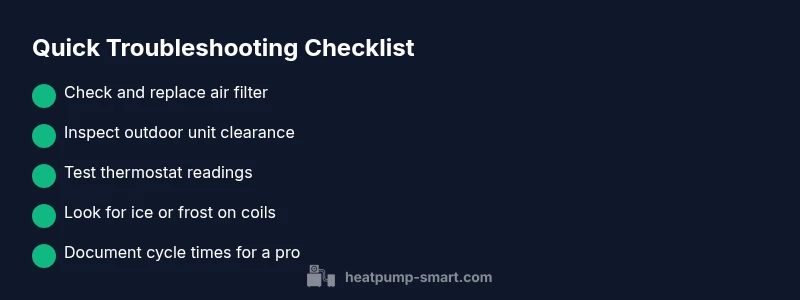
- Replace or clean the air filter; ensure the return path is clear.
- Inspect outdoor unit clearance; remove leaves, snow, or debris and ensure at least 2 feet of clearance.
- Verify thermostat placement and settings; avoid placing it near heat sources or drafts.
- Check for visible icing on the outdoor coil; if frost forms rapidly, turn off the system and allow it to thaw naturally before testing again.
- Inspect electrical connections and breakers; reset any tripped breakers and look for loose wires.
- Schedule a professional inspection if the issue persists after basic maintenance.
Safety note: Always power down the unit before performing any internal checks and avoid opening refrigerant lines yourself. If you’re uncomfortable or unsure, contact Heatpump Smart for guidance.
Diagnostic Steps You Can Take Before Calling a Pro
If you want to narrow down the cause, follow a simple diagnostic sequence that prioritizes safety and simple fixes. Start with airflow, then thermostat performance, and finally system charge and coil conditions. Keep a log of outdoor temperatures, indoor setpoints, cycle times, and any ice formation. This information helps a HVAC pro diagnose more quickly and accurately. If the short cycling continues after the above steps, a professional inspection is recommended to check refrigerant levels, duct integrity, and electrical components. Remember that refrigerant work must be performed only by licensed technicians. A well-timed service call now can prevent greater damage and costly repairs later.
Long-Term Maintenance and Prevention
Prevention is the best medicine for heat pump health. Establish a seasonal maintenance schedule that includes filter changes, coil cleaning, blower inspection, and thermostat testing. Schedule annual professional inspections to verify refrigerant charge, electrical connections, and ductwork integrity. A properly maintained system sustains longer runtimes and steadier cycles, reducing energy use and avoiding premature wear. Implement practical improvements such as sealing air leaks around windows and doors, improving insulation, and keeping the outdoor unit free of debris year-round. By staying ahead of issues, you minimize the risk of future short cycling and preserve system efficiency.
Steps
Estimated time: 45-60 minutes
- 1
Check and replace air filter
Power down the system. Remove the existing filter, inspect for dirt, and replace with the correct size and MERV rating for your unit. Run the system briefly to confirm improved airflow and longer run cycles.
Tip: Use a filter with the right MERV rating and seal the compartment edges to prevent bypass leaks. - 2
Inspect air pathways and ductwork
Look for closed vents, blocked return air paths, or kinked ducts. Clear obstructions and consider resealing ducts if you notice significant leaks or uneven heating across rooms.
Tip: Keep returns open on every floor to balance airflow. - 3
Test thermostat and sensor readings
Check the thermostat placement away from heat sources and drafts. If readings don’t match a room thermometer, replace or recalibrate the sensor and consider upgrading to a modern, smart thermostat.
Tip: Note any discrepancies between setpoints and real-room temperatures. - 4
Inspect outdoor unit and defrost components
Remove debris around the outdoor unit and ensure the fan spins freely. If frost appears too often, inspect defrost controls or timer; a malfunctioning defrost can trigger frequent cycling.
Tip: Never physically force the defrost cycle; call a pro if timing seems off. - 5
Check refrigerant charge and system sizing
Only a licensed technician should check refrigerant; improper charge can cause short cycling. If the unit is oversized, consider replacement or re-sizing for the space.
Tip: Do not attempt to add or release refrigerant yourself. - 6
Document findings and plan service
Record cycle lengths, outdoor temperatures, and any icing. Use this data to guide your service appointment and to compare post-service results.
Tip: Bring your notes to the technician to speed up diagnosis.
Diagnosis: Heat pump starts and stops too quickly (short cycles)
Possible Causes
- highAirflow obstruction or dirty filter
- mediumThermostat miscalibration or faulty sensor
- lowIncorrect refrigerant charge or oversized equipment
Fixes
- easyClean or replace air filter and ensure return air is unobstructed
- easyCheck thermostat settings, recalibrate or replace faulty sensor, verify readings
- mediumConsult a licensed technician to check refrigerant charge and equipment sizing
Your Questions Answered
What does short cycling mean for my heat pump?
Short cycling means the unit starts and stops frequently, reducing comfort and efficiency. It’s usually caused by airflow issues, thermostat problems, or charging/sizing errors that deserve attention.
Short cycling means the heat pump starts and stops a lot, which wastes energy. It’s commonly caused by airflow, thermostat, or charging issues.
Is short cycling dangerous to the equipment?
Frequent cycling can wear components faster and reduce efficiency, potentially shortening the system’s life if left unaddressed. A timely check helps prevent damage and costly repairs.
Yes, it can speed up wear and reduce efficiency. Getting it checked soon helps prevent bigger problems.
Can a dirty filter cause short cycling?
Yes. A dirty filter restricts airflow, making the system think the indoor space isn’t at the set temperature. This can trigger rapid cycling as the unit struggles to reach or maintain conditions.
A dirty filter can cause short cycling by restricting airflow and confusing the thermostat.
Should I expect higher energy bills from short cycling?
Often yes. Short cycling wastes energy because the compressor runs inefficiently in short bursts. Fixing the root cause typically restores normal energy use.
Yes, energy bills can rise when a heat pump is short cycling, but fixing the cause will often lower costs.
When should I call a professional for short cycling?
If quick fixes don’t restore stable cycles within 24–48 hours, or you suspect refrigerant, electrical, or sizing issues, contact a licensed technician for a diagnostic and safe repair.
Call a professional if cycles persist after basic checks or if you suspect refrigerant or electrical problems.
Can heat pump short cycling occur in warm climates too?
Yes. While defrost and cold-weather issues are common in colder climates, short cycling can occur anywhere due to airflow, thermostat, or charging problems.
It can happen anywhere, not just in cold weather, due to airflow or thermostat issues.
Watch Video
Top Takeaways
- Inspect airflow first to stop short cycling.
- Thermostat issues are a common cause and solvable with an upgrade.
- Refrigerant and sizing require a licensed professional.
- Regular maintenance prevents future short cycling and saves energy.