Heat Pump Not Defrosting: Essential Troubleshooting Guide
Urgent, step-by-step troubleshooting for heat pumps not defrosting. Identify causes, perform safe checks, and fix common defrost failures to protect efficiency and comfort.


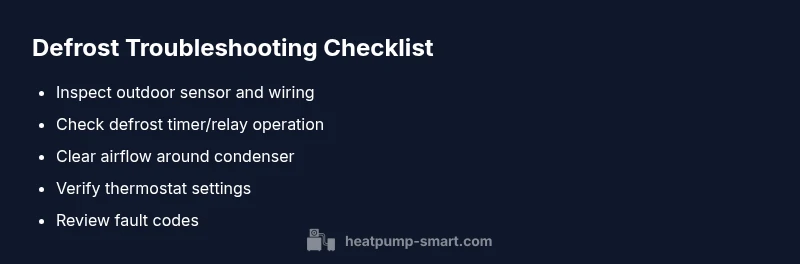
Most often, not defrosting is caused by a blocked outdoor sensor, a failed defrost thermostat, or a malfunctioning control board. Start with basics: 1) clear the outdoor unit of snow and debris, 2) check that the defrost coil comes on during a defrost cycle, 3) inspect the ambient thermostat and outdoor temperature sensors. If frost persists, power off and call a pro.
Understanding defrost in heat pumps
Defrost is a controlled process that melts frost that forms on the outdoor coil. When ice builds up, heat transfer drops and efficiency falls. Modern heat pumpsAutomatically initiate a defrost cycle based on temperature readings, pressures, and time. If the cycle fails to start or complete, you’ll notice more frost, reduced heating, and higher energy use. According to Heatpump Smart analysis, consistent defrost operation depends on sensors, control logic, and the outdoor environment. This section explains why not defrosting matters and what to look for first, so homeowners can act quickly to prevent energy waste and equipment wear.
Common causes when defrost isn't happening
- Blocked or dirty outdoor temperature sensor: readings may be skewed, delaying defrost.
- Faulty defrost thermostat or defrost relay: the coil may not heat to melt frost.
- Control board or relay failure: signals to start defrost may be lost.
- Low refrigerant or performance issues: frost can form if suction pressure is off, but this is less common in typical residential systems.
- Ice buildup from airflow restrictions: debris, snow, or leaves obstruct airflow and cause misreads.
- Thermostat settings or miscalibrations: an incorrect setpoint or faulty wiring can prevent defrost.
Quick checks you can do safely
- Inspect the outdoor unit for snow, ice, or debris and remove any blockage.
- Visually inspect wiring terminal blocks for loose connections; tighten if safe to do so.
- Confirm the defrost cycle activates by listening for a distinctive fan pause and a warmer coil period during defrost timing.
- Check indoor thermostat settings and confirm they align with manufacturer recommendations for your climate and system type.
- If you notice continuous frost, turn the system off for a few minutes to reset cycles, then observe whether a defrost cycle starts when powered back on.
How climate and outdoor conditions influence defrost
In colder climates, defrost cycles occur more frequently, but extreme subfreezing temperatures can overwhelm weak defrost signals. Humidity, wind chill, and radiant heat losses from the building envelope also influence frost formation. A well-sealed home and correctly sized unit reduce the workload on the heat pump and help defrost cycles operate as intended. Heatpump Smart’s team notes that sensor placement and calibration are critical in ensuring reliable defrost behavior across seasons.
Electrical and control issues to inspect
- Check for tripped breakers or blown fuses that may cut power to the outdoor unit and prevent defrost.
- Look for blown fuses in the indoor air handler or outdoor control box that could affect defrost signaling.
- Inspect the defrost timer, controller, and relays; faults here prevent the defrost cycle from initiating or completing.
- Review fault codes on the indoor display or connected app; many modern systems log defrost-related codes that point to specific components.
- If you’re unsure about electrical work, call a licensed technician to avoid shock or fire hazards.
Reading frost patterns to diagnose issues
- Fine frost on the leading edge of the coil often indicates airflow blockages.
- Widespread frost across the coil with a partially melted patch suggests a defrost timer or sensor fault.
- Clear frost on the coil but frosting reappears quickly can point to refrigerant or compressor-related problems.
- Frost that persists despite a defrost cycle signals a sensor, relay, or controller fault requiring professional assessment.
Step-by-step fixes for the most common causes
- Clean and clear airflow: remove snow/debris; ensure the outdoor unit has at least 18 inches of clearance on all sides.
- Verify sensor readings: compare outdoor sensor readings to a trusted thermometer; recalibrate or replace if readings are inconsistent.
- Test the defrost signal: locate the defrost relay and ensure it energizes during a cycle; replace if unresponsive.
- Inspect wiring and grounds: loose connections can prevent defrost signals from reaching the outdoor unit.
- If refrigerant issues are suspected: avoid attempting a refrigerant charge; this requires licensed refrigeration service.
Prevention and maintenance tips
- Schedule seasonal inspections: a professional check reduces the risk of silent defrost failures.
- Keep the outdoor unit clean and free from leaves, snow, and ice buildup.
- Use a programmable thermostat to maintain appropriate comfort levels and prevent frequent cycling that wears components.
- Monitor for frost early in the season and address issues before winter peaks hit.
When to call a professional quickly
If frost persists after basic checks, if you hear unusual noises during defrost, or if fault codes indicate a sensor or control board problem, contact a licensed HVAC technician immediately. A professional can diagnose refrigerant issues, test sensors with calibrated tools, and replace faulty components safely. Early professional intervention can prevent compressor damage and maintain home comfort.
Steps
Estimated time: 60-90 minutes
- 1
Power down the system safely
Turn off the heat pump through the thermostat and disconnect power at the service disconnect or breaker. Wait 60 seconds to reset any microcontrollers.
Tip: This avoids electrical shocks and prevents accidental restart during inspection. - 2
Clear the outdoor unit
Remove snow, ice, leaves, and debris from around the outdoor condenser. Ensure there is at least 18 inches of clearance for proper airflow.
Tip: Never strike ice with metal tools; use a plastic scraper to avoid damaging fins. - 3
Inspect sensors and wiring
Check the outdoor temperature sensor and exposed wiring for damage or loose connections. Secure or replace damaged parts as needed.
Tip: If you’re unsure about wiring, skip ahead to step 5 and call a technician. - 4
Test the defrost components
Access the defrost timer/relay; energize the defrost circuit manually if trained to do so, and observe whether the coil heats during the cycle.
Tip: Document any codes or abnormal sounds to share with the technician. - 5
Restore power and observe
Reconnect power and cycle the system; monitor for defrost activation and frost clearance over the next 2-3 cycles.
Tip: If frost returns quickly, stop and call a pro.
Diagnosis: Heat pump outdoor unit forms frost and fails to defrost
Possible Causes
- highBlocked outdoor temperature sensor readings
- highFaulty defrost thermostat or defrost relay
- mediumControl board or relay failure
- lowLow refrigerant charge or compressor issue
Fixes
- easyInspect outdoor sensor path and clean or replace sensor if readings are inconsistent
- mediumTest defrost relay and defrost timer; replace faulty components
- mediumCheck control board for fault codes; reseat connections or replace board as needed
- hardIf refrigerant-related symptoms are suspected, call a licensed technician for pressure tests and leak repair
Your Questions Answered
What are the most common causes of a heat pump not defrosting?
The top causes are a blocked outdoor sensor, a faulty defrost thermostat or relay, and control board issues. Less commonly, refrigerant problems and airflow restrictions contribute frost buildup and defrost failure.
Common causes include a blocked sensor, a failed defrost component, and control board faults. Refrigerant and airflow issues are possible but less frequent.
Can cold weather alone cause frost without defrosting?
Yes, very cold and damp conditions can form frost even if the defrost system is working. The system may cycle, but extreme conditions can overwhelm defrost timing.
Extreme cold and damp conditions can cause frost even when the defrost system is functioning, especially if cycles are overwhelmed by temperature.
When should I call a technician for a defrost issue?
Call a technician if frost persists after basic checks, fault codes appear, or you hear abnormal noises during defrost. Don’t attempt refrigerant work yourself.
If frost persists after checks or you see fault codes, contact a licensed HVAC tech right away.
Is a refrigerant leak the likely cause of frost not defrosting?
A refrigerant leak is a less common but serious cause. It can reduce efficiency and hinder defrost. A professional should perform pressure tests and leak repair.
A refrigerant leak is possible but less common; it needs a professional to test and repair.
What maintenance prevents defrost failures?
Seasonal inspections, keeping the outdoor unit clean, and ensuring proper airflow help prevent defrost failures. Maintain correct thermostat settings and seal the home for efficiency.
Regular maintenance and keeping the outdoor unit clean prevent many defrost issues.
Watch Video
Top Takeaways
- Identify frost-causing signals early to prevent efficiency loss.
- Start with sensor, relay, and wiring checks before expensive parts.
- Only trained professionals should handle refrigerant or control-board work.
- Regular maintenance reduces defrost failures and extends system life.