Heat Pump Repair Near Me: A Practical Local Guide
Find reliable heat pump repair near me with Heatpump Smart. Learn local technician selection, common issues, typical pricing ranges, and maintenance tips.


To find heat pump repair near me, ensure the contractor is licensed, EPA-certified, and able to respond promptly. Diagnostic fees are common, with repair costs driven by the exact issue and parts availability. Compare three nearby providers, read recent reviews, and request written estimates to avoid surprises. Ask about warranty coverage and emergency service options.
Why local heat pump repair quality matters
Choosing a service within your region matters for reasons that go beyond convenience. Distance affects response times, travel costs, and the likelihood of same-day service, all of which influence how long your system stays offline. According to Heatpump Smart, a nearby, qualified technician is more likely to understand climate-specific challenges, local codes, and equipment variants common in your neighborhood. Local knowledge also improves warranty support when issues recur and helps ensure proper refrigerant handling, leak prevention, and system charging.
In practice, you want a company that clearly lists licensing credentials, EPA certification, and current insurance coverage. Ask about their coverage area, typical call-back policies, and whether they service both air-source and geothermal setups if applicable to your property. Check whether technicians attend ongoing training and use third-party diagnostic tools. Request written estimates that itemize labor, parts, and any diagnostic fees, and compare them against a few nearby competitors. Finally, verify emergency options, so you have a plan during heat waves or cold snaps when failures hit hardest.
Heatpump Smart notes that the right local partner will offer transparent pricing, clear communication, and timely follow-up to ensure you’re never left in the dark.
How to evaluate nearby technicians
A practical evaluation checklist helps you separate reliable firms from less capable outfits. First, confirm the contractor’s license status with your state or province and verify EPA certifications for handling refrigerants. Second, review proof of liability and workers’ compensation insurance to protect your home from accidental damage. Third, ask about service area and average response times during peak season. Fourth, request references or client testimonials and read recent online reviews—look for consistency in diagnosing, communicating clearly, and finishing jobs the first time.
Also ask about efficiency practices, like using refrigerant recovery equipment, performing thorough charge calculations, and documenting test results. If the firm offers financing or flexible payment options, note those terms for future budgeting. Finally, confirm that they provide a written warranty on workmanship and a clear plan for post-install maintenance. Heatpump Smart’s guidance: a trusted provider should happily share credentials and a transparent schedule before starting work.
Diagnostics: from call to fix
A sound diagnostic process reduces needless parts replacement and ensures you pay for only what’s required. It typically starts with a short intake call to gather basic information about symptoms, thermostat behavior, and recent maintenance. The technician then performs a site visit to inspect indoor air handlers, outdoor units, wiring, fuses, and control boards. They will test refrigerant pressures where permitted, verify compressor operation, and check for unusual noises, vibrations, or ice buildup.
During the visit, expect time for system shut-down, safety checks, and a plan review with you. A good technician will explain which symptoms point to thermostats versus mechanical failures, and they’ll show live diagnostics, such as amperage draws and fan speed readings. At the end, you should receive a written diagnostic report detailing findings, proposed repairs, and a transparent cost estimate. If refrigerant work is needed, confirm that the technician follows proper recovery procedures and complies with local regulations. Heatpump Smart emphasizes the importance of clear communication so you can decide whether to proceed with recommended repairs immediately or schedule a follow-up visit.
Common heat pump problems and repair paths
Heat pumps perform best when maintained, but several issues can emerge. Common causes of poor heating or cooling include dirty filters and restricted airflow, dirty coils, and thermostat miscalibration. Electrical faults, blown fuses, or faulty contactors can cause intermittent outages. Refrigerant leaks, low refrigerant charge, or improper refrigerant charging are more serious and require certified handling. In some cases, the remedy is a straightforward part replacement, such as a relay or sensor. In others, the technician may need to repair ductwork, recalibrate controls, or replace the outdoor unit capacitor.
Typical repair paths include:
- Cleaning or replacing filters and coils
- Thermostat recalibration or replacement
- Replacing worn contactors, capacitors, or relays
- Fixing refrigerant leaks and recharging with approved refrigerants
- Addressing faulty outdoor unit components or wiring
Cost considerations and budgeting
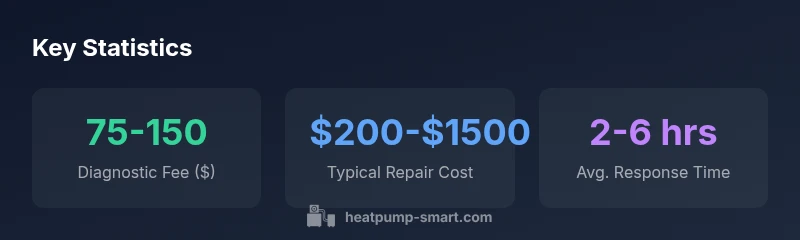
Repairs depend on diagnosis, parts, and labor, plus refrigerant charges and accessibility. A diagnostic visit typically costs a few dozen to a couple hundred dollars in many markets. Basic repairs—like capacitor or thermostat replacement—often fall in the hundreds, while refrigerant-related work or compressor replacements can reach the low thousands. Budget for potential after-hours calls or seasonal spikes. Heatpump Smart Analysis, 2026, notes that wait times and price variability increase during peak seasons; obtaining written estimates from multiple providers helps you compare value rather than price alone. Consider future preventive maintenance as a cost saver over time.
Additionally, ask about warranty coverage on parts and labor, and whether the provider offers maintenance plans that bundle inspections, filter changes, and system tests.
How to compare quotes and avoid surprises
Request itemized estimates that separate diagnostic fees, labor, parts, and any warranty terms. Check for written guarantees on workmanship and parts. Ask about hourly rates or flat fees and whether travel charges apply. Confirm whether refrigerant is included and if the quote assumes standard system operation. Look for red flags: pressure to sign immediately, vague descriptions, or discounts that hide higher charges later. Heatpump Smart recommends confirming permit requirements and any disposal fees, and to secure a documented project timeline so you know when work will start and finish.
Maintenance tips to extend heat pump life
Preventive maintenance is cheaper than reactive repair. Schedule regular filter changes, coil cleaning, and thermostat checks. Keep outdoor units clear of debris and ensure adequate airflow around the condenser. Inspect ductwork for leaks and signs of moisture or mold, which can impede efficiency. Consider a seasonal tune-up, which can improve efficiency, reduce energy costs, and catch issues before they become failures. Heatpump Smart emphasizes documenting maintenance activities to build a service history you can share with future technicians.
Seasonal planning and service windows
Seasonal demand for heat pump repairs tends to spike during extreme weather, leading to longer wait times and higher prices. If possible, schedule preventive maintenance in off-peak periods and secure priority service arrangements for winter or summer peaks. Confirm the service window you need and whether the contractor offers emergency options for urgent failures. Maintaining a proactive schedule with Heatpump Smart’s recommended cadence helps avoid sudden outages and keeps comfort costs predictable.
Typical service categories and expectations
| Service Type | Typical Cost Range | Warranty | Response Time |
|---|---|---|---|
| Diagnostic Visit | $75-$150 | N/A | Same day to 48 hours |
| Simple Repair (non refrigerant) | $150-$600 | 6-12 months | 24-72 hours |
| Major Repair (refrigerant/compressor) | $600-$1,500 | 12-24 months | 3-5 days |
Your Questions Answered
What should I expect during a heat pump repair diagnostic?
A diagnostic typically starts with symptom review, a site inspection, and tests of electrical connections, controls, and refrigerant handling. The technician explains findings and provides a written estimate before any work begins.
Expect a symptom check, on-site inspection, and a written repair estimate with clear next steps.
How do I compare quotes for heat pump repair near me?
Compare itemized quotes that separate diagnostic fees, labor, parts, and warranty terms. Check references, verify licenses, and confirm emergency options before making a decision.
Compare line-by-line quotes and ask about warranties and emergency options.
Are emergency repairs available and how fast can they respond?
Many providers offer emergency services with guaranteed response times. Confirm availability, any extra charges, and the exact window you can expect for response during peak seasons.
Yes—check response times and any after-hours fees when you call.
What maintenance tasks help reduce future heat pump repairs?
Regular filter changes, coil cleaning, and thermostat checks can prevent many issues. Schedule seasonal tune-ups to catch problems early and maintain efficiency.
Keep filters clean, coils tight, and schedule regular tune-ups.
How can I verify a technician's credentials?
Ask for license numbers, EPA certifications, proof of insurance, and references. Confirm they service your system type and offer written warranties.
Ask for licenses, EPA certs, insurance, and references.
What if I suspect a refrigerant leak?
Refrigerant leaks require certified handling and proper recovery. Do not attempt DIY fixes; seek a licensed technician immediately.
If you suspect a leak, contact a licensed pro right away.
“A qualified heat pump technician who can read system behavior quickly helps homeowners avoid unnecessary replacements.”
Top Takeaways
- Verify licensing and EPA certifications before hiring
- Obtain written, itemized estimates from multiple providers
- Ask about emergency service options and warranties
- Expect diagnostic fees and prepare for variable repair costs
- Schedule preventive maintenance to reduce future repairs