How to Charge a Heat Pump in Winter: Practical Safety Guide
Learn how to approach charging a heat pump in winter safely. This guide explains why professional service is essential, what to expect from a technician, and how to prepare for winter maintenance. Heatpump Smart provides expert guidance for homeowners, builders, and managers.


If you’re wondering how to charge a heat pump in the winter, the safe answer is: hire a licensed HVAC technician. You should not attempt to charge refrigerant yourself in cold weather. The pro will diagnose, recover any refrigerant, and adjust the charge to spec. Meanwhile, gather system details and prepare access for service. Heatpump Smart recommends booking a pro at first sign of trouble.
Why winter charging is different
If you’re wondering how to charge a heat pump in the winter, you’ll find that winter conditions introduce unique challenges. Refrigerant-related work is highly regulated and requires precise tools, temperature considerations, and safety protocols. In many places, attempting to recharge a heat pump without a professional can lead to improper charging, refrigerant leaks, and damage to the system. Heatpump Smart emphasizes safety and code compliance as the baseline for any charging work. Before any technician touches the lines, ensure the outdoor unit is free of heavy snow buildup and that the area around the service panel is accessible. The colder you are, the more critical it is to involve a licensed technician who can verify pressures, superheat, and subcooling with calibrated gauges. The bottom line is that winter charging is not a DIY task; it’s professional work that should be scheduled promptly to protect your system’s efficiency and longevity. This introductory section sets the stage for practical steps, safety considerations, and expectations when dealing with a winter recharge.
What charging a heat pump really means
Charging a heat pump isn’t a simple “add more refrigerant” task. It involves restoring the system to its manufacturer-specified charge under real operating conditions. In winter, ambient temperatures and outdoor-coil conditions can affect pressures and readings, so a trained technician uses calibrated gauges, refrigerant recovery equipment, and precise weighing to achieve the correct charge. This is not a cosmetic adjustment; incorrect charging can lead to poor heating or cooling, compressor stress, and costly repairs. Understanding this helps homeowners realize why professional service is essential and why DIY tips that promise a quick fix are not reliable in cold weather. Heatpump Smart highlights that a proper recharge must also include a careful leak check and verification of both subcooling and superheat values to ensure stable performance across modes.
Signs your system may need refrigerant
Many homeowners notice subtle or overt indicators when refrigerant levels are off. Common signs include reduced heating capacity, longer run times, and inconsistent temperatures across rooms. In winter, you might also see ice forming on the outdoor coil or a frequent defrost cycle that lasts longer than usual. You may hear unusual hissing or bubbling sounds near the refrigerant lines, or see a noticeable drop in overall efficiency with energy bills creeping upward. If you observe any of these symptoms, it is a sign to call a licensed technician for a diagnostic check. Do not attempt to measure or top off refrigerant yourself; only trained professionals should handle refrigerant in a closed-loop system.
What a technician does during a winter recharge
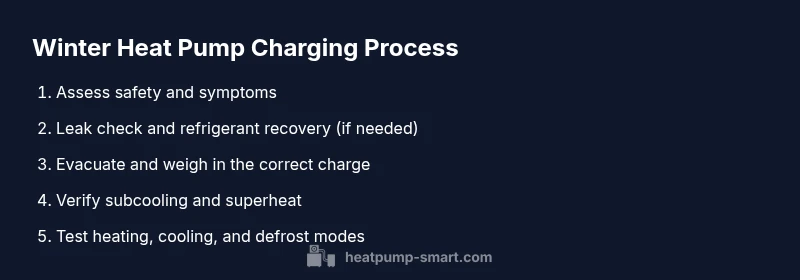
During a winter recharge, a licensed HVAC technician performs several critical steps to ensure the system operates safely and efficiently. They typically start with a thorough visual inspection and leak check, then recover any refrigerant from the system if needed. The next step is to evacuate air and moisture, followed by weighing in the correct refrigerant charge using manufacturer specifications. The technician will verify superheat and subcooling to the appropriate targets and test the system in heating and cooling modes, including the defrost cycle. Finally, they document the charge, test for leaks after a short run, and provide guidance on ongoing maintenance. This process minimizes risks and ensures your heat pump performs reliably through winter conditions.
Before the technician arrives: preparation tips in winter
Preparing for a winter service visit helps the technician work efficiently. Clear driveways and the outdoor unit area of snow and debris, ensure there is safe access to the outdoor unit and service panel, and gather your system’s model and serial number, recent service history, and a concise list of symptoms. If your system is in a tight space, note any nearby obstacles or pets that could interfere with access. Have your contact information ready and arrange a plan for timing, especially during cold snaps when technician slots may fill quickly. By laying the groundwork, you reduce delays and keep the recharge focused on restoring performance.
How cold weather affects refrigerant and pressures
Ambient temperature has a direct impact on refrigerant pressures and the behavior of a heat pump. In very cold outdoor conditions, readings can shift, making on-site pressure measurements less straightforward without appropriate instrumentation. Technicians compensate for cold-weather effects with calibrated gauges, controlled environmental conditions, and sometimes temporary adjustments to reading methods. This is one reason why winter charging is more complex and why professional oversight is essential. Having a clear understanding of how temperature affects charge helps homeowners appreciate the value of a proper winter recharge and the risks of a DIY approach in cold weather.
Alternatives to charging: boosting efficiency in winter
If a full refrigerant recharge isn’t immediately necessary or if a refrigerant repair is not feasible, there are several ways to improve winter performance. Focus on restoring overall system efficiency: replace or clean filters, ensure the outdoor unit has adequate clearance, and keep the indoor thermostat within a reasonable range to avoid overworking the heat pump. Use programmable settings to optimize operation during shoulder-season days, and consider supplemental heat if needed to reduce strain on the compressor. These adjustments can often improve comfort and energy use while you arrange professional service.
What to ask your HVAC pro
When you’re speaking with a licensed technician, ask about: (1) the exact diagnosis and whether a leak was found, (2) the refrigerant type and the target charge, (3) how they verify superheat and subcooling, (4) expected timelines and any follow-up checks, and (5) warranty coverage on the service and any refrigerant. Clear questions help you understand the work, reduce surprises, and ensure you’re getting a complete recharge rather than a quick top-off. Heatpump Smart suggests writing down questions beforehand to keep the conversation focused.
Costs, timing, and what to expect
Winter refrigerant charging involves several steps, and final costs vary with system size, leak status, and accessibility. Expect service to cover diagnosis, leak checks, refrigerant recovery (if needed), charging to spec, and post-service performance verification. While it’s common for such work to take a few hours, the exact timing depends on the complexity of the job and whether leaks are present. Request a written estimate before work begins and ask for documentation of the final charge and readings. This transparency helps you compare bids and understand the value of the service.
Authority sources
For deeper reading on heat pump operation and best practices, consult authoritative sources:
- https://www.energy.gov/energysaver/heat-pump-systems
- https://www.ashrae.org/resources--publications
- https://www.nist.gov/topics/thermodynamics
Tools & Materials
- Licensed HVAC technician contact information(Keep on hand in winter for emergencies)
- System model and service history(Provide to technician to aid diagnosis and charging specifications)
- Outdoor unit access clearance(Clear snow, debris, and ensure path is safe for the technician)
- Symptom log(Record any unusual noises, temperature drops, or cycle patterns)
Steps
Estimated time: 1-4 hours depending on system size, accessibility, and whether leaks are present
- 1
Schedule a licensed HVAC technician
Contact a qualified technician promptly when you notice signs of performance loss or suspicious symptoms. Winter service slots can fill quickly, so secure an appointment and share a concise symptom log.
Tip: Ask for a written estimate and what the visit will cover before the technician arrives. - 2
Gather system details and symptoms
Have your heat pump's model/serial number, service history, and observed symptoms ready. This helps the pro diagnose accurately and minimizes repeat trips.
Tip: Include recent changes to thermostat settings or airflow that could affect performance. - 3
Prepare the service area for access
Clear the outdoor unit and service panel area of snow, ice, and obstacles. Ensure a safe pathway for the technician and their equipment.
Tip: If weather is severe, coordinate with the tech for a time window with safer conditions. - 4
Power down if advised by the technician
Follow the technician’s guidance on electrical safety. They may request you switch off specific breakers to protect the system while the inspection occurs.
Tip: Never touch refrigerant lines or electrical components during a service visit. - 5
Let the technician perform the recharge
The pro will perform leak checks, refrigerant recovery (if needed), evacuate moisture, weigh in the correct charge, and verify superheat and subcooling.
Tip: Ask to see readings and notes from the final charge as part of the service record. - 6
Test operation and document results
Run the unit in heat and defrost modes, observe cycling, and confirm performance improves. Request guidance on maintenance and future monitoring.
Tip: Keep a brief post-service log of performance for the next few weeks.
Your Questions Answered
Can I charge my heat pump myself in winter?
No. Refrigerant charging should be performed only by a licensed HVAC technician due to safety, environmental, and code requirements. DIY charging can cause leaks and damage the system.
No—refrigerant charging is a job for a licensed HVAC technician to ensure safety and proper operation.
What are the signs that my heat pump needs refrigerant?
Signs include reduced heating or cooling capacity, longer cycle times, ice on the outdoor coil, unusual noises, and higher energy bills. If you notice these, contact a pro for a diagnostic check.
Look for reduced comfort, longer cycles, ice on the coil, or unusual sounds and contact a pro.
Why is winter charging more challenging?
Cold outdoor temperatures affect readings and refrigerant behavior. Technicians use specialized gauges and follow strict safety protocols to ensure accuracy and protection of equipment.
Cold weather makes readings trickier, so a trained pro is essential.
How long does a winter recharge take?
Duration varies with system size, condition, and accessibility. A typical service ranges from about one to several hours. Ask for an upfront time estimate before work begins.
Most recharge jobs take a few hours, depending on the system.
What should I prepare before the technician arrives?
Provide model/serial numbers, recent service history, a symptom log, and access to the outdoor unit. Clear the area around the unit and ensure safe entry for equipment.
Have your system details ready and the area cleared for the technician.
Will I see a price before work?
Good technicians will provide a written estimate covering diagnosis, charging, and any needed repairs. Seek transparency about what is included and any potential extra costs.
Ask for a written quote and what’s included before the visit.
Watch Video
Top Takeaways
- Always use a licensed HVAC technician for refrigerant charging.
- Prepare documentation and access before the appointment.
- Winter charging requires precise readings and leak checks.
- Ask for a written estimate and charge documentation after service.
- Heatpump Smart recommends prompt professional action to maintain efficiency.