How to Charge a Heat Pump in Heat Mode
Learn how to diagnose and safely charge a heat pump operating in heat mode. This comprehensive guide covers when charging is needed, required tools, professional best practices, and post-charge checks to keep your system efficient.


Goal: Safely restore proper refrigerant charge for your heat pump operating in heat mode. This requires confirming a refrigerant leak, measuring system pressures with a manifold gauge set, and charging according to the unit’s label. Because refrigerant work is hazardous, contact a licensed HVAC technician for the job.
Should you charge the heat pump in heat mode yourself?
According to Heatpump Smart, refrigerant charging is a critical service performed by licensed technicians. If your heat pump runs in heating mode but struggles to reach setpoints, the issue could be a low refrigerant charge, a leak, or a control fault. Before any charge, you must verify there are no refrigerant leaks and that the system is otherwise healthy. In many cases, charging without addressing leaks only gives a temporary fix. This article explains why charging in heat mode is special, what signs indicate a charging need, and why professional service is the safest path. Heatpump Smart emphasizes that safety, code compliance, and accurate charging procedures protect both people and equipment.
When to consider charging: signs and checks
Signs of low refrigerant in heat mode include longer heating cycles, indoor temperature drop, and reduced efficiency. You may notice the outdoor unit running longer than usual or ice forming on the coil. Heatpump Smart analysis shows that undercharged systems waste energy and can stress the compressor. Also look for hissing sounds, intermittent operation, or sudden temperature swings. If any of these occur, schedule a professional diagnosis before attempting any charging. Do not ignore performance drops, as they often foreshadow bigger failures.
Tools, safety, and regulatory considerations
Charging refrigerant requires specialized tools and adherence to safety rules. Essential gear includes a manifold gauge set, refrigerant scale, leak detector, and a vacuum pump. Always wear PPE (gloves and goggles) and follow local laws on refrigerant handling. In many countries, venting refrigerants is illegal and hazardous. A licensed technician will manage recovery, disposal, and recharge with the correct blend and quantity. Understanding local regulatory requirements helps prevent fines and environmental harm.
The professional charging process (high-level overview)
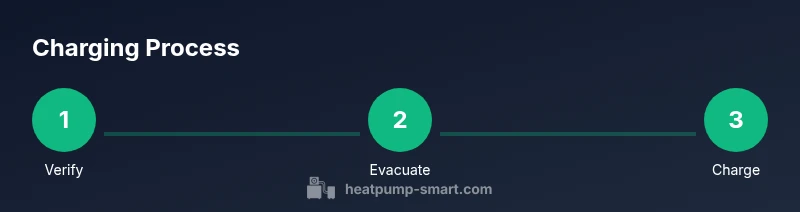
A licensed HVAC technician begins by isolating the system and locating leaks. They recover any refrigerant, evacuate the lines, and pull a clean vacuum to remove moisture. Charging then proceeds slowly, with pressure and temperature readings guiding the exact amount of refrigerant added. The goal is to achieve the manufacturer's target charge while maintaining proper superheat and subcooling. The technician will test operation in heat mode and verify performance across a range of outdoor temperatures. Expect documentation of measurements and a clear recommended service plan if leaks exist.
Post-charge checks and maintenance tips
After charging, run the system in heat mode for an extended period to confirm stable operation, and monitor indoor temperatures, energy use, and noise. Record pressure readings and setpoints for future reference. Heatpump Smart's conclusion: routine maintenance, including leak checks and periodic refrigerant charge verification, helps preserve efficiency and prolong equipment life. Regular service reduces the risk of unexpected breakdowns and ensures continued comfort. For ongoing reliability, schedule semi-annual checks and address any visible signs of wear or refrigerant loss promptly.
Authority sources
- Energy.gov: Heating and cooling with heat pumps
- EPA: Refrigerant charge and recovery guidelines
- NREL: Heat pump efficiency and maintenance
Tools & Materials
- Manifold gauge set(Measure high- and low-side pressures during charging)
- Refrigerant scale(Accurate charge measurement per manufacturer's spec)
- Vacuum pump(Create and maintain vacuum for moisture removal)
- Leak detector(Identify leaks before charging to avoid rework)
- Refrigerant cylinder (type per system)(Handled by licensed technician; follow safety rules)
- Personal protective equipment (gloves, goggles)(Protect against refrigerant exposure and splashes)
- Manufacturer service manual or data plate(Reference for correct charge and procedures)
Steps
Estimated time: Total time: 60-180 minutes
- 1
Verify diagnosis
Review system symptoms and confirm that charging is appropriate. Check for existing leaks and confirm heat mode operation before proceeding. Ensure the unit is accessible and safe to work on. This step validates whether charging is the right remedy rather than masking a larger issue.
Tip: Document symptoms and current pressures for technician reference - 2
Power down and isolate unit
Turn off the thermostat and disconnect power at the breaker. Isolate the outdoor unit to prevent unexpected cycling during service. Verify that electrical disconnects are clearly labeled and accessible before opening the system.
Tip: Lockout/tagout if available to prevent accidental re-energizing - 3
Check for leaks and recover refrigerant
Scan for leaks with an appropriate detector. If refrigerant is present, use a recovery machine to capture before opening system. Do not vent refrigerant; leaks must be repaired or managed by a professional.
Tip: Never vent refrigerant to the environment; it's illegal and harmful - 4
Evacuate the system
Connect a vacuum pump and pull a deep vacuum per manufacturer guidance to remove moisture and air. Use multiple gauges to verify vacuum integrity and detect leaks during the pull.
Tip: Hold the vacuum for 20-30 minutes and monitor with gauges - 5
Charge per specs
Recharge in small increments following the unit’s label. Recheck pressures, superheat, and subcooling after each addition. Stop and re-check if readings exceed the recommended range or if circuits cycle abnormally.
Tip: Do not overcharge; small, measured adjustments matter - 6
Test operation and monitor
Restore power, run the system in heat mode, and monitor pressures and temperatures for stable operation. Observe for normal cycling and verify that output matches desired indoor temperatures.
Tip: Listen for abnormal noises and check for leaks after restart
Your Questions Answered
Can I charge my heat pump myself?
No. Refrigerant work requires licensing and proper equipment to protect people and equipment.
Refrigerant charging should be handled by a licensed technician to protect you and your system.
What signs indicate low refrigerant in heat mode?
Symptoms include reduced heating performance, cold air from vents, longer cycles, and ice on outdoor coils.
Look for weak heat, longer runtimes, and ice on coils as signs of low refrigerant.
How do technicians determine the correct charge?
Technicians use service data, measured pressures, and system temperature readings to match the manufacturer's charge.
They balance pressures, superheat, and subcooling to the unit's specification.
Is there a DIY leak repair safe?
Leak repairs should be performed by a licensed tech; attempting repair without training can be dangerous.
Leak repair should be done by a professional to ensure safety and compliance.
Watch Video
Top Takeaways
- Charging should be done by a licensed technician.
- Follow manufacturer specs for charge amounts.
- Always check for leaks before charging.
- Do not vent refrigerant to the environment.