How to Get Snow Out of a Heat Pump: A Practical Homeowner Guide
Learn how to safely remove snow from outdoor heat pumps, prevent ice buildup, and maintain efficiency through winter with practical steps, safety tips, and maintenance advice.


This guide shows you how to remove snow from an outdoor heat pump safely and effectively, protecting airflow and efficiency. You’ll learn when to clear snow, how to do it without damaging fins or coils, and how to prevent future buildup. Follow the steps and safety tips from Heatpump Smart to minimize downtime and winter performance losses.
Why snow is a problem for heat pumps
Snow resting on the outdoor unit can block intake and exhaust vents, muffling airflow and forcing the compressor to work harder. When air can’t circulate, the coil temperature drops and frost can form, turning a simple snow issue into a frost build-up problem. Heatpump Smart notes that persistent snow and ice reduce efficiency, increase energy consumption, and can shorten the unit’s lifespan if ignored. In winter, the surrounding area should stay clear of snowbanks to maintain airflow. Visual cues of trouble include visible snow around vents, ice on the fins, and reduced heating output. If you notice these signs, it’s time to act. By understanding the risks, you’ll know when a careful clearance is warranted and when to call a professional.
According to Heatpump Smart, snow buildup is common in cold climates, but proactive clearing minimizes performance losses and protects critical components. This section sets expectations for what you’ll do next: plan safely, gather the right tools, and follow a step-by-step process that preserves coil integrity and airflow. Here, you’ll learn practical strategies and best practices to keep your heat pump working efficiently all winter long.
Safety first: power down, protect yourself, and plan
Before touching the outdoor unit, power it down completely. Use the outdoor disconnect switch or shut the thermostat to off, and if possible, unplug power at the breaker to eliminate the risk of shock or arcing. Do not use metal tools on the fins—the aluminum fins are delicate and bend easily, reducing heat transfer. Wear insulated gloves, eye protection, and sturdy boots with good traction. Keep kids and pets away while you work. Plan your approach: remove loose snow first, then address any ice, staying on solid ground and avoiding stepping on the unit itself. If you feel uncertain at any point, stop and consult a professional.
Heatpump Smart emphasizes safety as the priority: take your time, use non-metal tools, and never force ice off the fins. A careful, methodical approach reduces the risk of damage and injury while keeping the unit operational through winter.
How snow affects airflow and frost formation
Snow on the outdoor heat pump acts as a blanket that blocks air intake and exhaust, forcing the system to work harder to achieve the same indoor temperature. Wet snow melts and refreezes, forming ice on the coil and fins that further impede heat transfer. Frost buildup raises refrigerant temperatures, reduces efficiency, and can cause uneven cooling or heating cycles. The heat pump may run longer, increasing wear on the compressor and fan motor. Recognizing signs—persistent frost, reduced airflow, and unusual noise during operation—lets you intervene early. The best practice is to address snow while it’s light and movable, then inspect for any residual ice after the thaw. A slow, careful removal preserves coil surfaces and extends equipment life.
As you read, remember that Snow management isn’t just about clearing a visible layer; it’s about maintaining airflow paths and preventing ice damming that can trap moisture and escalate damage over several cold days.
Tools and materials you’ll need
Having the right tools ready before you start reduces the risk of improvisation and damage. You’ll want: a non-metallic snow shovel or plastic scoop for lifting without bending fins; a soft-bristle brush to sweep loose snow from the top and sides; a plastic scraper for stubborn snow near the edges (not metal); insulated gloves and a hat; a powerful flashlight or headlamp to see into any shadowed areas; and a clear plan to minimize altitude changes that could cause slips. Optional: a microfiber cloth for wiping condensation after clearing and a local contact list for professional help in case you encounter ice that won’t budge. These items help you perform a clean, safe clearance with minimal risk to the unit.
Heatpump Smart notes that using metal tools or applying high heat can damage the coil fins or refrigerant lines, so stick to plastic tools and gentle brushing whenever possible.
Step-by-step overview
This guide provides a structured approach with six practical steps. Each step concentrates on a specific action, from powering down to confirming safe operation after clearance. The goal is to protect airflow, prevent ice, and maintain system efficiency during winter. After the quick-start overview, you’ll find detailed Step-by-Step instructions, followed by post-clearance checks and prevention tips. If you apply these steps consistently, you’ll reduce downtime and preserve heat pump performance through storms and heavy snows.
Step-by-step: Step 1 – Power down the unit and secure the area
Step 1: Locate the outdoor disconnect switch and turn the power off. If you have a thermostat or smart controller that can isolate outdoor units, use that as well. Confirm there is no live current by trying a quick test with your hand (without touching exposed components). Exit the area if you detect unusual warmth or sparking. Tip: Allow the unit to cool for a few minutes if it has just operated, to avoid contact with hot surfaces. Time estimate: 3–5 minutes.
Step 2: Clear the immediate footprint of loose snow around the sides and top using a plastic scoop. Work from the outer edges inward to avoid pushing snow into crevices. Keep your distance from the fins and guard shrouds. Tip: Move slowly and avoid sudden, forceful motions that could bend the fins. Time estimate: 6–8 minutes.
Step-by-step: Step 3 – Remove packed snow and ice without damaging fins
Step 3: With a soft-bristle brush, gently sweep away compacted snow from the top and sides. If you encounter ice, use a plastic scraper or a gloved hand to lift without prying. Do not strike or hammer the unit; forceful impacts can crack refrigerant lines. Step 4: If ice persists on the coil, wait for daylight or a mild thaw rather than using hot water or chemicals. Pro-tip: If you see heavy ice accumulation on critical lines, stop and call a professional. Time estimate: 8–12 minutes.
Step 4: Recheck clearance around all airflow paths. Ensure there is no obstruction above or behind the unit that could trap heat. Wipe any remaining moisture from the exterior with a dry cloth. Resume power at the disconnect and test the unit for proper operation. Time estimate: 5–7 minutes.
Step-by-step: Step 5 – Reconnect power and test operation
Step 5: Restore power at the disconnect or thermostat. Listen for the appropriate startup sound and observe the fan’s motion. If the unit cycles normally and airflow appears consistent, proceed to Step 6. If you notice abnormal noises, odors, or if the airflow remains weak, turn the power off again and schedule a professional inspection. Time estimate: 2–3 minutes.
Step 6: Monitor performance for the next 24–48 hours. Check for normal cycle times, consistent indoor comfort, and absence of frost on the unit. Document the conditions (weather, snowfall amount) to guide future maintenance. Time estimate: 5–10 minutes for initial check; ongoing monitoring as weather changes.
Post-clearance checks and maintenance to prevent future buildup
After clearing snow, inspect the unit for any bent fins or residual ice near the coil. Clean away any debris or leaves that could trap moisture and obstruct airflow. Create a winter maintenance plan: schedule periodic checks during snow events, keep pathways clear, and consider temporary shields or a windbreak if your climate repeatedly dumps snow on the unit. Note changes in outdoor temperature, wind, and snow depth to anticipate future needs. Regular inspections help you spot problems before they escalate and keep your heat pump running at peak efficiency all season long. Heatpump Smart recommends recording maintenance dates and outcomes for reference in future winters.
Authority sources
For additional guidance and evidence-based recommendations, consult authoritative sources:
- U.S. Department of Energy, Energy Saver: Heating and Coolingÿhttps://www.energy.gov/energysaver/heating-and-cooling
- U.S. Department of Agriculture, Natural Resources Conservation Service: Snow and ice management guidelines (noaa.gov reference style) ÿhttps://www.noaa.gov
- National Renewable Energy Laboratory (NREL): Heat pump performance and winter operation basics ÿhttps://www.nrel.gov These sources provide general best practices for maintaining outdoor equipment in winter and minimizing energy losses due to snow and ice.
How to get snow out of heat pump: summary and next steps
Clearing snow from a heat pump is about protecting airflow, avoiding coil damage, and maintaining efficiency. Start with safety, use the right tools, and proceed with careful, incremental steps. If ice won’t budge or signs of damage appear, don’t force the unit—call a professional. Regular winter checks help prevent costly downtime and preserve comfort throughout the season.
Tools & Materials
- Non-metallic snow shovel or plastic scoop(Avoid metal to prevent bending fins or damaging the cabinet.)
- Soft-bristle brush(Sweep loose snow and gentle ice buildup without scratching fins.)
- Plastic scraper(Lightly lift ice near edges; do not use metal tools.)
- Insulated gloves(Keep hands warm and dry; maintain grip on tools.)
- Flashlight or headlamp(Improve visibility in shaded areas or low-light conditions.)
- Outlet power disconnect knowledge(Know how to safely shut off power to the outdoor unit.)
Steps
Estimated time: 30-60 minutes
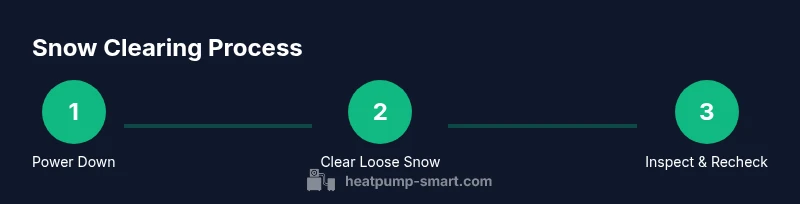
- 1
Power down the unit and secure the area
Turn off power at the disconnect switch or thermostat. If accessible, unplug from the outdoor receptacle and wait a moment to ensure all moving parts have stopped. This reduces shock risk and prevents arcing as you begin clearance.
Tip: Always verify there is no live current before touching any components. - 2
Clear loose snow from the top and sides
Use a plastic scoop to lift loose snow off the top and away from the sides. Work from the outer edges toward the center, avoiding contact with fins and decorative guards. Keep a stable stance to prevent slips.
Tip: Move slowly to avoid accidentally pushing snow into crevices. - 3
Remove packed snow and surface ice
With a soft brush, gently loosen packed snow and ice around the coil housing. If ice sticks, use a plastic scraper with light pressure and avoid prying hard. Do not strike fins with metal tools.
Tip: If ice remains after gentle brushing, pause and let weather conditions improve before forcing it off. - 4
Check airflow paths and re-clear as needed
Ensure there’s clear space above and around the unit for airflow. Re-sweep any areas where snow might reaccumulate during thaw or wind gusts.
Tip: Proper clearance around the unit prevents immediate re-obstruction. - 5
Reconnect power and test operation
Restore power and observe the unit: fan should run smoothly, and you should feel warm air from the indoor system within minutes. If airflow is weak or unusual noises persist, power off again and seek professional help.
Tip: Don’t run the unit while ice or snow still covers critical components. - 6
Document and plan for future checks
Note weather conditions, snowfall, and any signs of persistent ice. Schedule periodic checks during storms to minimize downtime and maintain efficiency.
Tip: Keep a winter maintenance log for quick reference next season.
Your Questions Answered
Is it safe for me to clear snow from my heat pump myself?
Yes, you can clear light snow yourself if you follow safety steps: power down the unit, use plastic tools, and avoid forcing ice. If ice is heavy or there’s visible damage, contact a professional.
Yes—just power down first and use plastic tools; don’t force ice. If you see heavy ice or damage, call a professional.
What should I avoid when snow is on a heat pump?
Avoid using metal tools or hot water, and never strike the fins. Do not operate the unit with ice or snow obstructing airflow, and don’t stand on or against the outdoor unit.
Avoid metal tools and hot water, and don’t operate the unit with ice buildup.
How can I prevent snow buildup around the heat pump?
Clear the area around the unit regularly during heavy snowfall, trim nearby plants or branches, and ensure a clear path for air intake and exhaust. Consider a snow fence or windbreak in windy climates.
Keep the area around the unit clear and protected from blowing snow.
How often should I check the heat pump during winter?
Check after each major storm or heavy snowfall and perform a quick inspection weekly during peak winter. Look for visible snow, ice, and airflow obstructions.
Check after big storms and do a quick weekly look during winter.
Can de-icing chemicals be used on a heat pump?
De-icing chemicals are generally not recommended because they can corrode components and aren’t necessary if you clear snow safely. Use gentle mechanical removal instead.
De-icers aren’t recommended; use careful manual removal instead.
When should I call a professional?
If there is persistent ice buildup, visible damage to fins or refrigerant lines, unusual noises, or if you’re not confident performing the steps safely, contact a licensed technician.
Call a pro if you see damage or can’t safely clear the ice.
Watch Video
Top Takeaways
- Safely power down before touching the unit
- Use non-metallic tools to protect fins
- Clear loose snow first, then address ice carefully
- Ensure ample airflow around the unit after snow clearance
- Keep a winter maintenance log for ongoing prevention