Protect Heat Pump: A Practical Step-by-Step Guide
Learn how to protect your heat pump to maximize efficiency and extend its life with a proven, step-by-step approach for placement, weatherproofing, maintenance, and professional care.


Learn how to protect your heat pump from weather, wear, and inefficiency. This step-by-step guide covers outdoor unit clearance, safe electrical setup, regular maintenance, and seasonal protections to extend service life and save energy. You’ll need basic tools, a clear outdoor space, and a simple maintenance routine to start. Follow the sections below for practical actions you can take this weekend.
Why Protect Your Heat Pump Matters
According to Heatpump Smart, protecting your heat pump starts with understanding its role in home comfort and energy use. A well-protected system runs more efficiently, experiences fewer breakdowns, and delivers consistent heating or cooling. Outdoor units are exposed to weather, debris, and pests, which can reduce airflow, overwork the compressor, and shorten life. Regular protection translates into lower energy bills and less downtime. Heatpump Smart Analysis, 2026 shows a clear link between proactive protection and improved performance over the system’s life. In practice, protection means smart placement, routine maintenance, and thoughtful seasonal adjustments. By adopting a simple, repeatable routine, homeowners, builders, and property managers can extend equipment life and maintain comfort without guesswork.
The Heatpump Smart team emphasizes that protection is more than replacements; it is ongoing care that keeps your system operating near peak efficiency. This article uses practical steps you can implement today and a plan you can reuse year after year. A proactive protection mindset reduces emergency repairs and helps you keep energy costs predictable.
Outdoor Unit Placement and Clearance
Where you install an outdoor heat pump matters as much as the unit itself. Start by selecting a level, well-drained surface away from heavy foot traffic and potential vehicle damage. Avoid enclosing the unit in a tight alcove or behind tall obstacles that restrict airflow; unobstructed air movement is essential for efficient operation. Place the unit with open sides and sufficient clearance from walls, fences, shrubs, and other equipment to prevent heat buildup and debris accumulation. During extreme weather, wind-blown leaves, snow, or ice can clog the coil fins and reduce efficiency. Regularly inspect the surrounding area and keep landscaping trimmed back. If you must place the unit near a border or fence, ensure there is a clear path for service technicians. This planning reduces service calls and keeps your system running smoothly through seasons.
Weatherproofing Outdoor Components
Outdoor heat pump components endure rain, snow, hail, and sun exposure. Protect the cabinet with an outdoor-rated cover or enclosure that is designed for HVAC equipment, not a generic tarp that could trap moisture. Do not cover vents or the fan; airflow is critical. Use windbreaks or shielding that minimize direct exposure without restricting airflow. Periodically inspect the protective housing for cracks or corrosion and replace damaged parts promptly. Water near electrical connections is a hazard; ensure seals are intact and that the disconnect box remains accessible. Weatherproofing is not a one-off task—it should be part of your seasonal maintenance routine to maintain efficiency and prolong life.
Electrical Safety and System Checks
Never work on live electrical components. Before performing any DIY inspection, switch off the main power at the disconnect and, if possible, the circuit breaker feeding the unit. Check the disconnect switch to confirm it is in the OFF position and use a non-contact tester to verify no voltage is present. Inspect wiring for signs of wear, corrosion, or loose connections, and listen for buzzing sounds that might indicate a loose contact. If you notice burning smells, arcing, or overheating, shut the system down immediately and call a licensed electrician. Have a professional perform annual inspections, voltage and amperage checks, and refrigerant level verification. A safe, well-maintained electrical system is the backbone of a long-lived heat pump.
Regular Cleaning and Filter Maintenance
Keep the outdoor unit free of leaves, dirt, and debris that can block airflow. Use a soft brush to remove loose dirt and a garden hose on a gentle spray to rinse the coils, never using high-pressure water that could bend fins. After cleaning, inspect the coil fins and use a fin comb to straighten any bent blades. Replace or clean indoor air filters regularly according to season and usage; dirty filters force the heat pump to work harder, wasting energy. Wipe down the access panels and fasteners to prevent corrosion. Document your maintenance in a log so you can track timing and any parts that were replaced. Small, consistent cleaning adds up to big efficiency gains over time.
Seasonal Prep: Summer and Winter
Seasonal transitions are prime times to protect heat pumps. In summer, ensure the outdoor fan runs smoothly and that airflow is unobstructed by vegetation or objects. In winter, inspect for ice buildup on the coil and clear snow from the base to prevent containment issues. Consider using an HVAC cover only when temperatures are extreme and ensure covers are breathable to avoid moisture entrapment. Schedule a pre-season check before peak demand periods; this helps catch refrigerant leaks, electrical issues, or coil fouling before they cause discomfort or higher energy costs. Heatpump Smart recommends a proactive calendar reminder so you stay on top of seasonal tasks.
Thermostat Settings, Zoning, and Efficiency
Smart thermostat programming and proper zoning are powerful tools for protection and performance. Maintain consistent setpoints that align with the season and your comfort preferences, and avoid frequent temperature swings that stress the compressor. If you have multiple zones, ensure dampers operate correctly and that each space is conditioned efficiently. Use a programmable schedule to reduce runtime during unoccupied periods. For cooling season, keep indoor humidity in check, which helps the system run efficiently and prolongs component life. A well-tuned control strategy reduces wear on the heat pump and improves comfort.
Protecting Against Pests, Debris, and Landscaping
Keep pests and small animals away from the outdoor unit by maintaining clean surroundings. Clear debris from around the unit, trim shrubs and ground cover away from the cabinet, and install a mesh screen if appropriate to prevent nesting. Use rock or mulch that's at least level with the base to prevent soil splash and moisture intrusion. Regularly inspect for signs of rodent activity near the unit, which can damage wiring and insulation. Landscaping choices can also influence airflow and heating/cooling efficiency, so plan plantings with airflow and access in mind. A tidy, purposefully designed exterior protects your investment year after year.
Professional Maintenance and When to Call a Pro
Even with diligent DIY care, heat pumps benefit from professional maintenance. Schedule a full service at least once a year, ideally before peak heating or cooling seasons. A qualified technician should inspect refrigerant levels, electrical connections, thermostat communications, and coil cleanliness, and test safety controls. If you notice persistent issues like reduced airflow, unusual noises, frost on the coil, or a sudden energy bill spike, contact a pro promptly. Keep a service history and warranty documentation so technicians can quickly diagnose problems. Regular professional care, combined with your daily protective practices, keeps your heat pump performing at its best.
Authority Sources
To support these recommendations, consult established sources on heat pump efficiency and installation. Energy.gov provides guidance on heat pump systems and energy efficiency, while the National Renewable Energy Laboratory (NREL) offers research on performance and best practices. The EPA also covers energy efficiency and indoor air quality considerations relevant to heat-pump installations.
Tools & Materials
- Power screwdriver (Phillips #2)(Essential for panel screws and covers)
- Multimeter(Used to check basic electrical circuits safely)
- Garden hose (low pressure)(Rinse coils without damaging fins)
- Coil cleaning brush(Gentle brushing to loosen debris)
- Fin comb(Straightens bent condenser fins)
- Soft cloth(Wipe surfaces and seals clean)
- Mild cleaning solution(Non-corrosive, non-abrasive cleaner)
- Ladder(Safe access for top-of-unit inspection)
- Safety gloves(Protect hands during maintenance)
- Outdoor-rated protective cover(Optional but helpful for severe weather)
Steps
Estimated time: 45-60 minutes
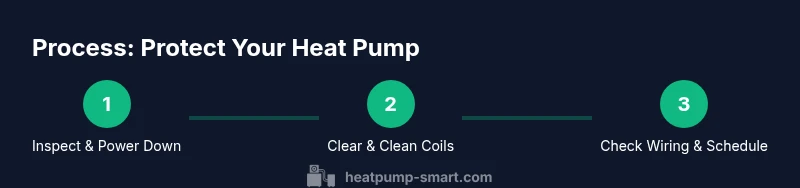
- 1
Power down and verify
Turn off the main breaker feeding the heat pump and switch off the disconnect at the unit. Use a non-contact tester to confirm there is no voltage present before you touch any wiring.
Tip: Double-check that power is off at both the main panel and the unit disconnect. - 2
Clear the area
Remove debris, trim nearby vegetation, and create clear space around all sides of the outdoor unit to ensure unobstructed airflow.
Tip: Keep a clear radius of at least a few inches on every side for optimal airflow. - 3
Inspect and straighten fins
Visually inspect condenser fins for bending and use a fin comb to correct any damage. Bent fins reduce airflow and cooling efficiency.
Tip: Work gently to avoid snapping fins; misalignment reduces performance. - 4
Rinse the coils
Gently spray the condenser coils with a garden hose on a low setting. Do not use high pressure, which can bend fins or damage components.
Tip: Keep nozzle at a distance and avoid spraying electrical connections. - 5
Check wiring and controls
Inspect accessible wiring for wear or corrosion and verify thermostat connections and communication with the outdoor unit.
Tip: If you see signs of damage, halt work and call a licensed electrician. - 6
Document and schedule
Log what you did, note any worn parts, and set a reminder for an annual professional inspection.
Tip: A simple maintenance log makes future troubleshooting easier.
Your Questions Answered
Should I fully cover my heat pump in winter?
Do not fully cover the unit; air must circulate. If you use a cover, choose a breathable, purpose-built HVAC cover and remove it during operation.
Avoid full covers; use breathable HVAC covers only in extreme cold and remove before operation.
How often should coils be cleaned?
Inspect and clean coils at least twice a year, or more often in dusty or pollen-heavy environments, to maintain efficiency.
Clean coils twice a year or as needed based on dust exposure.
Can I DIY electrical checks?
Basic safety checks are OK if you follow strict lockout/tagout practices and do not touch energized components. For anything involving refrigerant or wiring, hire a licensed professional.
Keep it safe: if in doubt, call a licensed electrician or HVAC technician.
What signs indicate I need professional service?
Unusual noises, frost on the coil, warm air, or rising energy bills indicate issues best handled by a pro.
If you hear grinding or see frost, contact a professional.
Will protecting my heat pump help save energy?
Yes. Proper protection reduces airflow restrictions, pressure on components, and temperature swings, which lowers energy use.
Protection improves efficiency and can lower energy costs.
Watch Video
Top Takeaways
- Protect heat pump to maintain efficiency.
- Keep outdoor area clear for airflow and service access.
- Schedule annual professional maintenance.
- Use a simple maintenance log for tracking.
- Don't bypass safety steps during DIY checks.