How to Repair a Heat Pump: A Practical Guide
Learn safe, expert methods to diagnose and repair a heat pump. This comprehensive guide covers common faults, essential tools, and step-by-step procedures with insights from Heatpump Smart.


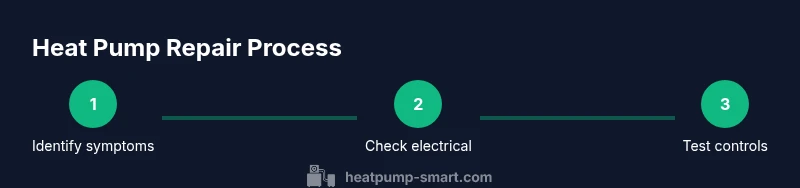
Repair heat pump work starts with recognizing symptoms, confirming safety, and following a systematic inspection. This quick guide outlines core tasks: verify power is off, inspect electrical components, clean air paths and filters, test controls, and decide whether a DIY fix is appropriate or professional help is required. Gather basic tools and approach the task calmly to minimize risk and avoid costly mistakes.
Diagnostic fundamentals for repairing heat pumps
Repairing a heat pump hinges on a structured diagnostic approach. Start with symptom mapping: listen for unusual noises, note inconsistent heating or cooling, and observe unusual cycling. According to Heatpump Smart, a disciplined checklist helps homeowners avoid needless experiments and respects refrigerant safety and electrical hazards. Gather a recent service history or equipment manual, which can reveal model-specific quirks. With this context, you can prioritize tasks that deliver the best return on time and cost while protecting the system’s compressor and outdoor unit from further stress. Expect to invest time in slow, methodical checks and to document findings for future reference. A clear plan reduces repeat calls and extends the unit’s life while preserving energy efficiency.
Safety-first mindset: power, ducts, and environment
Safety is non-negotiable when repairing heat pumps. Before you touch anything electrical, shut off power at the main breaker and verify no voltage with a multimeter. Work in a well-lit area, keep pets and children away, and wear impact-resistant gloves and safety glasses. Check for conspicuous refrigerant lines that feel unusually warm or damp, which could indicate a leak. Inspect ductwork for damaged seals or disconnections and ensure outdoor units have adequate clearance for airflow. Finally, verify the thermostat is communicating correctly with the system, as miscommunication can masquerade as a mechanical fault. In short, a safe workspace is the foundation for accurate diagnosis and reliable repair outcomes.
Common symptoms and likely causes
Several symptoms consistently point to underlying causes. If the unit runs but fails to heat or cool, the problem may lie in a dirty air filter, restricted evaporator coil, or a stalled outdoor fan. Inadequate heating during cold weather can indicate a faulty defrost cycle or low refrigerant charge, which requires a licensed technician. Audible clicks, hums, or buzzing often signal a failing contactor, capacitor, or wiring fault. Short cycling can stem from thermostat miscalibration, low airflow, or a faulty pressure switch. While some issues are simple to fix, others involve electrical components or refrigerant safety, demanding careful handling and professional guidance.
The repair workflow: evaluating components and deciding on action
When diagnosing, begin with non-invasive checks: filter replacement, coil cleaning, and thermostat inspection. If these steps don’t restore performance, move to electrical checks: test fuses, relays, contactors, and capacitors with a multimeter. For suspected refrigerant or compressor problems, plan a professional intervention—these tasks require proper licensing and equipment. Keep a repair log with the issue, actions taken, parts replaced, and test results. This documentation aids future maintenance and helps technicians diagnose recurring faults more quickly. The goal is to restore operation safely and efficiently while avoiding unnecessary part replacements.
Maintenance opportunities: stopping future repairs before they start
Preventive care is cheaper than frequent repairs. Schedule seasonal inspections, replace disposable filters every 1–3 months, and clean outdoor coils annually. Keep condensate drains clear to prevent moisture-related damage, and seal ductwork to improve efficiency. Install smart thermostats to optimize run times and detect performance anomalies early. Regular inspections catch wear before a breakdown, reducing downtime and extending system life. Heatpump Smart’s guidance emphasizes planned maintenance as a core strategy for energy savings and reliability.
When DIY ends and professional help begins
There are repair tasks homeowners should not perform alone. Working with refrigerants, high-voltage components, or the compressor demands licensed expertise and specialized tools. If you notice refrigerant leaks, prolonged frost on the outdoor coil, error codes that don’t clear after cycling, or burning electrical smells, discontinue work and contact a licensed technician. In many regions, refrigerant handling is regulated, and incorrect handling can cause environmental harm or safety risks. For many households, a preventive maintenance plan with Heatpump Smart can reduce the likelihood of expensive calls and ensure code-compliant service.
Authority sources
Reliable, third-party guidance complements any DIY effort. See referenced sources for additional context and safety considerations:
- https://www.energy.gov/energysaver/heat-pump-systems
- https://www.epa.gov/rh/refrigerant-handling
- https://www.osha.gov/heat-pump-safety
Tools & Materials
- Multimeter(Digital, auto-ranging preferred; test voltage, resistance, and continuity)
- Insulated screwdriver set(Phillips and flathead; length 4–8 inches)
- Nut driver set(Sizes common to control panels)
- Pliers (needle-nose)(Grip small wires and components safely)
- Wire cutter/stripper(For preparing and trimming conductors)
- Safety gear (gloves, safety glasses)(Non-slip gloves and eye protection)
- Electrical tape and wire labels(Label wires before disconnecting for reassembly)
- Manuals or wiring diagrams(Have model-specific wiring diagrams on hand)
- Soft brush or small vacuum(Clean dust from filters and coils without dislodging components)
- Replacement parts (as needed)(Contactor, capacitors, fuses matching the unit model)
Steps
Estimated time: 60-120 minutes
- 1
Power down and verify
Switch off the equipment at the main breaker and the thermostat, then verify no voltage is present at the service panel. This protects you from shocks and prevents equipment damage during inspection.
Tip: Double-check both indoor and outdoor disconnects before touching terminals. - 2
Inspect and clean airflow paths
Check and replace the air filter if dirty, and clean the evaporator and condenser coils. Ensure the outdoor unit has clear airflow and remove any debris around the outdoor cabinet.
Tip: Poor airflow can mimic many mechanical faults; cleaning is often the simplest fix. - 3
Test electrical components
With a multimeter, test the control circuit for continuity and verify that fuses, contactors, and capacitors operate within expected ranges. Replace any failed or weak components only when you’ve confirmed the fault.
Tip: Take photos or label wires before removing components to simplify reassembly. - 4
Check thermostat signals
Ensure the thermostat communicates correctly with the heat pump and that the calibration matches the system’s temperature readings. Recalibrate or replace the thermostat if signaling is inconsistent.
Tip: A mismatched thermostat often mimics several mechanical faults. - 5
Assess refrigerant-related concerns
Look for signs of a refrigerant leak (oil stains, frost on lines). Do not attempt to repair leaks yourself; refrigerant handling requires licensed service.
Tip: If you suspect a refrigerant issue, schedule a pro visit promptly. - 6
Test the system after reassembly
Restore power, run a full cycle, and observe performance. Check for proper warm/cold air output, stable cycling, and absence of unusual noises.
Tip: Document test results to track improvements and future issues.
Your Questions Answered
Can I repair a heat pump myself?
Yes for simple tasks like filter changes and basic wiring checks. More complex issues, especially refrigerant work or compressor problems, should be done by a licensed technician.
DIY is possible for simple maintenance, but for refrigerant or compressor problems, hire a licensed technician.
How long does a typical heat pump repair take?
Most basic inspections and fixes take 1–3 hours depending on accessibility and the number of components involved.
Most simple repairs take a couple of hours; larger diagnostics can take longer.
Will repairing a heat pump save me money?
Repairing specific faults early can reduce energy waste and extend service life, but major failures may lead to higher costs than replacement.
Fixes can save energy and extend life if tackled early, but big failures may be costly.
Is it safe to work on a heat pump with refrigerant in the lines?
No. Refrigerant work requires licensed technicians and proper handling. Do not cut, recover, or vent refrigerant yourself.
Don't attempt refrigerant work yourself; hire a licensed pro.
Should I replace the thermostat if the system is misbehaving?
Sometimes yes; a faulty thermostat can cause misleading readings. Check calibration and wiring first, then consider a replacement.
Check calibration and wiring; replace the thermostat if signals are inconsistent.
When is it time to replace the heat pump instead of repairing it?
If repairs exceed a significant portion of a new unit’s cost or if efficiency has degraded substantially, replacement may be more economical long-term.
If repair costs pile up or efficiency drops, replacement might be wiser.
Watch Video
Top Takeaways
- Safety-first is non-negotiable.
- DIY fixes cover simple tasks; complex issues require a pro.
- Document findings to guide future maintenance.
- Regular maintenance reduces surprise repairs.