Why is My Heat Pump Frosted Over? A Practical Troubleshooting Guide
Discover why your heat pump is frosted over, common causes, safe fixes, and when to call a pro. Heatpump Smart's expert guide covers defrost cycles, airflow, and maintenance to reduce frost risk.


Frost on a heat pump isn’t always dangerous, but persistent icing signals airflow, defrost, or refrigerant issues. Use our step-by-step guide for safe checks and learn when it’s time to call a professional for a proper diagnosis.
Understanding Frost on Outdoor Coils
Why is my heat pump frosted over? If you’ve ever asked why is my heat pump frosted over, you’re not alone. Frost on the outdoor coil occurs when humidity in the air meets the cold coil surface. In many climates, freezing temperatures combine with dew or mist to create a thin sheet of ice that can quickly grow if airflow is impeded. According to Heatpump Smart, frost is often a symptom rather than a failure, guiding homeowners to diagnose airflow and defrost dysfunction. However, if frost remains longer than a typical defrost interval, or you notice ice forming on the sides of the condenser or refrigerant lines, it’s a sign something isn’t operating as expected. Inspect airflow, confirm there’s nothing blocking the outdoor unit, and check indoor pathways for restricted flow. The goal is to restore normal heat transfer and prevent efficiency loss, unnecessary energy use, and potential equipment stress.
Defrost Cycles: What Happens and What Doesn’t
Most air-source heat pumps include an automatic defrost cycle to melt frost when it forms. This cycle typically runs for a few minutes and should clear ice without interrupting heating. If frost persists beyond the expected interval, or if you notice ice build-up after cycling, the defrost control or outdoor temperature sensor may be malfunctioning. Heatpump Smart Analysis suggests that repeated icing can indicate airflow restrictions or a refrigerant-related issue that needs professional evaluation. In milder conditions, occasional frost is normal; in harsher conditions, persistent icing warrants a deeper check of the coil, valve, and controls to prevent efficiency loss.
Common Causes of Frost: Quick Check List
- Dirty air filters or debris around the outdoor unit obstructing airflow (high likelihood).
- Ice buildup from a dirty or clogged outdoor coil reducing heat exchange (high likelihood).
- Malfunctioning defrost timer or control board (medium likelihood).
- Low refrigerant charge or a leak (medium likelihood).
- Inadequate outdoor clearance or snow/vegetation blocking air paths (low likelihood).
- Faulty sensors or control wiring causing abnormal defrost behavior (low likelihood).
Addressing the high-likelihood causes typically yields quick improvements. If you find ice around refrigerant lines or the coil is visibly blocked, proceed with the safe checks below before calling a pro.
Immediate Safe Checks You Can Do
- Power off the outdoor unit before inspection. Do not bang ice or force removal.
- Clear debris, snow, and vegetation around the condenser to restore airflow.
- Check and replace the indoor air filter if dirty; ensure rooms are circulating air properly.
- Observe if frost melts during the next defrost cycle and note the cycle duration.
- If there is a strong refrigerant odor or hissing, do not operate the unit and call a technician immediately.
These quick checks are low risk and can prevent unnecessary damage. If frost persists after these steps, it’s time to move to a formal diagnostic flow.
Diagnostic Flow: Symptom to Diagnosis to Solution
The flow starts with a visible frost symptom on the outdoor coil. The next step is to test for airflow issues (filters, debris, clearances). If airflow is adequate, inspect the defrost cycle timing and controls. If frost persists after defrost, check refrigerant pressure and look for leaks. A persistent issue typically indicates a refrigerant problem or faulty defrost control, which should be handled by a licensed technician. Finally, verify outdoor temperatures and humidity levels, as extreme weather can exacerbate frost formation even with proper operation.
Step-by-Step Fixes: From Easy to Hard
- Easy: Clean or replace air filters; remove obvious debris around the outdoor unit.
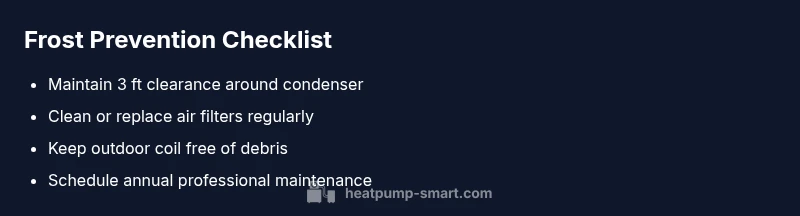
- Easy: Ensure a minimum 3-foot clearance around the condenser and trim any plants or snow buildup.
- Medium: Gently brush frost from the outdoor coil if safe and power is off; do not pry or bend fins.
- Medium: Reset defrost controls following the manufacturer’s instructions and observe cycle timing.
- Hard: If frost returns after thawing, schedule a refrigerant charge check for leaks by a licensed tech.
- Hard: Inspect sensors and control boards for faults; replacement requires professional service.
Estimated total time: 1-2 hours, plus any professional visits if needed.
Safety Reminders and When to Call a Pro
- Always power off the unit before touching any external components. Never use a heat gun or sharp tools on ice near electrical parts.
- If you suspect a refrigerant leak, unusual odors, or frost returns repeatedly, contact a qualified technician immediately.
- Do not attempt refrigerant repairs yourself; refrigerant handling requires licensing.
- Keep records of frost events and defrost cycle behavior to share with your installer or service tech.
Prevention and Maintenance to Reduce Frost Risk
Regular maintenance is your best defense against frost. Schedule annual professional inspections, clean the outdoor coil yearly, and replace filters every 1-3 months during heating season. Ensure proper installation clearances and check thermostat and sensor settings. Consider upgrading to a unit with an efficient defrost strategy if you operate in consistently cold, humid climates. In cold seasons, monitor frost formation and maintain outdoor surroundings to minimize ice buildup.
What to Expect After Fix: Performance and Efficiency
Once frost issues are resolved, you should see improved heating efficiency, stable indoor temperatures, and reduced energy use. A healthy system recovers faster after defrost cycles and minimizes ice formation during routine operation. If performance still lags, a professional assessment may reveal a larger issue such as a refrigerant leak or sensor fault that requires calibration or component replacement.
Steps
Estimated time: Total time: 1-2 hours
- 1
Power off and thaw frost safely
Turn off the outdoor unit at the breaker. Let the ice melt naturally; avoid chiseling or applying heat directly to refrigerant lines.
Tip: Wear gloves and use a dry cloth to wipe away water after melting. - 2
Inspect and clean air filters and outdoor coil
With power off, remove and inspect indoor and outdoor filters. Clean or replace dirty filters; wipe down the outdoor coil to remove dirt and debris.
Tip: Dirty filters are the most common frost accelerants. - 3
Check outdoor clearance and airflow paths
Ensure at least 3 feet of clearance around the condenser. Remove snow, leaves, or plants that may block airflow.
Tip: Clearance improves heat exchange and defrost efficiency. - 4
Test defrost cycle and thermostat
Refer to the manual to observe defrost cycle timing. If cycles seem abnormal, adjust settings or schedule service.
Tip: Document cycle duration and any frost changes for techs. - 5
Check refrigerant signs and possible leaks
Look for oil spots near connections or hissing sounds. Do not attempt to repair leaks yourself.
Tip: Only licensed technicians should handle refrigerant issues. - 6
Call a professional if frost returns
If frosting recurs after thawing and basic checks, schedule a professional inspection to check sensors, controls, and refrigerant status.
Tip: Provide maintenance history to the tech for quicker diagnosis.
Diagnosis: Outdoor heat pump coil is frosted or icing persists on coil
Possible Causes
- highBlocked or restricted airflow due to dirty filters or debris around the outdoor unit
- highDirty outdoor coil reducing heat transfer
- mediumMalfunctioning defrost timer/control
- mediumLow refrigerant charge or refrigerant leak
- lowInadequate outdoor clearance or snow/plant obstruction
- lowFaulty outdoor temperature sensor or control board
Fixes
- easyClean or replace air filters; clear debris around the outdoor unit
- easyGently brush frost and clean outdoor coil when power is off; recheck airflow
- mediumCheck and reset defrost switch and wiring per manual
- hardHave a licensed tech check refrigerant pressure and seal leaks if present
- easyTrim vegetation and maintain a clear radius around the condenser
- mediumReplace faulty sensors or control board as advised by a technician
Your Questions Answered
What is frost on a heat pump and why does it form?
Frost forms on outdoor coils when moisture in the air freezes on contact with the cold surface. It can be normal during defrost cycles, but repeated icing signals airflow or refrigerant issues that require inspection.
Frost on the outdoor coil happens when moisture freezes on the cold surface; it can be normal during defrost, but persistent icing means a check is needed.
Is frost dangerous to my heat pump?
Occasional frost during operation isn’t dangerous, but consistent icing can reduce efficiency and indicate problems like leaks or faulty controls. If frost lasts beyond a normal defrost window, seek professional help.
Frost isn’t always dangerous, but persistent icing can harm efficiency; check components and consider a service if it keeps happening.
Can I thaw frost manually?
Yes. Power off the unit and allow the ice to melt naturally. Do not chisel ice or use sharp tools; avoid direct heating near electrical parts.
You can thaw by turning off the unit and letting it melt; don’t chip ice or use direct heat near wiring.
When should I contact a technician?
If frosting recurs after thawing, or you notice refrigerant odors, noises, or abnormal heating, schedule a professional inspection promptly.
Call a technician if frost keeps coming back or you hear unusual noises or smell refrigerant; get it checked.
Will frost damage refrigerant lines?
Persistent frost can indicate refrigerant leaks or pressure issues; only a licensed tech should handle refrigerant-related work.
Ice can signal leaks; refrigerant work should be done by a pro.
How often should I service my heat pump to prevent frost?
Aim for an annual professional service plus regular cleaning and filter changes to reduce frost risk.
Annual maintenance plus routine cleaning helps prevent frost buildup.
Watch Video
Top Takeaways
- Identify frost causes by airflow, humidity, and defrost function.
- Keep the outdoor area clear and filters clean.
- Use the diagnostic flow to determine a safe fix.
- Call a pro if you suspect refrigerant leaks or sensor failure.
- Prevent frost with regular maintenance and proper installation.