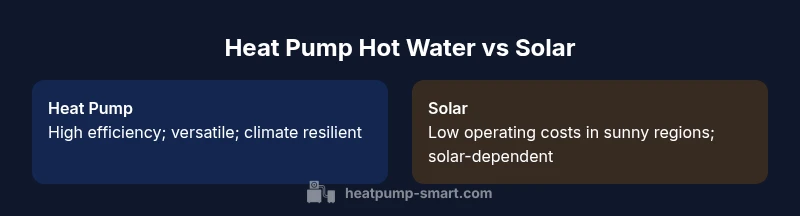
Heat Pump Hot Water vs Solar: A Practical Comparison
Compare heat pump hot water vs solar: costs, efficiency, climate needs, and maintenance to help homeowners and builders choose the best hot water solution.


Heat pump hot water vs solar presents two paths to efficient domestic hot water. Heat pumps excel in energy efficiency year-round, even in milder climates, while solar shines in sunny areas with abundant irradiance. Both can pair with storage and smart controls, but climate, upfront costs, and maintenance shape long-term costs and reliability.
Understanding the Options: Heat Pump Hot Water vs Solar
Hot water is a fundamental utility in most homes, and two modern approaches dominate discussions: heat pump hot water and solar hot water. A heat pump water heater uses ambient heat from the air (or surrounding space) and an electric compressor to raise water temperature, often delivering high efficiency with gas-like reliability. Solar hot water relies on rooftop collectors that absorb sunlight to heat water, typically stored in a tank for on-demand use. The comparison between heat pump hot water vs solar hinges on climate, house design, and energy prices. According to Heatpump Smart, both systems can be paired with storage and smart controls to optimize performance and comfort. The Heatpump Smart team found that the choice often comes down to climate resilience, upfront investment, and long-term energy costs, rather than a single universal winner. The keyword heat pump hot water vs solar appears throughout this analysis to emphasize the core decision every homeowner faces: how to balance reliability, efficiency, and cost over the system’s lifetime.
Energy Efficiency and Operating Costs
Efficiency metrics like COP (coefficient of performance) for heat pumps and the seasonal performance of solar thermal systems drive long-term costs. A heat pump water heater typically delivers strong efficiency across a wide range of indoor temperatures, especially when electricity prices are favorable or off-peak rates apply. Solar hot water shines when there is abundant sun, contributing a large share of annual hot water needs and reducing grid electricity usage. The comparative question, heat pump hot water vs solar, also depends on storage sizing and backup strategies. Hybrid approaches—using solar to pre-heat water and a heat pump to finish—can combine the strengths of both. From a life-cycle perspective, heat pumps can offer consistent performance in cooling-supported homes, while solar performance tracks solar irradiance year-to-year, making region and seasonal variability critical considerations. Heatpump Smart analysis shows that total operating costs hinge on electricity prices, insulation quality, and how much backup is required during cloudy periods.
Climate and Location Considerations
Climate strongly influences which option performs best. Heat pumps are versatile in moderate to cold climates because they extract ambient heat from the air and can operate efficiently with modern refrigerants. Solar thermal systems depend heavily on sunlight, making them ideal in sunny, dry locations with minimal shading. In overcast or high-latitude regions, heat pumps often offer more consistent performance, whereas solar may require a larger storage tank and supplemental heating. When weighing heat pump hot water vs solar, consider local climate data, typical winter temperatures, and how seasonal sun patterns affect your hot water demands. Heatpump Smart’s field reviews suggest that hybrid installations can smooth variability by using solar heat when available and a heat pump as a reliable backup.
Installation and Space Requirements
Installing a heat pump water heater usually requires a dedicated unit near the existing hot water system, with adequate clearance for airflow and electrical connections. Solar solutions demand rooftop or ground-mounted collectors, a storage tank, and piping that connects to the home’s water system, along with proper roof load considerations. The space footprint and structural requirements differ: heat pumps are compact and self-contained, while solar involves external modules and potentially more complex routing. For homeowners, builders, and property managers evaluating heat pump hot water vs solar, the key is to map out available space, roof orientation, and access for routine maintenance to minimize long-term disruption.
Maintenance and Reliability
Maintenance demands differ between these technologies. Heat pump water heaters require periodic checks of refrigerant lines, electrical connections, and venting paths, with relatively low ongoing maintenance if professionally installed. Solar hot water systems need regular inspection of collectors for debris, insulation integrity, and anti-freeze loops in glycol-based systems. In terms of reliability, heat pumps deliver steady performance in many environments, whereas solar depends on solar availability and system sizing. A well-designed hybrid approach can yield robust reliability by leveraging solar input when possible and relying on the heat pump during cloudy periods or high-demand times.
Financial Considerations and Incentives
Financial factors play a decisive role in the heat pump hot water vs solar decision. Upfront costs vary by system design, with heat pumps offering compact installation and modular expansion, while solar requires roof-ready infrastructure and collectors. Ongoing costs are tied to electricity prices for heat pumps and the proportion of water heated by solar for solar-only systems. Incentives, rebates, and tax credits differ by region and program availability, so it’s essential to check what applies locally. Heatpump Smart analysis shows that incentives can materially affect the payback period, especially when paired with energy storage or smart controls that optimize usage according to time-of-use pricing. In all cases, a well-insulated tank and piping reduce standby heat loss and improve overall savings.
Integration with Solar PV and Smart Controls
For homeowners aiming for maximum energy independence, integrating hot water systems with solar PV and smart controls is a powerful strategy. A heat pump can be controlled via smart thermostats and automation to minimize energy use while ensuring comfort. Solar thermal systems can be paired with PV arrays to optimize energy flows, especially when paired with a hybrid storage strategy. When evaluating heat pump hot water vs solar, consider how each system can interact with existing or planned solar PV, home energy management software, and future grid dynamics. Heatpump Smart recommends evaluating controller compatibility and potential for demand response programs that can enhance savings.
Comparison
| Feature | Heat pump hot water | Solar hot water |
|---|---|---|
| Installation and upfront costs | Moderate to high upfront costs, compact footprint | Moderate upfront costs but higher roof and installation considerations |
| Energy efficiency and performance | High efficiency year-round, works well with grid electricity | Very high efficiency with strong sun but dependent on irradiance |
| Climate dependence | Generally versatile across climates; cold-friendly with modern refrigerants | Best in sunny climates; performance follows sun exposure |
| Maintenance and reliability | Lower annual maintenance, sealed refrigerant loop | Regular collector cleaning and system checks; weather exposure adds risk |
| Space and installation considerations | Indoor/outdoor options; tank proximity matters | Rooftop or ground-mounted collectors; potential roof load |
| Long-term costs and savings | Savings depend on electricity price and usage patterns | Savings tied to solar irradiance and storage efficiency |
| Environmental impact | Lower emissions when paired with clean electricity; depends on grid mix | Low operating emissions with solar contribution; very low when sunny |
Advantages
- Strong year-round performance and reliability
- Seamless integration with smart home systems
- Flexible placement and scalable storage options
- Less dependent on roof conditions than solar
Disadvantages
- Higher upfront costs than some competing options
- Electricity price exposure can affect running costs
- Requires electrical service and professional installation
- Solar integration may be complex in older homes
Heat pump hot water generally offers more reliable year-round performance and easier integration with home systems, while solar excels in sunny climates with high insolation.
Choose heat pumps for consistent efficiency and flexible installation. Choose solar when you have abundant sun, available roof space, and strong incentives to maximize solar contribution.
Your Questions Answered
What is the main difference between heat pump hot water and solar hot water?
Heat pump water heaters use ambient heat and electricity to heat water, delivering reliable performance in many climates. Solar hot water uses rooftop collectors to heat water from the sun, performing best in sunny locations. The choice often depends on climate, space, and long-term energy costs.
Heat pumps heat water using ambient heat and electricity, while solar uses rooftop sun to heat water. The best choice depends on your climate and space.
Which system is cheaper to operate over the long term?
Operating costs depend on electricity prices, available sunlight, and usage patterns. Heat pumps can be cheaper with affordable electricity or off-peak rates, while solar can dramatically cut grid energy usage in sunny regions. A hybrid approach can often reduce overall costs the most.
Long-term costs depend on electricity prices and sun exposure. Heat pumps save with good electricity rates; solar saves with ample sun.
Can heat pump water heaters and solar water heaters be used together?
Yes. A hybrid system can pre-heat water with solar and finish with a heat pump, or vice versa. This approach can smooth variability, maximize solar contribution, and improve reliability during cloudy periods.
Absolutely. A hybrid setup can combine solar pre-heat with a heat pump for reliability.
How does climate affect performance?
Climates with strong sun favor solar; cooler climates may still work well with heat pumps, especially where sun is limited or seasonal. Heat pumps generally provide steadier performance across a broader range of weather conditions.
Sun-rich areas boost solar performance. Heat pumps cope better when sun is scarce or temperatures drop.
Are there government rebates or tax credits?
Rebates and tax incentives vary by region and program availability. Check local energy programs and utility offerings to determine eligibility for both heat pump and solar solutions. Incentives can materially affect payback periods.
Check local programs — incentives differ by region and can significantly affect payback.
What maintenance is required for each system?
Heat pumps require periodic checks of electrical connections and refrigerant lines. Solar thermal systems need collector cleaning and occasional checks of piping and anti-freeze loops. Regular inspection by a qualified tech helps prevent issues.
Regular inspections help prevent problems; heat pumps need electrical and refrigerant checks, solar needs collector care.
Top Takeaways
- Assess climate and sun exposure before choosing
- Prioritize insulation to reduce standby losses
- Consider a hybrid approach for optimal results
- Check local incentives and utility programs
- Plan for future integration with PV and smart controls