Heat Pump vs Water Heater: A Comprehensive Side-by-Side Guide
Compare heat pump water heaters with traditional electric options to identify the most energy-efficient hot water solution for your home, focusing on efficiency, costs, climate impact, and installation.


Choosing between a heat pump water heater and a traditional electric water heater hinges on climate, efficiency, and upfront costs. Heat pump water heaters leverage ambient heat to minimize running costs, while electric resistance tanks offer simpler installation and lower initial price. This quick comparison helps homeowners, builders, and managers evaluate energy source, efficiency, and installation realities for long-term hot-water reliability.
Understanding the heat pump water heater vs traditional water heater
When homeowners discuss heat pump vs water heater, they're typically comparing a heat pump water heater to a conventional electric tank. A heat pump water heater uses a refrigerant cycle to extract heat from the surrounding air and transfer that heat to the water in the tank. A traditional electric water heater relies on electric resistance coils to heat water directly. In practice, this means the heat pump unit can deliver hot water with less electricity, but the upfront cost and installation requirements differ. According to Heatpump Smart, the core distinction is energy sourcing: heat pumps pull ambient heat from the space, reducing running costs, while electric tanks burn electric energy to heat water on demand. The Heatpump Smart team emphasizes evaluating long-term energy savings, climate suitability, and electrical infrastructure before choosing a model. This establishes the baseline for comparison: energy source, efficiency, and practical installation realities in homes and apartments.
How heat pump technology heats water
A heat pump water heater uses a refrigeration cycle to move heat from the surrounding air into the water tank, rather than generating heat directly with electric resistance. The system relies on a compressor, evaporator, and condenser to transfer energy efficiently. In storage-tank configurations, a single unit can heat water for a family while also cooling or dehumidifying the nearby space in some designs. The process is inherently energy-efficient because it shifts heat rather than creates it, which is why it can deliver lower operating costs when conditions are favorable. While performance improves in warmer spaces, modern units include defrost features and backup electric elements to maintain hot water supply during shoulder seasons. Heatpump Smart notes that performance varies with ambient temperature, humidity, and the unit’s design, so homeowners should consider space layout and ventilation when planning an installation.
Energy efficiency and climate considerations
Energy efficiency for heat pump water heaters is typically described using a COP or energy factor that reflects how much heat is delivered per unit of electricity. In practice, performance is highest when the unit can draw heat from a reasonably warm surrounding air and when the home’s climate matches the unit’s design. In cooler spaces, efficiency can drop unless the system includes a robust backup heating element. Electric resistance tanks, by contrast, heat water with direct electrical power and tend to have steady performance regardless of ambient temperature, though operating costs rise with electricity prices. When evaluating options, homeowners should compare long-term operating costs rather than only upfront price. Heatpump Smart analysis highlights that the best choice often depends on climate, insulation quality, electrical service, and local utility incentives. Overall, heat pumps deliver strong efficiency in temperate climates with adequate space and ventilation.
Space needs, installation, and maintenance
Heat pump water heaters require space for the cabinet, air intake and exhaust, and often a nearby area with good ventilation. They may sit in a utility closet or garage and can be noisier than a standard electric tank, especially during startup or defrost cycles. Installation can involve upgrading electrical service, adding dedicated circuits, and ensuring proper drain pans and overflow protection. By contrast, traditional electric tanks are simpler to install, usually requiring less space for air movement and venting. Maintenance tends to be lower-risk and straightforward: check the anode rod (if present), drain the tank periodically, and keep the area around the unit clear. Still, regular checks of filters and coils on heat-pump units help sustain efficiency and prevent future issues. Planning ahead for space, load, and service access pays dividends over the system’s life.
Cost, payback, and lifecycle considerations
Upfront costs for heat pump water heaters are typically higher than those for standard electric tanks, though rebates and incentives can narrow the gap. Operating costs are generally lower because the system draws heat from the surrounding environment rather than relying solely on electric resistance. The long-term economics depend on household hot-water demand, electricity rates, and climate. A well-sized unit paired with solar or a demand-based thermostat can maximize savings. When evaluating lifecycle, consider replacement intervals, maintenance needs, and potential tax credits or utility rebates. Heatpump Smart notes that the true payback period depends on local energy prices and climate, so homeowners should run a personalized calculation that accounts for local incentives and anticipated usage.
Performance under real-world use
In day-to-day life, hot-water delivery, recovery time, and the ability to sustain multiple simultaneous uses matter as much as efficiency ratings. Heat pump units often deliver lower operating costs per gallon of hot water, but demand spikes during baths, laundry, and dishwashing can push the system to rely on backup elements. Temperature stability and recovery performance depend on tank size, input water temperature, and the health of the refrigerant loop. For households with high simultaneous demand, a larger tank or a secondary heating solution may be appropriate. The practical takeaway is to align the system’s size and backup strategy with typical patterns of hot-water use, rather than relying on theoretical efficiency alone.
Practical installation scenarios for homeowners, builders, and managers
- New builds: prioritize space planning, electrical service capacity, and code-compliant venting or intake paths. A heat pump water heater can become a central component of an energy-efficient home if paired with proper insulation and low-heat-loss piping.
- Retrofits: evaluate whether existing electrical service can accommodate a heat pump unit and if the space is suitable for installation and venting. Some projects may require upgrades to panel capacity or new dedicated circuits.
- Multi-unit buildings: coordinate with a licensed electrician and plumber to ensure consistent performance across units, and consider shared or centralized heat pump systems if codes and budgets allow. Heatpump Smart reinforces that planning ahead with a professional assessment reduces surprises and helps ensure you meet local permitting standards.
How to decide: a practical step-by-step checklist
- Assess climate and space: mild, heated spaces with good ventilation favor heat pumps. 2) Compare upfront costs vs long-term operating costs, including incentives. 3) Confirm electrical capacity and panel space for a heat pump system. 4) Check rebates from utilities and local government programs. 5) Confirm compatibility with existing plumbing and hot-water draw patterns. 6) Plan for maintenance and potential backup heating options to ensure reliability.
Future-proofing and integration with home systems
Heat pump water heaters pair well with other energy-smart investments. If you have rooftop solar or a home storage solution, heat pumps can leverage lower-cost electricity during daylight hours. Smart controls and load-shifting strategies can further optimize usage, especially in homes with variable electricity pricing. For builders and property managers, selecting a model with robust warranty coverage and scalable installation options supports long-term asset value. Heatpump Smart emphasizes looking for units with good diagnostics, service networks, and compatibility with modern thermostats and energy-management platforms. This approach aligns with broader goals of energy efficiency, resilience, and comfort.
Comparison
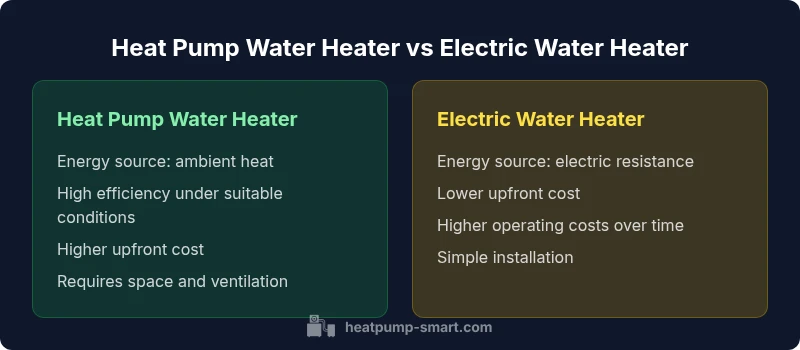
| Feature | Heat pump water heater | Electric resistance water heater |
|---|---|---|
| Energy source | Ambient heat captured by a heat pump | Electric resistance heating |
| Efficiency | High efficiency (COP-based) | Moderate to high efficiency depending on electricity cost |
| Upfront cost | Higher upfront cost | Lower upfront cost |
| Operating cost | Lower operating costs in mild climates | Higher operating costs due to resistance heating |
| Space and installation | Requires space and ventilation | Typically simpler installation |
| Climate impact | Best in temperate climates | Less climate-sensitive, depends on electricity price |
| Incentives | Often eligible for rebates/credits | Incentives vary by region |
| Maintenance | Regular maintenance improves life and efficiency | Maintenance typically lower but depends on model |
Advantages
- Lower ongoing energy costs in suitable climates
- Improved hot-water delivery and recovery with modern tanks
- Good compatibility with solar and energy-management systems
- Potential rebates and incentives in many regions
- Long-term savings can exceed upfront costs when properly sized
Disadvantages
- Higher upfront cost and longer payback period
- Performance can decline in very cold spaces without backup heating
- Installation may require electrical upgrades and ventilation planning
- Some models may be noisier in tight spaces
Heat pump water heaters are generally the better long-term option when climate, space, and upfront cost align with the home’s needs
They deliver superior energy efficiency and potential long-term savings. Choose electric resistance if upfront cost and simple installation are paramount or climate conditions are unfavorable.
Your Questions Answered
What is a heat pump water heater?
A heat pump water heater uses a refrigeration cycle to move heat from the surrounding air into the water tank, rather than generating heat directly with electric resistance. This can deliver hot water more efficiently than a standard electric tank, especially in milder environments. Installation and climate matter for performance.
A heat pump water heater uses ambient heat to heat water, which makes it more efficient in the right spaces.
Is a heat pump water heater worth it in cold climates?
In colder environments, heat pump performance can drop compared with mild climates. The decision depends on electricity costs, climate, and available space. Some models provide backup heating to maintain reliability.
In cold climates, heat pumps may work, but efficiency drops; consider local energy costs.
Can a heat pump be retrofitted into an existing electric water heater?
You typically don’t retrofit a heat pump into an existing electric tank. Most installations involve replacing the unit with a heat-pump water heater or adding a separate heat-pump module connected to a tank. Check electrical capacity and space.
Retrofits usually mean replacing the unit or upgrading the tank; verify space and wiring first.
What rebates or incentives are available for heat pump water heaters?
Rebates and incentives vary by region and utility. Look for energy-efficiency programs, tax credits, and utility rebates in your area. Check with local energy providers for current offers.
Many programs offer rebates; check your utility and local government sites.
What maintenance does a heat pump water heater require?
Regular maintenance includes checking the air filter, inspecting the refrigerant lines, and ensuring drainage and condensate pans are clear. Schedule professional service periodically to ensure the heat pump and backup elements operate reliably.
Keep filters clean and have periodic professional checks.
How long does a heat pump water heater last?
Lifespan varies by model and use. With proper maintenance, a modern heat pump water heater should serve many years, but exact years depend on installation quality and factors like water hardness and usage.
They last many years with good maintenance; exact years vary.
Top Takeaways
- Prioritize climate and space: heat pumps excel in mild spaces
- Expect higher upfront costs but lower operating costs over time
- Check local rebates and utility programs to improve ROI
- Ensure adequate electrical service and ventilation during installation
- Pair with solar or smart controls for maximum efficiency