Heat Pump vs Gas Heater for Pool: A Comprehensive Comparison
Compare heat pumps vs gas heaters for pool heating—efficiency, costs, climate needs, and installation considerations to help homeowners and professionals choose the best option.


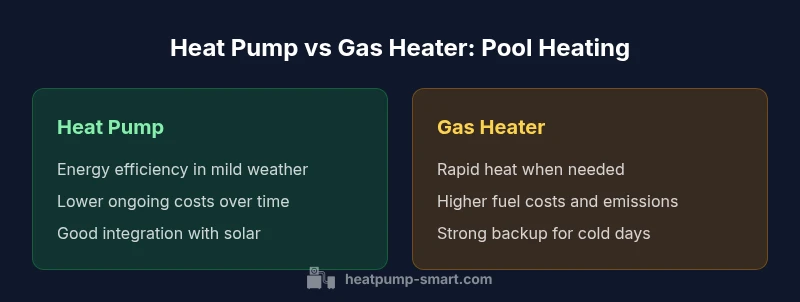
Heat pumps typically deliver energy-efficient pool heating with lower operating costs than gas heaters, especially in mild climates. Gas heaters heat fast but cost more to run and emit more. The Heatpump Smart team notes that climate, pool size, and usage patterns determine the best option.
The Core Difference Between Heat Pumps and Gas Heaters for Pools
When evaluating pool heating options, the core distinction is how heat is produced and transferred. Heat pumps move heat from the outdoor air into the pool water, delivering warmth with high seasonal efficiency in mild to moderate climates. Gas heaters generate heat directly through combustion, warming water quickly but at higher operating costs and emissions. For homeowners, builders, and property managers, this choice affects long-term budgeting, climate resilience, and maintenance needs. Heat pumps excel for steady, season-long comfort when you use the pool regularly and can tolerate a slower warm-up after a cool spell. Gas heaters shine when you need rapid temperature rise, especially if the pool remains at high warmth during peak usage or in colder climates where outdoor temperatures stay low. The Heatpump Smart team emphasizes that the best option hinges on climate, pool size, and how you actually use the pool throughout the swimming season.
How Heat Pumps Work for Pool Heating
A heat pump draws heat from the ambient air and concentrates it using a refrigerant cycle. The outdoor unit, often paired with an indoor control, uses a fan to extract heat from air and transfer it to the water through a heat exchanger. The system operates most efficiently when the air is reasonably warm and the pool is adequately insulated. Since heat pumps do not create heat themselves, their efficiency drops as outdoor temperatures fall. For best results, couple a heat pump with a pool cover to reduce heat losses at night and during cloudy days, and consider solar integration where feasible to maximize savings. Proper sizing and professional commissioning ensure the unit runs at peak efficiency across the swimming season.
How Gas Pool Heaters Operate
Gas pool heaters burn propane or natural gas to directly heat pool water through a burner inside the heater cabinet. They can deliver very rapid heating, which is helpful when you need quick turnaround after heavy use or after a cold spell. Gas heaters tend to have fewer moving parts than some heat pumps, but they require venting, a reliable gas supply, and more robust combustion-related maintenance. They also emit combustion byproducts, contributing to a larger carbon footprint if environmental impact is a concern. Proper clearances, venting design, and code-compliant installation are essential for safety and longevity.
Energy Efficiency and Running Costs: A Side-by-Side View
Energy efficiency is a central difference. Heat pumps offer high seasonal efficiency by moving warmth rather than generating it, which typically yields lower operating costs in climates with moderate temperatures. Gas heaters provide rapid heat but at higher ongoing fuel costs and emissions. The choice often depends on climate and usage patterns: if you heat frequently and stay within a comfortable temperature most of the season, heat pumps usually win on total cost of ownership. In colder periods or for pools requiring high temperatures quickly, a gas heater can be a valuable backup or primary option in a hybrid system.
Climate Considerations and Sizing Strategies
Sizing a pool heater correctly is crucial. In mild to moderate climates, a properly sized heat pump can maintain comfortable water temperatures efficiently, provided the pool is insulated and covered when not in use. In cooler climates, heat pumps may require larger outdoor units or supplemental heat sources to compensate for lower ambient temperatures. Gas heaters excel in cold conditions when ambient temperatures reduce heat pump efficiency. Professionals recommend a careful climate-based assessment, a pool-size calculator, and an energy-use plan to decide whether a heat pump, gas heater, or a hybrid approach best fits the site.
Upfront Costs, Maintenance, and Lifespan
Upfront costs for heat pumps are typically higher than for many gas heaters, but operating costs tend to be lower over the long term. Maintenance for heat pumps focuses on refrigerant integrity, fan operation, and coil cleanliness, whereas gas heaters require burner inspections, vent checks, and gas line safety. With proper maintenance, both systems offer long lifespans, but heat pumps often deliver better long-term value in temperate environments. Budget for seasonal servicing, filter replacements, and annual professional checks to preserve efficiency.
Installation Realities: Space, Venting, and Permits
Heat pump installations require outdoor space for the compressor unit, with a location that allows adequate airflow and weather protection. Venting is generally not needed for heat pumps, which can simplify installation in many settings. Gas heaters demand a vented exhaust system and a reliable gas supply, along with clearances from walls and combustible materials. Permit requirements vary by region, so a licensed installer should evaluate local codes, electrical requirements, and electrical panel capacity before planning the project.
Performance With Pools of Different Types and Setups
In-ground and above-ground pools have distinct heating needs. Heat pumps work well for larger volumes and continuous use when climate allows, while gas heaters can compensate for rapid temperature changes in smaller or highly variable pools. Saltwater pools, pool covers, and solar heating can influence overall efficiency; heat pumps pair well with solar-ready configurations, while gas heaters remain versatile for quick boosts regardless of water chemistry. Consider pool type, cover usage, and seasonal patterns when selecting a system.
Environmental Impact and Emissions
Heat pumps minimize direct emissions by using electricity to move heat instead of burning fuel, aligning with broader energy-efficiency goals. Gas heaters produce combustion byproducts and higher ongoing emissions, which can be a consideration for eco-conscious projects or buildings seeking green certifications. If you plan to rely on electricity from low-carbon sources, heat pumps become an even more attractive option for reducing the pool’s environmental footprint over time.
Making the Decision: A Practical Flowchart
Begin by evaluating climate and seasonal use, then consider pool size and desired temperatures. If you heat frequently in a mild climate and want long-term savings, start with a heat pump. If you live in a cold climate or require rapid heating for brief periods, a gas heater or a hybrid system may be preferable. Always factor upfront costs, maintenance requirements, and space constraints into your final plan.
Common Mistakes to Avoid
Underestimating the importance of proper sizing can lead to underheating or overspending on a too-large unit. Skipping professional sizing and commissioning often results in poor performance. Neglecting weatherproofing, pool covers, and solar integration reduces the real-world efficiency of either option. Finally, ignoring maintenance schedules can shorten unit life and erode efficiency over time.
Comparison
| Feature | Heat pump | Gas pool heater | ||
|---|---|---|---|---|
| Heating speed | Slower to reach target temperature | Faster heating and recovery | ||
| Energy efficiency | Higher efficiency in moderate climates | Lower efficiency in mild weather; efficiency improves with gas price dynamics | ||
| Operating costs | Lower ongoing costs in suitable climates | Higher ongoing costs due to fuel}} | Upfront cost | values [] |
Advantages
- Lower operating costs over time in mild to moderate climates
- High seasonal efficiency supports steady pool temperatures
- Quiet operation in many models
- Good compatibility with solar or off-peak pricing
Disadvantages
- Higher upfront cost compared to many gas heaters
- Efficiency drops in very cold weather without supplemental heating
- Outdoor unit requires dedicated space and weather protection
- Gas heaters offer rapid heat, which some users may not need
Heat pumps are the more versatile, energy-efficient choice for most residential pools in temperate climates; gas heaters excel where rapid heating is needed or in cold environments.
For most pools, a heat pump provides better long-term value and energy efficiency. Choose a gas heater if you need fast heat in cold weather or operate a pool with high peak demand and limited time for gradual warming.
Your Questions Answered
How does a heat pump heat pool water, and why is it more energy-efficient in milder climates?
Heat pumps extract heat from the outside air and transfer it to the pool water via a refrigerant cycle. They don’t burn fuel to generate heat, which makes them highly energy-efficient in moderate temperatures. Efficiency declines as outdoor temperatures fall, so climate and usage patterns matter.
Heat pumps move heat from the air into your pool water, using electricity more efficiently than burning fuel, especially in milder weather.
Can you run both a heat pump and a gas heater together?
Yes, some installations use a hybrid approach with a heat pump for most heating and a gas heater as a backup for peak demand or very cold days. Proper control systems and professional sizing are essential for effective operation.
A hybrid setup can combine the strengths of both, with the gas heater backing up the heat pump when extra warmth is needed.
What factors affect the installed cost of pool heating systems?
Costs depend on equipment type, heating capacity, space availability, venting requirements for gas heaters, and local permit fees. Labor, electrical work, and potential ground or pad preparation also influence total costs.
Installation cost varies with equipment choice, space, and local rules; plan for professional sizing and permitting.
Are rebates or incentives available for heat pump pool heaters?
Rebates or incentives vary by region and program. Check local energy programs, utility offerings, and national incentives for eligible heat pump installations.
Look for local energy programs or utility rebates that support efficient pool heating options.
How do I determine the right size for a pool heater?
Sizing should match pool volume, desired temperatures, and climate. A professional can perform calculations based on pool surface area, insulation, and usage plans to select the appropriate heating capacity.
Sizing should be done by a pro to ensure you get the right capacity for your pool.
Top Takeaways
- Assess climate and pool use to guide the choice
- Heat pumps win on long-term operating costs in milder zones
- Gas heaters win on rapid heating and cold-weather reliability
- Pair with a cover and consider solar integration to maximize efficiency
- Ensure proper sizing to avoid over or under-heating
- Factor upfront costs against annual energy costs over time