Pool Heat Pump vs Gas: A Comprehensive Comparison
An objective, in-depth comparison of pool heat pumps and gas heaters, focusing on efficiency, climate considerations, cost of ownership, installation, maintenance, and practical guidance for homeowners, builders, and property managers.


Pool heat pump vs gas: For most homeowners, a heat pump delivers energy-efficient, cost-conscious heating over time, while a gas heater can deliver rapid warmth when you need it most. The best choice hinges on your climate, electricity prices, and how often you heat your pool. Heat pumps excel with steady, moderate heating; gas shines in cold snaps or short, high-demand heats.
What these systems are and how they work
A pool heating system is not a single device but a choice between two fundamentally different technologies. A pool heat pump extracts heat from the outside air and transfers it to your pool water using a refrigerant cycle, while a gas pool heater burns natural gas or propane to directly warm water. The fundamental difference is energy source and heat delivery method. Heat pumps rely on electricity to move heat rather than generate it, which typically leads to higher energy efficiency over the system’s life. Gas heaters, by contrast, produce heat through combustion, often delivering rapid temperature gains but at higher ongoing fuel costs. For most homes, the decision should consider not only upfront costs but also long-term operating costs, climate conditions, and how you use the pool over the swimming season. Heat pumps tend to shine where ambient temperatures are mild to moderate, while gas heaters can be advantageous when you need quick relief from chilly weather or have irregular heating patterns. Heatpump Smart’s analysis indicates that homeowners who heat consistently year-round often see the strongest payback from heat pumps, thanks to lower operating costs when electricity prices are stable and relatively moderate outdoor temperatures.
How to read this guide
In this comparison, we break down the key factors that influence total cost of ownership and user experience. You’ll see how climate, energy prices, pool size, and heating goals affect whether a heat pump or a gas heater is the better fit. We also provide a step-by-step decision framework you can use when speaking with installers and contractors. By the end, you’ll have a clear sense of which technology aligns with your priorities—whether your aim is maximum energy savings, rapid heat, or reliable performance in challenging weather.
Heat pump mechanics and efficiency benchmarks
Heat pumps operate like an air conditioner in reverse: they draw warmth from the surrounding air (even when it’s cool) and compress it to heat the pool water. The core metric is the coefficient of performance (COP), which measures how many units of heat are produced per unit of electricity consumed. COP changes with outdoor temperature and humidity, and it tends to be higher in warm or mild climates and lower when it’s cold. Seasonal COP (SCOP) adds a real-world perspective by accounting for heating needs across an entire season. Modern pool heat pumps often incorporate variable-speed fans and compressors, which optimize efficiency during part-load conditions—common in residential use. While a heat pump won’t produce heat as quickly as a gas heater, it keeps running costs predictable and lower over long periods when electricity prices are reasonable and the ambient temperature supports efficient heat transfer. The Heatpump Smart team notes that installation quality and proper sizing are crucial to achieving the promised COP in real-world conditions.
Gas pool heaters: rapid warmth at the push of a button
Gas pool heaters burn natural gas or propane to heat water directly. They are typically rated by input BTU (British Thermal Units) and output heat, with faster heating cycles than heat pumps, especially when the pool is large or the water is very cold. Because heating is combustion-based, the running costs depend heavily on fuel prices and thermal efficiency of the unit. Gas heaters excel in cold weather or when a pool needs to reach a high temperature quickly after a period of low use. They also tend to have simple, robust designs with straightforward service routines. However, long-term fuel price volatility and higher potential emissions are common downsides. When you compare lifecycle costs, gas heaters can be cheaper upfront but more expensive to operate if fuel prices rise or if you heat the pool frequently over a long season.
Total cost of ownership: balancing upfront and operating costs
The decision between a heat pump and a gas heater hinges on a trade-off between upfront cost and ongoing energy costs. Heat pumps generally carry higher initial purchase and installation costs, largely due to the need for electrical work, and in some cases, a dedicated circuit and adequate space for outdoor units. Gas heaters often come with lower upfront costs and shorter installation timelines, especially where gas lines and venting are already in place. Over time, heat pumps typically deliver lower operating costs in mild climates because electricity price trends and heat transfer efficiency favor continuous use. In colder climates, the performance gap narrows, and the decision may tilt toward gas when rapid heating on demand is a frequent requirement. Heatpump Smart’s assessment highlights the importance of evaluating your pool usage pattern, local fuel and electricity costs, and potential incentives to determine the most cost-effective option for your property.
Climate and site-specific performance expectations
Ambient temperature and wind exposure play a critical role in the effectiveness of a pool heat pump. In temperate climates, heat pumps maintain comfortable water temperatures with modest energy use. In areas with long, cold winters or frequent temperature swings, performance can drop, extending heating times and increasing electricity consumption. Gas heaters, while less sensitive to outdoor temperature, require a ready fuel source and more space for venting and exhaust clearance. For pool managers or multi-unit properties, the reliability and responsiveness of heat pumps may be favored when you must maintain a consistent water temperature with fewer service calls, whereas gas heaters might be preferred for rapid heating when weather patterns are unpredictable. The key is to model your climate, pool cover usage, and typical heating schedules to project realistic energy use and costs.
Installation, space, and integration with your pool system
Both options require careful integration with your pool’s circulation system, thermostat network, and electrical or gas supply. A heat pump installation usually needs a dedicated outdoor location, cold-weather protection, and a properly sized electrical circuit. Gas heaters require a vent system and a safe clearance from any combustible materials, plus a gas line connection. The installation footprint, noise considerations, and accessibility will influence neighborhood compliance and permit requirements. In many cases, a combined approach—like a heat pump installed with a supplemental gas heater for peak demand periods—offers a balanced solution, providing efficiency with a reliable backup. When evaluating bids, ensure contractors account for local climate data, pool size, and water temperature targets to avoid under- or over-sizing the equipment.
Maintenance, service, and reliability considerations
Maintenance for pool heaters tends to revolve around cleanliness of heat exchangers, refrigerant checks for heat pumps, and routine inspections of electrical or gas connections. Heat pumps generally exhibit long service lives with relatively low maintenance needs beyond annual coil and filter checks. Gas heaters require periodic vent inspection, gas line integrity checks, and ignition system service. Availability of skilled technicians is a practical concern; heat pump technicians may be more common in residential markets due to rising popularity, while gas heater service depends on regional gas utility support. For property managers, choosing equipment with a broad service network and a reputable warranty can reduce downtime and maintenance costs over the life of the system. Heatpump Smart emphasizes planning for routine service and scheduled maintenance to protect efficiency and reliability.
Environmental impact, incentives, and rebates
Environmental considerations matter when choosing between pool heat pump and gas heater. Heat pumps use electricity, and their environmental impact depends on the grid’s energy mix; when powered by low-emission electricity, they offer a cleaner heating option over the long term. Gas heaters burn fossil fuels and produce direct emissions, which can be a concern in regions with strict air-quality goals. Many regions offer rebates, tax credits, or incentives for energy-efficient pool heating systems, particularly for heat pumps and high-efficiency equipment. When evaluating options, review available programs—these incentives can substantially reduce the effective payback period and improve overall project economics. Heatpump Smart’s research indicates that incentives, when combined with energy savings, can tip the decision in favor of heat pumps in suitable climates.
Decision framework: when to choose heat pump vs gas for a pool
To decide, assess five core factors: climate, pool usage frequency, heating speed requirements, available incentives, and space constraints. In warm climates with long swimming seasons and frequent daily heating, a heat pump often wins on total cost of ownership. For properties in cold climates where rapid heat is necessary after cold snaps or shorter heat cycles, a gas heater can be a practical choice, especially if the installation space and venting are straightforward. Consider a staged approach: start with a heat pump for daily use and add a small gas heater as a backup for peak demand days or very cold periods. Engage qualified installers to run a life-cycle cost analysis that includes equipment depreciation, maintenance, and utility rate projections. By aligning your choice with climate realities and usage patterns, you’ll maximize comfort and minimize operating costs.
The quick takeaway for decision-makers
In most cases, prioritize a heat pump for energy efficiency and steady performance in temperate zones. Reserve a gas heater for scenarios requiring rapid heat or reliability in very cold conditions, or where the local energy market makes gas cheaper at scale. The optimal configuration may also involve hybrid systems or staged heating strategies that balance cost and comfort. Always verify equipment sizing, installation requirements, and potential rebates before committing.
Comparison
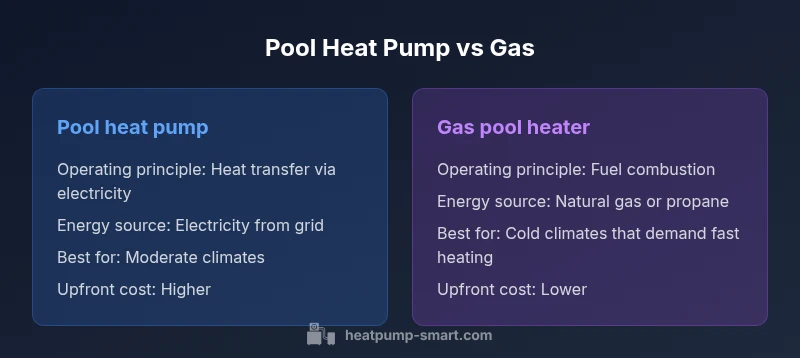
| Feature | Pool heat pump | Gas pool heater |
|---|---|---|
| Operating principle | Moves heat from ambient air to water, energy-efficient | Burns fuel to generate heat directly, rapid warming |
| Energy source | Electricity (air-source heat pump) | Natural gas/propane |
| Efficiency / performance metric | COP/SCOP dependent on outdoor temp | Fuel input efficiency and heat output |
| Climate dependence | Best in mild/moderate climates | Less sensitive to outdoor temps, but fuel costs matter |
| Heating speed | Slower to heat, steady warmth | Faster response for quick warms |
| Upfront cost | Typically higher initial investment | Often lower upfront cost |
| Operating costs | Lower over time with stable electricity prices | Higher if fuel prices rise, but cheap heat when needed |
| Maintenance | Generally lower maintenance | Regular venting and parts checks |
| Lifespan | Longer service life with proper maintenance | Good durability with periodic service |
| Emissions | Indirect emissions depend on electricity mix | Direct combustion emissions |
Advantages
- Energy-efficient operation over the pool season
- Lower operating costs with stable electricity prices
- Cleaner energy option when powered by green grid electricity
- Less space required for fuel storage (gas not needed on-site)
Disadvantages
- Higher upfront cost and installation complexity for heat pumps
- Performance declines in cold climates, potentially increasing heating time
- Gas heaters emit combustion byproducts and rely on fuel availability
- Electricity price volatility can affect running costs
Heat pumps win for long-term efficiency in moderate climates; gas heaters win for rapid heating and very cold conditions
Choose a heat pump if you prioritize energy savings and a steady heating profile. Opt for gas if you need quick warmth in cold weather or have limited access to reliable electricity.
Your Questions Answered
Which is cheaper to operate over the pool season: a heat pump or a gas heater?
Generally, a heat pump offers lower operating costs over a typical season in mild climates due to higher efficiency. Gas heaters may be cheaper upfront but tend to incur higher fuel costs over time, particularly if heating is frequent or prolonged.
Heat pumps usually cost less to run in moderate climates, while gas heaters can be cheaper upfront but more expensive to operate as fuel prices rise.
Will a heat pump work efficiently in very cold temperatures?
Heat pumps lose some efficiency as outside temperatures drop, which can extend heating time in very cold weather. In extreme cold, a gas heater may be needed as a backup or to ensure rapid warmth.
In very cold weather, a heat pump may take longer to heat; you might rely on a gas heater for quick warmth.
Can I install a heat pump with an existing pool system?
Yes. A heat pump can typically be integrated with most existing pool circulation systems, though electrical capacity, space for the unit, and proper clearance are important considerations. A licensed professional should evaluate wiring and refrigerant lines.
Yes, you can usually add a heat pump to an existing system with proper electrical and refrigerant connections.
What is the typical lifespan of pool heaters?
Lifespans vary by technology and maintenance. Heat pumps often offer long service lives with proper maintenance, while gas heaters require periodic part replacements and vent upkeep. Regular service helps maximize longevity for either option.
With good maintenance, heat pumps last long; gas heaters also last well but need regular servicing.
Are there rebates or incentives for pool heat pumps?
Many regions offer rebates or tax credits for energy-efficient pool heating systems, including heat pumps. Availability depends on local programs and utility incentives, so check current options before purchasing.
Yes, heat pumps often qualify for rebates, but check local programs first.
Top Takeaways
- Prioritize heat pumps for energy efficiency in temperate zones
- Gas heaters are best for rapid heating and cold-weather reliability
- Evaluate climate, usage patterns, and incentives before deciding
- Hybrid solutions can balance cost and comfort
- Verify installation requirements and service networks before purchase