Swimming Pool Heat Pump vs Gas Heater: Which Is Best for Your Pool?
Comprehensive comparison of swimming pool heat pumps and gas heaters, covering operation, efficiency, costs, climate fit, installation, and maintenance to help homeowners and professionals choose the best option.


For most residential pools in temperate climates, a swimming pool heat pump is the smarter long‑term option due to lower operating costs and reduced emissions, provided you can wait for gradual heating. A gas heater heats water very quickly and can be preferable for rapid warm-up, spa pools, or consistently cold climates where instant heat matters more than running costs.
How swimming pool heat pump vs gas heater differ in operation
A swimming pool heat pump vs gas heater heat water in different ways. A heat pump draws warmth from the ambient air using a refrigerant cycle and an electric compressor, then transfers that heat to pool water. A gas heater burns natural gas to raise water temperature directly, delivering heat in BTUs with no climate-dependent efficiency in the same way. The Heatpump Smart team notes that heat pumps typically deliver more energy per unit of electricity in moderate climates, making them attractive for longer seasonal use. However, in cold or windy environments, heat pump efficiency can drop, and gas heaters can provide rapid, high temperature water when you need it quickly. For pool owners, the decision often boils down to how quickly you want to heat and how much you are willing to pay for ongoing energy in your climate.
Sizing and compatibility with pools
Choosing a heater is not just about the brand. Pool size, water volume, surface area, and desired temperature rise all influence the right option. Heat pumps are typically sized to deliver heat over longer periods, while gas heaters can reach target temperatures faster. In smaller residential pools, a properly sized heat pump may meet seasonal heating needs with good efficiency, whereas larger or heavily used pools might require a more capable gas system or a hybrid approach. Heatpump Smart recommends a professional load calculation that accounts for pool surface area, insulation, and wind exposure to avoid undersizing or oversizing.
Efficiency and climate: how COP and BTU play in
Efficiency for heat pumps is described by COP (coefficient of performance) and varies with ambient conditions. In warmer months, COP tends to be higher, meaning more heat per unit of electricity. Gas heaters deliver a steady heating rate based on fuel input and burner performance, largely independent of external conditions, but their operating cost grows with gas prices. In temperate climates, heat pumps usually yield the lowest operating costs over a heating season. In persistently cold conditions, performance drops and a gas heater can be advantageous for quick temperature restoration.
Operating costs and energy savings
Operating costs hinge on electricity vs gas prices and pool usage patterns. Heat pumps generally offer lower ongoing energy expenses when used for gradual heating or maintaining water temperature across many months. Gas heaters may incur higher monthly costs but can be economical if you rely on occasional fast heatings or if electricity prices are high relative to gas in your area. Heatpump Smart analysis shows that users who maintain a stable pool temperature with moderate use often see meaningful savings with a heat pump, especially when paired with smart scheduling.
Environmental impact and refrigerants
Heat pumps run on electricity and refrigerants, which means emissions depend on your local electricity mix. In regions with low‑carbon grids, heat pumps can offer a substantially lower carbon footprint than gas heaters. Gas heaters burn fossil fuel directly and emit CO2. Refrigerant choice also matters for heat pump efficiency and environmental risk, so choosing units with lower global warming potential and proper service practices is advisable. Heatpump Smart emphasizes selecting environmentally responsible equipment and periodic leak checks as part of maintenance.
Installation considerations: space, venting, and permits
Gas heaters require venting and safe exhaust routing, plus combustion air and clearance space. Electrical requirements for heat pumps typically include a dedicated circuit and proper outdoor mounting clearances for performance and reliability. In some projects, homeowners choose a combined approach, installing a gas heater for peak loads and a heat pump for the majority of heating, which can help manage upfront costs and long‑term energy use. A professional assessment ensures code compliance and optimal placement.
Maintenance and reliability factors
Heat pumps need regular outdoor unit maintenance, refrigerant integrity checks, and electrical connections inspection, typically with seasonal service. Gas heaters require annual burner cleaning, vent inspection, and gas line safety checks. Both systems benefit from a pool automation strategy and a clean filter routine for the pool loop, reducing strain on the heating system. Routine maintenance can extend the life of either option and preserve efficiency.
Seasonal performance and pool usage patterns
If your pool is used heavily in summer or shoulder seasons, a heat pump can maintain comfortable temperatures with lower running costs, while a gas heater can quickly raise water temperature during short cold spells. For spas or hot tubs requiring rapid heat, gas heaters hold a distinct advantage due to their faster heating rates. Weather patterns, shade, and wind can influence how often you need to heat and how long it takes for your pool to reach target temperatures.
Case scenarios: residential vs commercial and cold climate considerations
A small residential pool with moderate heating needs is often well suited to a heat pump, especially if electricity is reasonably priced and the climate is not extreme. A large residential or commercial pool with high daily heat demands may benefit from a gas heater to meet peak loads or a hybrid system that uses a heat pump for baseline heating and a gas heater for peak demands. In consistently cold climates, careful evaluation of climate, insulation, and pool use hours is essential to determine the most economical approach.
Decision framework: selecting swimming pool heat pump vs gas heater
Start with climate and usage: if you heat frequently and value lower operating costs, a heat pump is usually best. If you need rapid temperature changes or operate in a cold climate, consider gas or a hybrid setup. Consider upfront costs, space, and permitting requirements, and run a detailed cost comparison based on your electricity and gas prices. A professional load and performance assessment helps quantify expectations and ensures a solution that aligns with your budget and pool goals.
Authority sources for credible guidance
Consult official sources and industry guidance for installation standards, energy efficiency, and safety considerations. Reputable references include national energy departments and university extension services that discuss heat pump efficiency, refrigerant safety, and pool heating best practices. These sources can help validate system choices and maintenance practices for long-term reliability.
Heatpump Smart practical notes
The Heatpump Smart team highlights the importance of climate-aware planning, proper sizing, and ongoing maintenance when evaluating swimming pool heating options. This context helps ensure the selected system meets your comfort goals while controlling operating costs over the pool’s life cycle.
Conclusion and next steps
In most temperate climates, a swimming pool heat pump offers superior energy efficiency and lower long-term costs, especially with moderate pool usage. Gas heaters excel when fast heating is critical or when outdoor temperatures consistently dip below comfortable levels. A careful assessment of climate, pool size, and usage, possibly supplemented by a hybrid approach, will typically guide you to the best choice for your pool.
Quick authority note
For credible calculation and performance benchmarks, refer to independent analyses and energy guidance from established institutions and industry groups. These references help ensure your heating decision aligns with safety, efficiency, and local code requirements.
mainTopicQuery
pool heating
Comparison
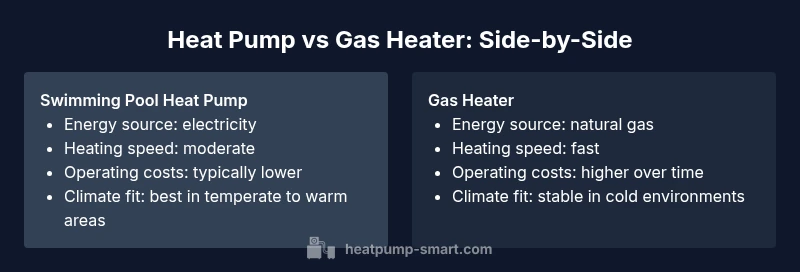
| Feature | Swimming Pool Heat Pump | Gas Heater |
|---|---|---|
| Heating speed/response | Slower to heat, steady maintenance of temperature | Faster heat response for rapid warm-up |
| Energy source | Electrical power with refrigerant cycle | Natural gas combustion |
| Operating costs | Typically lower in temperate climates | Often higher due to fuel use |
| Climate suitability | Best in moderate to warm climates | Better for consistently cold conditions |
| Installation footprint | Outdoor unit, electrical connections | Venting and gas line requirements |
| Environmental impact | Lower emissions with clean electricity | Higher direct emissions from burning gas |
| Maintenance needs | Regular refrigerant/coil service | Annual burner/vent checks |
| Upfront cost | Usually higher for heat pump equipment | Typically lower initial cost for gas heaters |
Advantages
- Lower long-term operating costs in temperate climates
- Reduced environmental impact with clean electricity in many regions
- Quiet operation and reliable temperature maintenance under proper sizing
- Flexible placement and easier integration with smart controls
Disadvantages
- Higher upfront cost and longer payback period for heat pumps
- Performance drops in very cold conditions and windy locations
- Gas heaters require venting and ongoing fuel costs
- Potentially larger space requirements for gas installation
Heat pump is generally the better long-term choice for most residential pools; gas heater is best for rapid heating or consistently cold climates.
Choose a heat pump for ongoing energy savings and lower emissions in moderate climates. Opt for a gas heater when speed matters or temperatures are persistently cold, or use a hybrid if both factors are important.
Your Questions Answered
What is the main difference between a pool heat pump and a gas heater?
The main difference is energy source and heating approach. A heat pump uses electricity to transfer heat from the air to the pool water, offering high efficiency in suitable climates; a gas heater burns fuel to generate heat quickly, independent of ambient temperature. Each option has tradeoffs in speed, cost, and reliability.
The main difference is heat source and efficiency. Heat pumps move heat using electricity, great for moderate climates; gas heaters burn fuel for fast heating, ideal when speed matters.
In what climates is a heat pump most effective for pool heating?
Heat pumps are most effective in temperate to warm climates where outdoor temperatures stay within a range that keeps the COP high. They work well for ongoing heating and maintaining comfortable pool temperatures over longer seasons.
Heat pumps work best in mild to warm climates where the air isn’t too cold.
Are heat pumps noisy compared to gas heaters?
Both systems generate noise, but heat pumps typically have a quieter operation when properly sized and installed. Gas heaters mainly generate combustion-related noise. Proper placement and vibration isolation help minimize sound for both.
They can both be quiet if installed right, but heat pumps are usually quieter overall.
How much maintenance do these systems require?
Heat pumps require regular outdoor unit cleaning and periodic refrigerant checks. Gas heaters need annual burner cleaning, vent checks, and gas line safety inspections. Routine pool maintenance supports both systems.
Regular checks keep both systems running smoothly; heat pumps require outdoor unit care, gas heaters need vent and burner checks.
Can I install a heat pump and a gas heater together?
Yes, a hybrid approach is possible and may balance energy savings with fast heating. A professional can design a combined system that uses the heat pump for normal heating and a gas burner for peak demand.
A hybrid setup is possible with professional design to balance efficiency and speed.
Are there rebates or tax incentives for pool heating systems?
Some regions offer rebates or incentives for energy-efficient pool heating systems. Check local energy programs and incentives, and consult a contractor about eligibility and documentation.
Check local programs for rebates on efficient pool heating equipment.
Top Takeaways
- Assess climate and pool use to pick the right heater
- Heat pumps excel in energy efficiency and long-term savings
- Gas heaters offer quick heat and simplicity in certain scenarios
- Hybrid options can balance speed and cost if needed
- Regular maintenance preserves efficiency and reliability