Pool Heater vs Heat Pump: Which Is Best for Your Pool in 2026
A thorough, objective comparison of pool heaters and heat pumps, covering upfront costs, operating expenses, climate suitability, installation considerations, and long-term value to help homeowners decide.


When choosing a pool heater, a heat pump generally offers better long-term energy efficiency and lower running costs than traditional gas or electric resistance heaters, especially in temperate climates. Gas heaters heat quickly and work well in very cold weather but come with higher fuel costs and emissions. The right choice depends on climate, pool usage, and your tolerance for upfront investment.
Key Differences at a Glance
Wading through pool heating options often leads to a simple question: should you pick a traditional pool heater (gas or electric resistance) or a pool heat pump? The core distinction lies in energy source and efficiency. Gas heaters burn fuel to generate heat quickly, delivering rapid warm-up but at higher ongoing costs and emissions. Heat pumps, by contrast, move heat from the surrounding air into the pool water using an electric-powered refrigerant cycle. They typically provide higher operating efficiency and lower long-term costs, but their performance depends on ambient temperatures and proper installation. According to Heatpump Smart, 2026 analysis, heat pumps are often the more economical choice for homeowners in moderate climates who use their pools regularly across seasons. The decision should weigh upfront cost, climate, pool size, and expected usage to determine which path yields the best value for your situation.
How Heat Pumps Heat Your Pool
Pool heat pumps operate on a simple thermodynamic principle: they extract heat from the outside air and transfer it into the pool water via a refrigerant cycle and a heat exchanger. The process uses electricity to drive a compressor and fan, but it can deliver a significant amount of heat from ambient air even when outdoor temperatures aren’t extreme. Heat pumps work best when the surrounding air is above the mid-40s Fahrenheit (approximate threshold varies by model) and benefit from modern inverter technology and variable-speed fans that optimize performance. Installation quality, airflow, and condenser coil cleanliness all influence overall efficiency. In real-world terms, a properly sized heat pump can heat a pool to comfortable temperatures with far less energy than a gas heater under similar usage patterns.
Gas and Electric Resistance Heaters: When They Excel
Traditional gas heaters and electric resistance units heat water quickly and reliably, regardless of outdoor conditions. They excel when you need rapid warm-up after a cold snap or when pool usage is highly variable and peaks unpredictably. Gas heaters have the advantage of independence from outdoor air conditions, which makes them effective in very cold climates or during short, intense heating needs. However, they come with higher operating costs over time and more frequent maintenance related to fuel delivery systems and venting. Electric resistance heaters can be cheaper upfront but are among the least efficient options for large-volume pool heating, especially when used consistently. For some properties, especially where electrification or gas infrastructure is already present, these options may be the simplest retrofit.
Efficiency, Running Costs, and Operating Realities
Efficiency is central to the pool heater vs heat pump decision. Heat pumps typically offer higher overall efficiency (often described as a coefficient of performance, or COP) because they leverage ambient heat rather than generating heat directly from fuel. This usually translates to lower electricity bills over the swimming season, particularly for mid-sized to large pools in temperate climates. Gas heaters can heat quickly but accumulate higher fuel costs and emissions with extended use. The choice can hinge on pool ownership patterns: if you summer only a few months a year, a gas heater might seem appealing for its speed; if you swim year-round, a heat pump’s efficiency advantage often becomes clear over time. Heatpump Smart’s guidance in 2026 emphasizes balancing upfront investment with expected seasonal usage and local energy prices.
Climate, Temperature, and Pool Type Considerations
Ambient climate strongly shapes system performance. Heat pumps lose some efficiency as outdoor temperatures drop and humidity shifts; many models include defrost cycles to handle cold snaps, but effectiveness wanes in harsher winter conditions unless paired with supplemental heat. Gas heaters maintain steady heating but at the cost of ongoing fuel consumption and emissions. In saltwater pools, corrosion-resistant components and proper protective measures are essential for both systems, but heat pumps often pair well with modern salt-tolerant equipment. The pool size, desired water temperature, and whether the pool is used daily or seasonally should guide the sizing and selection process.
Sizing, Siting, and Installation Realities
Sizing a pool heater or heat pump correctly is critical for comfort and efficiency. An undersized unit will run continuously and struggle to reach target temperatures, while an oversized unit can waste energy and wear out components faster. Heat pumps require outdoor space for the condenser and adequate airflow, plus a suitable electrical supply. Gas heaters may require venting and gas line considerations, which can complicate installation and add to upfront costs. A professional load calculation that accounts for pool volume, climate, insulation, and heater efficiency is essential. Proper siting minimizes heat loss and ensures easy access for maintenance, preventing temperature swings and inefficiencies.
Maintenance, Durability, and Life Expectancy
Ongoing maintenance shapes the long-term value of pool heating systems. Heat pumps benefit from routine component checks, coil cleaning, and airflow assurance, with annual or biannual service typically recommended. Gas heaters require venting inspection, flame monitoring, and periodic fuel system maintenance. Electric resistance heaters demand less mechanical maintenance but are less forgiving regarding inefficient cycling and scaling in certain water conditions. Lifespan expectations depend on usage, climate, and service quality; heat pumps often show strong longevity when properly maintained, while traditional gas systems may require more frequent refurbishments in challenging climates.
Real-World Scenarios and Decision Framework
Each property presents a unique set of constraints. If you live in a warm or temperate climate with steady pool use throughout the swimming season, a heat pump often delivers superior annual energy savings and comfort with less ongoing fuel expense. In regions with extended cold spells or if you need rapid heating in a short window, a gas heater or a hybrid approach (dual-system) can complement a heat pump to ensure reliability. For new builds, consider future energy prices, potential rebates, and available space for equipment. In older homes with existing gas lines, a gas heater might present a lower initial barrier, while a modern heat pump can provide a compelling long-term return if climate and usage align. Evaluate installation complexity, electrical capacity, and maintenance plans before committing.
Quick Decision Checklist for Your Project
- Define your climate and seasonal pool usage. 2) Assess available space, ventilation, and electrical/gas infrastructure. 3) Compare upfront costs against long-term operating costs and potential rebates. 4) Check local incentives and warranties. 5) Plan for maintenance access and ongoing service needs. 6) Consider resale value and energy-efficiency goals. A structured comparison aligned with your climate and schedule helps you choose confidently.
Final Thoughts: Practical Path Forward
Selecting between a pool heater and a heat pump boils down to climate, usage, and long-term cost considerations. Heat pumps offer compelling energy savings in milder climates and with frequent pool use, while gas heaters provide reliable performance in colder conditions and colder months. For many homeowners, a heat pump paired with a backup heating option or a hybrid approach strikes the best balance between comfort, efficiency, and resilience. As you plan, refer to local energy guidelines, evaluate total cost of ownership, and lean on professional advice to tailor a solution that fits your property and budget.
Comparison
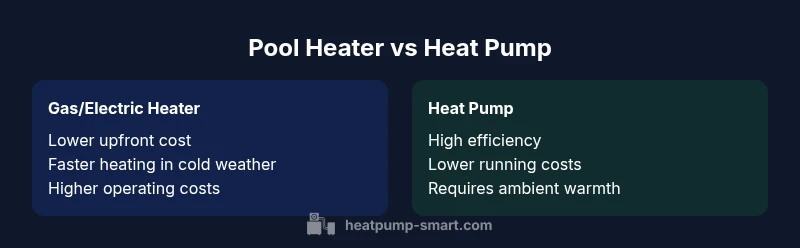
| Feature | Gas/Electric Pool Heater | Pool Heat Pump |
|---|---|---|
| Upfront Cost | Lower upfront cost | Higher upfront cost |
| Running Costs | Higher ongoing fuel/electric costs | Lower ongoing energy costs |
| Energy Efficiency | Lower efficiency for large pools in mild weather | High efficiency with ambient heat |
| Climate Performance | Works well in warm temperatures, less dependent on ambient air | Best in temperate to cool climates with adequate airflow |
| Installation Considerations | Typically simpler installation; venting for gas or dedicated electric | Requires outdoor space for condenser and proper airflow |
| Maintenance | Fuel system checks and venting maintenance are common | Regular refrigerant and coil maintenance; airflow checks |
| Best For | Budget-focused upfront buyers; short heating windows | Year-round users in temperate climates seeking long-term savings |
Advantages
- Lower long-term operating costs with heat pumps
- Reduced environmental impact due to higher efficiency
- Flexibility with modern controls and variable-speed options
- Quieter operation in many installations
Disadvantages
- Higher upfront cost and longer payback period
- Reduced performance in very cold climates without supplemental heat
- Requires space for outdoor unit and adequate airflow
Heat pumps generally win on long-term value in temperate climates; gas heaters may be preferable for very cold climates or when upfront cost is the main constraint.
Choose a heat pump if you prioritize energy efficiency and year-round comfort in moderate climates. Opt for a gas heater if you need rapid heating in cold weather or have tight budget constraints upfront.
Your Questions Answered
Is a pool heat pump suitable for very cold climates?
Pool heat pumps perform best in mild to moderate climates and can struggle in very cold conditions without supplemental heat. In colder regions, a gas heater or hybrid system may be necessary to maintain comfortable temperatures during the coldest months.
Heat pumps work best in mild weather; for very cold places, you might need a backup heat source.
What is the upfront cost difference between a pool heat pump and a gas heater?
Heat pumps usually require a higher upfront investment due to their compressor, fan, and refrigerant system. Gas heaters tend to be cheaper to purchase, but operating costs rise with fuel prices.
Heat pumps cost more upfront but save on energy over time; gas heaters are cheaper now but cost more to run.
Can I retrofit my existing pool heater to a heat pump?
Retrofitting depends on current plumbing, electrical capacity, and space for the outdoor condenser. In many cases, a full replacement with a heat pump is chosen to optimize efficiency and future-proof the installation.
Retrofit options depend on space and wiring; often replacement with a heat pump is preferred.
Do heat pumps work with saltwater pools?
Yes, heat pumps can work with saltwater pools, but you should select corrosion-resistant components and maintain proper water chemistry to protect equipment.
Yes, heat pumps can be paired with saltwater pools with proper materials and maintenance.
What maintenance is required for pool heat pumps?
Annual professional service is common, along with routine checks of airflow, coil cleanliness, and electrical connections. Keep the outdoor unit clear of debris for consistent performance.
Regular professional service and keeping the unit clear of debris keeps heat pumps efficient.
How should I size a pool heat pump for my pool?
Sizing should consider pool volume, desired temperature rise, climate, and pool usage. A professional load calculation and manufacturer guidelines help identify the right unit size for your needs.
Size it based on your pool and climate; professionals can calculate the exact needs.
Are there rebates or tax credits for pool heat pumps?
Some regions offer energy-efficiency rebates or incentives for heat pumps. Check local programs and utility offerings to see if you qualify, and factor any incentives into the overall economics.
Look for local rebates or incentives to improve payback.
Top Takeaways
- Assess climate and yearly pool usage before deciding
- Balance upfront costs with long-term operating savings
- Ensure proper installation space and electrical/gas infrastructure
- Plan for maintenance to maximize system life
- Consider hybrid options for variable climates