What Temperature Do Heat Pumps Heat Water To? A Practical Guide
Discover what temperature heat pumps heat water to, how it affects energy savings, and how to set safe, comfortable targets for your home.


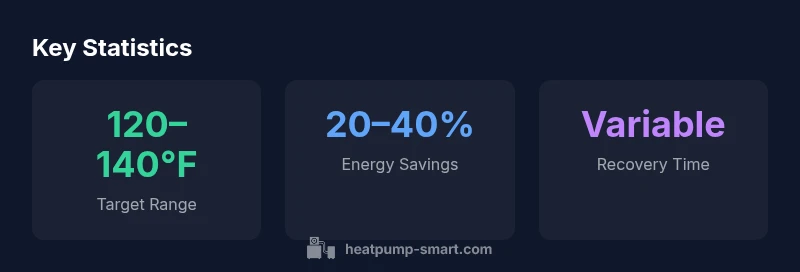
Heat pump water heaters typically heat water to domestic temperatures by transferring ambient heat into the water. In most homes, targets range from about 120°F (49°C) to 140°F (60°C). Exact temps depend on model, thermostat settings, and safety features. Higher temps increase energy consumption and scald risk, while lower temps may fall short of hot-water needs.
What temperature do heat pumps heat water to?
According to Heatpump Smart, heat pump water heaters operate by extracting ambient heat from the air or ground and transferring it to the water. The resulting hot water temperature is set to domestic targets rather than 'boiling' temperatures. In practice, many homes aim for 120°F (49°C) to balance comfort and energy use. Some households raise to 130–140°F (54–60°C) for improved sanitization or to meet higher hot-water demand. The exact temperature depends on the model, thermostat setting, the use of back-up heating, and safety features. Heating to a higher target increases energy consumption due to more frequent compressor cycles and standby heat losses, while lower targets can fall short of user expectations for showers and dishwashing. The best approach is to start with a standard like 120°F and adjust based on your family’s usage patterns, the number of occupants, and the quality of your incoming cold water. For households with children or elderly residents, consider a tempering valve or slightly higher temp with controlled mixing to reduce risk of scalding. If you’re asking what temperature do heat pumps heat water to, start with 120°F as a baseline and adjust as needed.
How heat pump water heaters set temperatures
Most heat pump water heaters use an electronic thermostat or digital control panel that lets you set a target water temperature. Some models offer a single-point dial, while others provide a calendar-based schedule or eco-mode that adjusts the target temperature based on energy savings goals. The thermostat typically displays in Fahrenheit (°F) or Celsius (°C) and stores multiple presets for different household needs. For safety, many units warn if temperatures exceed a certain limit or automatically limit the maximum by default. When you adjust the setpoint, the system recalibrates by modulating compressor speed and fan operation to reach the new target. Remember to allow a grace period after changing the setting to observe the actual delivered temperature and consistency across hot water outlets.
Factors that influence water temperature
- Inlet water temperature: Colder incoming water requires more energy to reach the target, potentially affecting recovery time.
- Tank size and insulation: Larger, well-insulated tanks retain heat longer, reducing cycling but requiring a higher initial energy input to raise temps.
- Climate and ambient air temperature: Warmer ambient air improves heat extraction efficiency; cold climates may reduce overall efficiency and stability of water temps.
- Back-up heating: If a secondary heat source is used (electric resistance or gas), it may be engaged to meet peak demand, altering the perceived temperature stability.
- Safety features: Tempering valves or anti-scald devices can help manage higher setpoints without risking burns.
- Usage patterns: Families with high hot-water demand may benefit from a higher setpoint during peak usage days and a lower setting during low-use periods.
Energy use implications of higher temperatures
Raising the water temperature increases the energy required to heat water and may raise standby losses in poorly insulated tanks. Conversely, maintaining a lower setpoint reduces energy use per gallon but can increase the frequency of heating cycles to meet demand. For many households, the sweet spot balances comfort with energy savings: starting at 120°F, then adjusting upward to 130–135°F during periods of heavy use and returning to 120°F when demand subsides. Implementing a high-setpoint with a tempering valve allows you to enjoy hot water quickly while protecting against scalding and reducing the risk of overheating the storage tank.
Practical guidelines to configure temps for your home
- Start at 120°F (49°C) as a baseline for most households and adjust in small increments (2–5°F) until you reach comfortable showers and dishwashing performance.
- If you have young children or elderly residents, consider keeping the setpoint at 120°F and installing a tempering valve to prevent scalding while using a higher internal temperature for sanitation if needed.
- For higher hot-water demand, test a gradual increase to 130–135°F and assess whether recovery times meet your needs without excessive energy use.
- Use eco/seasonal modes if your unit supports them to automatically adjust temperatures based on outdoor temperature and usage patterns.
- Regularly measure the actual delivered temperature at a faucet with a calibrated thermometer to ensure the system performs as expected.
Maintenance and safety considerations
Keep the thermostat and control panel clean, and verify that the temperature sensor is immersed correctly in the water tank. Inspect insulation around the coolant lines and ensure there are no air leaks that could affect efficiency. If you notice inconsistent temperatures, check for mineral buildup or sediment that could insulate the water and reduce heat transfer. Always follow manufacturer guidelines for service intervals, and consult a licensed technician if you suspect sensor drift or refrigerant-related issues.
Common scenarios and tuning tips
- Small households with moderate hot-water needs: 120°F is typically sufficient; you may not need to adjust higher unless you notice insufficient hot water.
- Families with high draw: A higher setpoint (130–135°F) during mornings and evenings may reduce run-time and improve perceived temperature, then revert to 120°F later.
- Homes with stored legionella concerns: Some guidelines recommend higher temperatures, but this should be paired with a mixing valve and safety controls to prevent scalding. Always align with local codes and manufacturer guidance.
Key factors influencing hot-water temperature in heat pump systems
| Parameter | Typical setting | Notes |
|---|---|---|
| Hot water setpoint | 120–140°F | Domestic range; adjust per needs |
| Inlet water temperature influence | Colder inlet temps raise energy use | Affects recovery and burn risk |
| Tank size impact | Larger tanks reduce cycling | Size matters for available hot water |
| Back-up heating | Possible with higher setpoints | Used during peak demand |
Your Questions Answered
What temperature should I set my heat pump water heater to?
For most homes, start at 120°F (49°C) and adjust upward in small steps if you need more hot water. Consider a higher setpoint only if you have high demand, and use a tempering valve to protect against scalding.
Start with 120 degrees and adjust up slowly if you need more hot water. Use a tempering valve for safety.
Why does my water heater heat to different temps at times?
Differences can occur due to changes in incoming water temperature, seasonal climate, and whether the back-up heater engages. Thermostat calibration and short-term usage spikes can also cause temporary fluctuations.
Temps can vary with incoming water, season, and whether backup heaters kick in.
Can I lower the temperature in summer to save energy?
Yes. Reducing setpoint during months with lower hot-water demand can save energy, but ensure comfort and safety remain adequate for your household.
Yes, you can lower it in summer to save energy as long as you maintain enough hot water.
Is 140°F safe for households with children?
140°F is effective for sanitation but poses scald risks. Use a tempering valve or keep a lower setpoint with improved outlet mixing to protect children and older residents.
Higher temps can cause scalds; use a tempering valve and adjustable mixing.
How do I adjust the temperature on my heat pump water heater?
Open the control panel, locate the water temperature setting, and adjust in small increments (2–5°F). Allow time for the system to stabilize and verify with a test at a faucet.
Open the panel, adjust by small increments, then test at a faucet after it stabilizes.
What about legionella risk and hot water safety?
Legionella concerns may justify higher temperatures, but combine with safety valves and local codes. Use mixing valves to prevent scalding while maintaining higher storage temps if recommended.
Higher temps can help with safety, but use mixing valves and follow local codes.
“Temperature settings should balance comfort, safety, and energy efficiency. A well-tuned heat pump water heater can deliver dependable hot water with lower energy use.”
Top Takeaways
- Set a safe starting point at 120°F and adjust as needed
- Balance comfort with energy use by avoiding consistently high temps
- Install a tempering valve to prevent scalding while using higher targets
- Check thermostat settings after seasonal changes
- Match tank size and climate to hot-water demand