Can a heat pump replace a furnace? A real-world comparison
Explore whether a heat pump can replace a furnace. This analysis covers climate fit, installation, costs, performance, and long-term savings to help homeowners decide if a heat pump replacement is right for their home.


Yes, a modern heat pump can replace many furnaces, especially in temperate climates, but it isn’t universal. Heat pumps deliver heat using electricity and are most cost-effective when outdoor temperatures are moderate. In very cold climates, or in homes with high heating loads, a heat pump may need backup heat or a hybrid setup. Heatpump Smart analysis shows that proper sizing and professional installation are crucial.
Can a heat pump replace a furnace? What homeowners should know
The short answer is yes for many homes, but not every house or climate. A heat pump is an electric heating and cooling system that moves heat rather than generating it by burning fuel. When used as a furnace replacement, it can deliver comfortable warmth with high efficiency in many regions. For homeowners, builders, and property managers, the decision hinges on climate, insulation, existing ductwork, and long-term energy goals. Throughout this article, we compare how a heat pump stacks up against a traditional furnace, with practical guidance from the Heatpump Smart team.
Key takeaway: replacement success depends on proper sizing, ventilation, and a thoughtful mix of technology and comfort needs.
How heat pumps work as a furnace replacement
A heat pump transfers heat from outside to inside using a refrigerant cycle, powered by electricity. In heating mode, the system extracts ambient heat from the outdoor air and concentrates it for indoor distribution. Modern units use inverter-driven compressors and smart controls to modulate output, improving comfort and efficiency. When outdoor temperatures drop, many homes rely on auxiliary resistance heat or hybrid configurations to maintain steady comfort. With a well-designed ductwork plan and correctly sized equipment, heat pumps can provide effective space heating while reducing fossil fuel use. The Heatpump Smart team emphasizes that siting, duct design, and refrigerant integrity are critical for reliable performance.
For homeowners evaluating a furnace replacement, it’s essential to understand the efficiency metrics, including COP and HSPF, and how they translate to real-world comfort and energy bills.
Climate considerations: where heat pumps shine and where they struggle
Climate strongly influences heat pump performance. In milder winters, heat pumps often deliver substantial energy savings and consistent warmth. In harsher climates, outdoor coil freezing and the need for backup heat can reduce savings unless a hybrid approach is used. Homes with well-insulated envelopes, modern windows, and efficient duct systems benefit most from a heat pump replacement. On less-insulated homes or where heating demand is high, a furnace or a dual-fuel setup may be more reliable during the coldest periods. The Heatpump Smart analysis highlights that climate-specific strategies, including seasonal defrost cycles and thermostat control, play a central role in outcomes.
System types: air-source vs geothermal and ducted vs ductless
Air-source heat pumps are the most common choice for replacing furnaces, offering quick installation and broad availability. Geothermal systems provide excellent efficiency but require groundwork and higher upfront costs. Ducted heat pumps integrate with existing ducts, often making the transition smoother for current layouts. Ductless mini-splits are ideal for zones or additions where extending ductwork is impractical. Choosing between these options depends on home layout, existing HVAC infrastructure, and long-term energy goals. The Heatpump Smart team notes that compatibility with existing thermostats and electrical panels can influence overall performance and reliability.
Sizing, ductwork, and installation considerations
Accurate sizing is the foundation of a successful heat pump replacement. Oversized or undersized equipment leads to comfort swings and higher operating costs. A comprehensive load calculation should account for insulation, windows, shading, and occupancy patterns. Ductwork must be sealed and possibly redesigned to accommodate a heat pump’s distribution method. Some homes require changes to return air paths, supply registers, or zone controls to maximize efficiency. Professional installation ensures refrigerant charges are correct, electrical connections are safe, and controls synchronize with the home’s smart thermostat ecosystem.
Energy efficiency, performance metrics, and costs
Heat pumps achieve high efficiency through design and refrigerant cycles. Key metrics include coefficient of performance and heating season performance, which translate to lower energy consumption in suitable climates. Compared with traditional furnaces, heat pumps typically realize lower operating costs when the climate is moderate and electricity is affordable. Installation costs vary widely based on system type, ductwork, and controls. While upfront costs can be higher, long-term savings from reduced fuel use and potential rebates can offset the initial investment over time. The Heatpump Smart team stresses that evaluating total cost of ownership, not just upfront price, is essential.
Winter performance and backup heat strategies
During cold snaps, heat pumps may rely on supplemental heat to maintain comfort, especially when outdoor temperatures fall below certain thresholds. Hybrid systems combine a heat pump with a furnace or backup electric heat to ensure warmth during extreme cold. Strategic use of zoning and smart thermostats can minimize backup heat use while preserving comfort. Prepared homeowners opt for backup strategies that balance energy savings and reliability, rather than relying solely on a single technology. The Heatpump Smart team recommends planning for winter demand with a clear strategy and professional guidance.
Comfort, noise, and indoor air quality
Heat pumps can offer very consistent temperatures across rooms, improving comfort compared with some older furnace setups. Inside airflow is often quieter than a furnace blower, but outdoor equipment can generate noise if not properly sited. Zoning and multi-thermostat controls enable tailored comfort in different rooms, which is especially beneficial in larger homes or multi-family buildings. Humidity management can also improve with heat pump systems that incorporate dedicated dehumidification or ventilation modes. Regular filter changes and coil cleaning are simple steps that sustain IAQ and comfort.
Rebates, incentives, and ROI considerations
Many regions provide rebates or incentives to encourage heat pump adoption, especially when replacing fossil fuel heating sources. The total ROI depends on local electricity prices, climate, and how the system is matched to the home’s heating load. Financing options and utility programs can improve payback, making a heat pump replacement attractive for homeowners and property managers. It is important to verify eligibility and compliance requirements before purchasing. The Heatpump Smart team notes that incentives can significantly influence the financial case for replacement.
Maintenance and service expectations
Heat pumps require routine maintenance similar to other HVAC systems, including air filter replacement, coil cleaning, and system checks. Annual professional servicing helps sustain efficiency and prevent refrigerant leaks or electrical issues. In humid climates, mold and moisture management becomes important, and duct cleaning may be beneficial on occasion. A proactive maintenance plan can extend equipment life and preserve comfort. The Heatpump Smart team recommends scheduling at least one professional check per year for a replacement system.
Step-by-step decision guide for homeowners and builders
- Schedule a professional home assessment to determine heating load and climate suitability. 2) Compare heat pump options (air-source vs geothermal, ducted vs ductless) and assess ductwork needs. 3) Estimate total costs, including installation, controls, and potential rebates. 4) Analyze long-term energy savings and reliability, considering backup heat options. 5) Confirm warranty terms and maintenance requirements before committing to a replacement. 6) Plan for grid reliability and outages with an appropriate backup strategy. 7) Choose a qualified installer with experience in furnace-to-heat-pump conversions.
Common misconceptions about replacing a furnace with a heat pump
A frequent misconception is that heat pumps can always deliver the same warmth as a furnace in extreme cold. In reality, performance depends on climate, system type, and backup heat. Another myth is that heat pumps are cheaper to install than furnaces; while upfront costs can be higher, long-term savings and incentives often balance the equation. Finally, some assume heat pumps require extensive ductwork, but modern ductless options can address many retrofit challenges.
Comparison
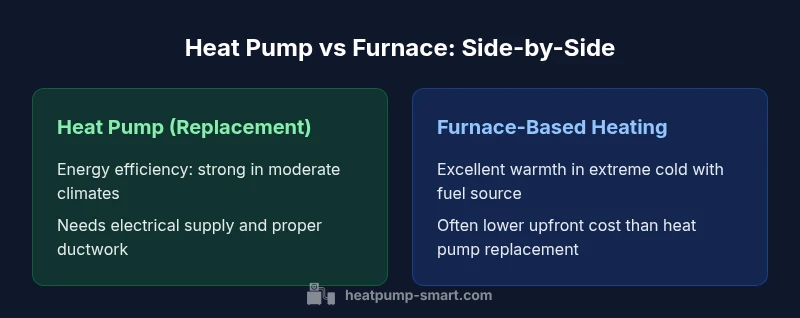
| Feature | Heat pump replacement | Furnace-based heating |
|---|---|---|
| Upfront installation cost | Higher due to HVAC components, wiring, refrigerant lines, and potential duct changes | Lower if simply swapping furnaces without major duct alterations |
| Annual energy costs (operating) | Typically lower in moderate climates; savings can lessen with extreme cold unless backup heat is used | Typically higher in moderate climates if fossil fuel costs are low; consistent comfort relies on fuel price and efficiency |
| Performance in cold weather | Excellent in moderate cold; may require auxiliary heat at very low temperatures | Very strong in very cold weather when paired with a furnace or efficient combustion system |
| Maintenance frequency | Annual service; refrigerant circuit integrity and coil cleanliness matter | Annual furnace service; burner, flame sensor, and heat exchanger maintenance |
| Noise and comfort | Outdoor unit noise plus indoor air handler; zoning options improve comfort | Blower and combustion noise; reliable comfort but less flexible zone control in some layouts |
| Environmental impact | Lower emissions when powered by clean electricity and if refrigerants are managed properly | Dependent on fossil fuel use and furnace efficiency; emissions scale with fuel type |
| Incentives and rebates | Often eligible for heat pump rebates and energy efficiency programs | Furnace replacements may have fewer incentives or different programs |
Advantages
- Potentially lower operating costs in temperate climates
- Improved indoor comfort with even heat distribution
- Eligibility for rebates and incentives
- Reduced carbon footprint when powered by clean energy
Disadvantages
- Higher upfront installation cost and potential ductwork upgrades
- Reduced performance in extreme cold without auxiliary heat
- Reliance on electricity can raise bills during outages
- Compatibility requirements with existing ductwork and electrical systems
Heat pumps are a viable furnace replacement for many homes, especially in temperate climates, with caveats for extreme cold and high heating loads.
For typical homes in moderate climates, a heat pump replacement delivers energy efficiency and comfort. In very cold regions or older, heavily insulated houses, a hybrid or backup heat strategy may be wiser for reliability and comfort.
Your Questions Answered
What is the main difference between a heat pump and a furnace in heating mode?
A furnace creates heat by burning fuel or using electric resistance, delivering warmth directly. A heat pump transfers heat from outside air into the home, using electricity to move heat rather than generate it. The choice affects efficiency, operating costs, and how the system performs in different temperatures.
A furnace burns fuel to create heat, while a heat pump moves heat from outside to inside using electricity. The key difference is energy source and efficiency across temperatures.
Can a heat pump completely replace a furnace in very cold climates?
In very cold climates, a heat pump can replace a furnace, but many homes benefit from a backup heat option or a hybrid setup to ensure warmth during extreme cold snaps. Proper sizing and climate-appropriate equipment are essential.
In extremely cold areas, a heat pump may require backup heat or a hybrid approach for reliable warmth.
What indicators show my home is a good candidate for heat pump replacement?
Good candidates typically have moderate winter temperatures, good insulation, and existing ductwork or are open to ductless options. A professional load calculation will confirm suitability and projected savings.
If you have moderate winters and solid insulation, a heat pump replacement is worth evaluating with a professional.
Are there safety concerns when replacing a furnace with a heat pump?
Replacing a furnace with a heat pump usually involves electrical and refrigerant work, which should be performed by licensed technicians. There are no combustion safety concerns with heat pumps, but all electrical and refrigerant systems must meet code requirements.
No combustion risks with heat pumps, but rely on licensed pros for electrical and refrigerant work.
How long does installation typically take?
Installation time varies by system, ductwork needs, and whether a geothermal loop is installed. A typical job may take several days to a week, depending on complexity and permitting.
Most installations take several days to a week, depending on complexity and permits.
Do heat pumps require specialized electrical upgrades?
Some homes require electrical panel upgrades or dedicated circuits for heat pump equipment and backup heat sources. A licensed electrician and HVAC technician can assess and plan necessary upgrades.
Some homes may need panel upgrades; a pro can confirm.
Top Takeaways
- Assess climate and home heating load before deciding
- Plan for backup heat in cold seasons or opt for a hybrid system
- Ensure proper sizing and ductwork to maximize performance
- Factor in incentives and long-term energy savings
- Work with a qualified installer experienced in furnace-to-heat-pump conversions