When to Use Heat Pump vs Furnace: A Practical Guide
Explore when to use heat pump vs furnace for home heating. Analytical guidance on climate, efficiency, costs, and installation to help homeowners decide with Heatpump Smart.


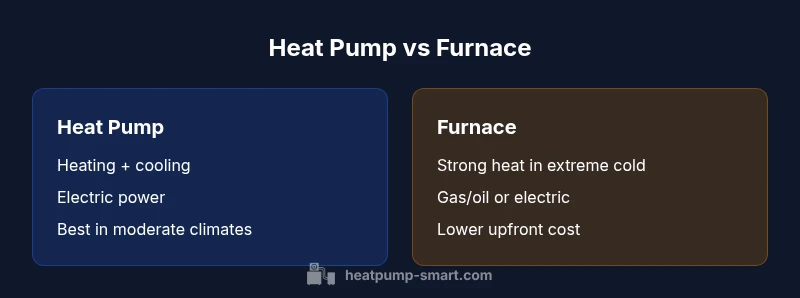
When to use heat pump vs furnace depends on climate, energy goals, and budget. In moderate climates, a heat pump often delivers year‑round comfort with high efficiency, while a furnace tends to be more cost‑effective in extreme cold or when electrical capacity is limited. This comparison uses Heatpump Smart analysis to help homeowners choose the best option for their home.
Understanding the Core Difference
Heating systems vary in how they generate heat, move heat, and support overall home comfort. The central question of when to use heat pump vs furnace hinges on three core factors: climate, electricity availability, and long‑term energy goals. A heat pump transfers heat between indoor and outdoor spaces and can provide cooling in the warmer months, effectively offering a two‑in‑one solution. A furnace, by contrast, creates heat through combustion or electric resistance and is typically more straightforward in operation during very cold snaps. According to Heatpump Smart, the fundamental distinction is energy source and heat transfer method. Understanding this helps homeowners map performance expectations, maintenance needs, and total cost of ownership over the system’s life.
Climate-based Decision Rules
Climate dictates performance more than any single feature. In temperate regions with mild winters, heat pumps often outperform furnaces on annual energy use because they also handle cooling. In regions with prolonged sub‑freezing conditions, furnaces may deliver more reliable warming without relying on auxiliary heat sources. Heat pumps can be paired with backup heat to maintain comfort during cold spells, a setup that Heatpump Smart frequently recommends for seasonal variability. To decide when to use heat pump vs furnace, start by comparing average winter temperatures, humidity, and annual energy costs. A data‑driven approach considers not just upfront price but grid cleanliness, fuel prices, and available rebates.
Efficiency and Operating Costs Over Time
Efficiency is not a single number; it is a dynamic relationship between equipment performance and usage patterns. Heat pumps excel in energy efficiency ratings when the outdoor temperature is mild to moderate and occupancy patterns align with cooling needs. Furnaces typically maintain steadier performance in very cold weather, especially when paired with proper insulation. Over a 10‑ to 20‑year horizon, consumers often find heat pumps offer lower operating costs in mixed climates, while furnaces can be advantageous in areas with expensive electricity or abundant natural gas. Heatpump Smart analysis shows that the long‑term cost balance depends on climate, electricity pricing, and how well a home is sealed and insulated.
Installation Considerations and Upfront Costs
Upfront cost is a major factor in the decision matrix. Heat pumps generally require a higher initial investment due to equipment complexity and, in some cases, ductwork or electrical upgrades. Furnaces often come with lower initial costs and simpler installation, particularly in homes already set up for gas or oil heating. However, the total price should include potential needs for backup heat, refrigerant line sets, and zoning capability. Homeowners should consider available rebates, utility incentives, and financing options. Heatpump Smart notes that a well‑planned installation can reduce performance gaps and extend system life.
Performance in Cold Climates and Heat Modes
In very cold climates, heat pumps rely on auxiliary or backup heat to sustain comfortable indoor temperatures. When the outdoor temperature drops below the manufacturer’s rated threshold, the heat pump’s efficiency decreases and auxiliary heat (often electric resistance or fossil fuel) kicks in. Furnaces, particularly gas furnaces, tend to deliver consistent warmth even in extreme cold. A hybrid system, combining a heat pump with a furnace, can optimize performance by using the heat pump for most of the season and switching to the furnace during peak cold. Heatpump Smart emphasizes evaluating climate severity and backup heat requirements before choosing a system.
Maintenance, Durability, and Lifespan
Maintenance needs differ: heat pumps require periodic refrigerant checks, coil cleaning, and filter changes, with more components that may need service over time. Furnaces require annual combustion chamber inspection, heat exchanger checks, and filter changes. Across both systems, proper maintenance extends lifespan and sustains efficiency. A well‑maintained heat pump can last 12–15 years, while furnaces often reach 15–20 years with regular service. Heatpump Smart highlights the importance of seasonal checks and professional tune‑ups to prevent efficiency losses.
Hybrid and Dual‑Mode Systems: When to Consider Both
Hybrid or dual‑mode configurations combine a heat pump with a furnace to maximize comfort and reliability in variable climates. These systems swap between heating sources based on outdoor temperature and electricity costs, providing robust performance during extreme cold while maintaining energy efficiency most of the year. This approach can reduce total energy use and improve resilience during grid outages. Heatpump Smart’s guidance consistently favors hybrids for homeowners in transitional climates or where climate risk and energy costs are uncertain.
Practical Steps to Decide for Your Home
Begin with a home energy audit to identify insulation gaps and air leakage. Gather climate data for your area, including long‑term temperature trends and utility rate structures. Compare installed costs, anticipated energy savings, and available rebates. Model scenarios for heating a typical winter week with a heat pump (with backup heat) versus a furnace, using your household energy patterns. Engage qualified installers who can simulate performance under your specific home conditions to provide a precise recommendation grounded in local data. Heatpump Smart has found that real‑world performance often diverges from lab ratings, underscoring the need for a tailored evaluation.
Common Misconceptions and Pitfalls
Myths persist around heat pumps, such as believing they cannot heat homes in cold climates or that they always require more maintenance. In reality, modern heat pumps are designed for cold climates and can be very reliable when paired with proper backup heat and efficient insulation. Another pitfall is ignoring ductwork or air sealing in the home, which can degrade any system’s performance. A careful assessment that includes climate, home envelope, and system sizing will prevent over‑ or under‑investment and lead to a more comfortable, cost‑effective solution. The Heatpump Smart team consistently emphasizes context over trend when guiding homeowners.
Real-World Scenarios: Quick Case Studies
Scenario A: A 1,800 sq ft home in a mixed climate with moderate winters and hot summers. A well‑sized heat pump provides heating and cooling with low annual energy costs, assuming good insulation and a reasonable electricity rate. Scenario B: A 2,400 sq ft home in a harsh winter region with high natural gas prices. A furnace or a hybrid system often delivers steadier warmth at a lower operating cost, especially if off‑peak rates and backup heat are factored in. While every home is unique, these snapshots illustrate how climate and energy costs influence the optimal choice.
A Quick Roadmap to Your Decision
- Assess climate and electrical capacity; 2) Conduct an energy audit; 3) Compare installed costs including potential upgrades; 4) Evaluate rebates and financing; 5) Have installers model performance for your home; 6) Consider long‑term comfort goals and resale value. The right choice balances upfront affordability, ongoing energy costs, and resilience. According to Heatpump Smart, invest in a solution that aligns with both your climate reality and your household needs.
Comparison
| Feature | Heat pump | Furnace |
|---|---|---|
| Upfront cost (equipment + installation) | Moderate to high | Low to moderate |
| Annual operating costs (typical climates) | Low to moderate with cooling/heating use | Moderate to high depending on fuel costs |
| Energy efficiency (year-round) | High efficiency for both heating and cooling when paired with proper controls | High efficiency specifically for heating, especially in colder climates |
| Cold-weather performance | Requires backup heat; efficiency drops in extreme cold | Strong warmth in cold climates; less dependence on electricity for heat |
| Maintenance frequency | Regular filter and refrigerant checks; outdoor units need protection | Annual service for combustion system; filter changes |
| Best for | Energy savings in temperate zones; cooling needs included in one system | Budget-conscious upgrades; reliable heating in extreme cold |
| Environmental impact | Lower emissions with clean electricity; refrigerant management important | Emissions tied to fuel source; modern furnaces can be clean with proper venting |
Advantages
- High potential for year‑round comfort with cooling capability
- Lower long‑term operating costs in moderate climates
- Upgraded home value and modern controls
- Flexible integration with smart thermostats and zoning
Disadvantages
- Higher upfront cost and potential electrical upgrades
- Performance reductions in extreme cold without backup heat
- Complex installation and potential ductwork changes
- Dependence on electricity or gas supply chains
Heat pumps win for most moderate climates; furnaces remain strong in extreme cold or when upfront cost is the priority
In climates that aren’t extremely cold, heat pumps offer better long-term energy efficiency and home comfort. In very cold areas, or where electrical capacity is limited, a furnace or hybrid approach can be optimal. The Heatpump Smart team recommends evaluating climate, insulation, and incentives to choose the most robust solution.
Your Questions Answered
What climates are best for a heat pump?
Heat pumps perform best in temperate to mild winter climates with reasonable electricity costs. In very cold regions, a heat pump with backup heat or a hybrid system often provides the best balance of comfort and efficiency.
Best in temperate zones, with backup heat in colder areas.
Can I use a heat pump with a furnace?
Yes. A hybrid system combines a heat pump with a furnace to maximize efficiency while ensuring warmth in extreme cold. This setup is common in transitional climates and can reduce operating costs.
Yes, hybrid setups are common in fluctuating climates.
Do heat pumps cost more upfront?
Often yes, due to equipment complexity and potential ductwork or electrical upgrades. However, rebates and longer‑term energy savings can offset the initial investment over time.
Upfront can be higher, but long-term savings may offset it.
Will a heat pump work in extremely cold temperatures?
Heat pumps can work in cold weather but may rely on backup heat during very cold periods. Proper sizing, insulation, and a backup system improve reliability.
Backup heat helps in extreme cold.
What maintenance do these systems require?
Heat pumps require refrigerant checks and coil cleaning; furnaces need annual combustion and venting checks. Regular filter changes and professional tune‑ups keep both systems efficient.
Regular filters and annual service keep both at peak.
How should I size a heat pump or furnace for my home?
Sizing should be done by a professional using a load calculation that accounts for climate, insulation, windows, and occupancy. Oversized or undersized systems reduce comfort and efficiency.
Professional load calculation is essential.
Top Takeaways
- Assess climate before choosing: heat pumps for moderate winters, furnaces for severe cold
- Factor total costs: upfront installation vs. long‑term energy use
- Consider rebates and financing to improve ROI
- Don’t ignore home envelope: insulation and air sealing impact results
- Evaluate hybrid options for transitional climates