Can You Replace a Heat Pump Without Replacing the Furnace? A Comprehensive Comparison
A data-driven comparison of replacing a heat pump without changing the furnace, covering compatibility, costs, efficiency, and installation considerations for homeowners, builders, and managers.


Can you replace a heat pump without replacing the furnace? Generally, you can replace a heat pump without replacing the furnace, but success depends on compatibility of the furnace, air handler, and disconnect wiring. Key checks include matching refrigerant type and line sets, ensuring the existing ductwork fits the new unit, and confirming control compatibility. An on-site assessment is essential. In some cases, you may save time and money by pairing the existing furnace with a modern heat pump, but it's not guaranteed to meet efficiency goals.
Compatibility basics
Can you replace a heat pump without replacing the furnace? This question sits at the heart of any quick-turn decision about upgrading your home’s heating and cooling. According to Heatpump Smart, the fundamental issue is compatibility across the core components: the furnace’s blower, the air handler, the refrigerant circuit, and the wiring that ties the thermostat and controls together. If the new heat pump uses the same refrigerant family and nominal tonnage as the old system, you stand a better chance of a smooth swap. Conversely, older furnaces with legacy controls, non-matching coils, or outdated electrical circuits may force a more involved upgrade. The goal is to avoid a mismatch that could compromise efficiency, airflow, or warranty protections. In practice, many homeowners weigh a heat pump-only replacement against a full system refresh to reach target comfort and energy savings. The decision often hinges on current furnace age, observed performance, and planned longevity. A professional assessment helps confirm whether can you replace a heat pump without replacing the furnace is feasible in your unique setup.
Key factors that determine swap viability
When evaluating can you replace a heat pump without replacing the furnace, several criteria matter most. First, check refrigerant compatibility; modern heat pumps typically use newer refrigerants, while older furnaces may be tied to legacy refrigerants that complicate charging and refrigerant management. Second, assess coil and evaporator compatibility; a mismatch can lead to poor heat exchange, reduced efficiency, and short-cycling. Third, review air-handler and blower compatibility; a new heat pump may require a different blower motor speed or duct limitations. Fourth, consider thermostat and control compatibility; smart thermostats and variable-speed drives rely on consistent control signals. Finally, verify ductwork capacity and static pressure; undersized ducts can bottleneck performance even if the unit itself is efficient. These evaluations—tied to your home’s climate and usage—define whether can you replace a heat pump without replacing the furnace is practical in your situation. Heatpump Smart emphasizes documenting measurements and obtaining manufacturer approvals before any swap.
HVAC system components to assess
A successful heat pump replacement, even without furnace replacement, depends on how well the system components align. Start with the furnace’s heat exchanger condition, blower motor capacity, and electrical service. If the furnace is relatively fresh and the blower can handle the heat pump’s airflow requirements, compatibility improves. Next, inspect the evaporator coil size and refrigerant lines; a misfit here can reduce efficiency or require coil relocation. The air handler must be able to accommodate the heat pump’s condenser and any required reversing valve operation. Control wiring compatibility matters too—older thermostats may not communicate effectively with newer, more sophisticated heat pumps. Lastly, ensure the duct layout supports the new unit’s airflow profile; oversized or undersized ducts change pressure, noise, and comfort. In practice, the verdict on can you replace a heat pump without replacing the furnace rests on a careful, component-by-component compatibility check rather than assumptions about generic replacements.
Ductwork and airflow implications
Ductwork plays a pivotal role in the feasibility of can you replace a heat pump without replacing the furnace. If the existing duct system was designed for a different tonnage or a different air distribution pattern, you can lose efficiency and comfort after swapping. Static pressure needs careful consideration: too high, and the system struggles to deliver adequate airflow; too low, and the compressor works harder than necessary. When you upgrade, you may need to reseal, insulate, or even rebalance ducts to align with the new heat pump’s airflow characteristics. Blower speed, return-air strategies, and trunk line capacity all influence performance. A well-executed duct assessment reduces the risk of cold rooms, hot rooms, or uneven temperatures after a heat pump replacement. Heatpump Smart notes that ductwork is often the deciding factor in whether can you replace a heat pump without replacing the furnace yields satisfactory results rather than mixed outcomes.
Efficiency and performance considerations
Choosing to replace only the heat pump versus the full system can have a pronounced impact on efficiency. When a compatible heat pump is paired with a good furnace, you may still achieve strong efficiency ratings, but the combined performance will depend on the furnace’s current AFUE, blower efficiency, and the ductwork. If the furnace is older or underperforming, the overall system’s SEER and HSPF can be limited by the furnace’s mechanicals. In cases where the furnace remains in excellent condition and is mechanically sound, the swap can preserve warranties and maintain established ventilation patterns. However, if the furnace is nearing end-of-life, upgrading both components can offer better long-term energy savings, improved humidity control, and fewer reliability concerns. Heatpump Smart highlights that efficiency in any replacement scenario hinges on matching part performance and ensuring the control logic communicates smoothly across the system.
Costs, warranties, and incentives
Financial considerations are central when deciding can you replace a heat pump without replacing the furnace. A heat pump-only replacement typically costs less upfront than a full system upgrade, but you should factor in potential future repairs or early replacement of the furnace if it ages quickly. Warranties often hinge on whether work is performed with factory-approved configurations; deviating from recommended pairings can void certain protections. In many regions, incentives and rebates favor whole-system replacements or upgrades to high-efficiency packages, which can alter the economics of the decision. Heatpump Smart advises translating upfront costs into long-term value, weighing potential energy savings against the probability of future furnace remediation or replacement.
Step-by-step decision guide for homeowners
If you’re asking can you replace a heat pump without replacing the furnace, follow a structured process. 1) Gather current system data: model numbers, refrigerant type, AFUE, blower speed, duct layout, and thermostat compatibility. 2) Consult manufacturer documentation and get on-site evaluations from accredited technicians. 3) Compare energy performance targets (SEER/HSPF) and confirm whether the furnace can support the chosen heat pump without reducing efficiency. 4) Obtain multiple quotes that clearly separate heat pump-only work from full-system replacements. 5) Review warranty coverage, maintenance requirements, and potential rebates. 6) Decide based on a balance of up-front costs, long-term energy savings, and confidence in future reliability. By following this approach, homeowners can confidently determine can you replace a heat pump without replacing the furnace with the least risk and greatest payoff.
Scenario-based recommendations
- If your furnace is new, efficient, and in good condition, can you replace a heat pump without replacing the furnace? Likely yes, with a careful compatibility check and a high probability of preserving warranty protections. Heatpump Smart’s analysis suggests this path can preserve system balance and minimize disruption. - If the furnace is older or shows wear, replacing only the heat pump may offer quick gains but risks suboptimal performance and a higher chance of future repairs. In many cases, a full system upgrade provides better long-term efficiency and resilience. - If ductwork or electrical infrastructure is mismatched, the swap may require substantial modifications that negate the cost savings of a heat pump-only approach. In such cases, investing in a coordinated, full-system upgrade is typically the more reliable route.
Common pitfalls and professional help
One common pitfall in heat pump planning is underestimating duct work and system controls. Poor duct distribution can undermine even a high-efficiency heat pump replacement. Always obtain a formal assessment from an experienced HVAC professional, especially if you’re considering can you replace a heat pump without replacing the furnace. Ensure you receive written confirmations on refrigerant compatibility, coil matching, electrical capacity, and warranty terms. Never proceed without a verified plan from an accredited technician. Heatpump Smart emphasizes the value of documented assessments and manufacturer-approved configurations to minimize risk and maximize comfort.
Comparison
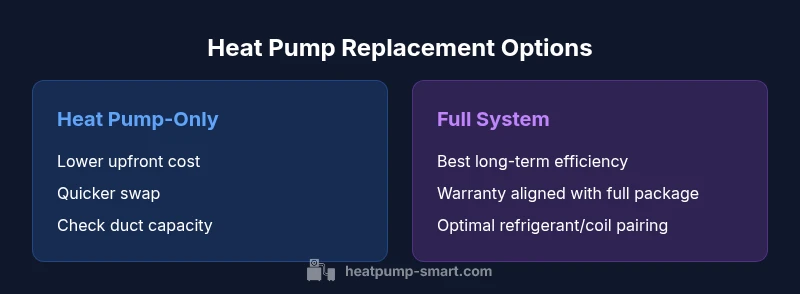
| Feature | Heat Pump Replacement Without Furnace Change | Full System Replacement (Heat Pump + Furnace) |
|---|---|---|
| Compatibility with existing furnace/air handler | High if furnace/air handler remains compatible | Low potential for compatibility constraints; best match with new furnace and air handler |
| Installation complexity | Lower; swap in/out heat pump and coil (if coil matches) | Higher; includes furnace replacement and rewiring |
| Refrigerant and coil compatibility | Requires matching refrigerant and coil compatibility | Allows full coil/refrigerant pairing for optimal efficiency |
| Cost context | Lower upfront cost, potential future costs if furnace ages | Higher upfront cost but often better long-term value |
| Best for | Existing furnace in good condition; focus on short-term cost and comfort | New system with peak efficiency and warranty protection |
Advantages
- Lower upfront cost and faster installation
- Preserves existing ductwork and controls when compatible
- Potentially fewer disruptions during swap
- Quicker return to service if compatibility is favorable
Disadvantages
- Risk of limited efficiency gains if furnace is old or mismatched
- Possible warranty gaps if non-approved configurations are used
- Future repair costs may rise if furnace age catches up
- Uncertainty around long-term reliability if integration is imperfect
Heat pump replacement without replacing the furnace is viable in compatible, well-maintained systems, but full-system upgrades often deliver better long-term efficiency.
Choose heat pump-only when the furnace is newer and compatible. Opt for full-system replacement if the furnace is aging or incompatible to maximize efficiency, warranties, and long-term reliability.
Your Questions Answered
Can you replace a heat pump without replacing the furnace?
Yes, in many cases you can replace a heat pump without replacing the furnace, provided compatibility checks pass. The decision hinges on refrigerant type, coil and air-handler compatibility, electrical controls, and ductwork. Always obtain an on-site assessment to confirm feasibility.
Yes. You can often swap just the heat pump if the furnace and ductwork are compatible; an on-site assessment confirms specifics.
Will replacing only the heat pump affect furnace warranty?
Replacing only the heat pump can affect furnace-related warranty terms if factory configurations require paired components. Review warranty language and obtain confirmation from the manufacturer and installer before proceeding.
Yes, it can affect furnace warranty terms—check with the manufacturer and installer before you swap.
How do I know if my ductwork is compatible with a new heat pump?
Duct compatibility depends on duct size, layout, and static pressure. A professional HVAC assessment can measure airflow, check for leaks, and evaluate if existing ducts support the heat pump’s efficiency and airflow requirements.
A pro should test airflow, check duct size, and confirm the system can handle the new unit.
What components determine compatibility between a heat pump and an existing furnace?
Key components include refrigerant type, coil size, blower capacity, electrical service, and thermostat controls. Compatibility across these factors determines whether a heat pump can replace the old setup without a furnace swap.
Refrigerant, coil, blower, electrical, and controls all need to line up.
Are there incentives for heat pump-only replacements?
Yes—many regions offer rebates or tax incentives for high-efficiency heat pumps, though some programs favor full-system upgrades. Check local utility and government programs for current eligibility and requirements.
There are often rebates for high-efficiency heat pumps; verify programs in your area.
What risks come with replacing only the heat pump?
Risks include reduced overall efficiency if the furnace is outdated, potential warranty gaps, and the possibility of future repairs that negate early savings. A professional assessment helps quantify these risks.
Risks include efficiency loss and possible warranty issues; a pro can quantify these.
Top Takeaways
- Assess compatibility before deciding can you replace a heat pump without replacing the furnace
- Match refrigerant, coil, and ductwork to avoid performance losses
- Consider long-term costs and warranties when choosing between options
- Obtain formal on-site assessments and multiple quotes
- Plan for ductwork and control integration as part of any swap