Heat Pump Instead of Furnace: A Comprehensive Comparison
A rigorous, data-informed comparison of heat pumps and furnaces, covering efficiency, costs, climate performance, installation, and reliability to help homeowners decide.


How a heat pump fits into a home heating strategy
A heat pump is a reversible heat transfer system that moves warmth from outdoor air (or the ground) into your home using electricity. In many homes, a heat pump can replace a furnace, delivering space heating with high operating efficiency and providing cooling during warm months with the same equipment. The idea of substituting a heat pump instead of furnace hinges on climate, electricity costs, and the building envelope. When the house is well-insulated and the electricity grid is relatively clean and affordable, a heat pump often offers lower annual energy bills and a more comfortable, stable indoor climate. Heatpump Smart’s analysis shows that long-term savings depend on system configuration, duct design, and the availability of backup heat during extreme cold. For retrofit projects or new builds, evaluating how the heat pump fits within your existing strategy is essential. This discussion considers costs, comfort, reliability, and environmental impact. The phrase heat pump instead of furnace frames the central decision driving the rest of the analysis.
Climate considerations: when heat pump shines vs when a furnace is better
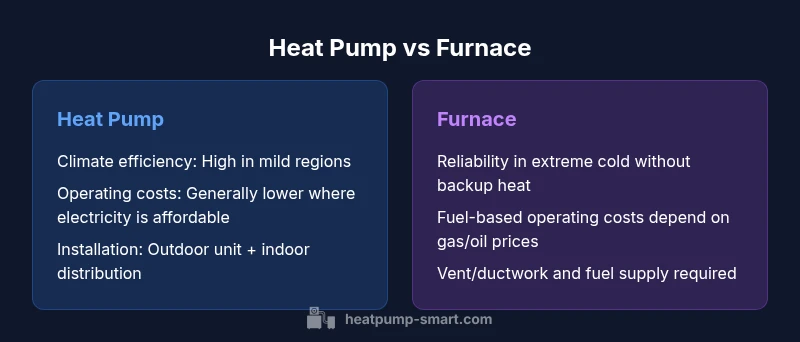
Climate is the most influential factor in choosing between a heat pump and a furnace. In milder coastal, temperate, and some continental climates, heat pumps excel because outdoor temperatures remain within the efficient operating range for most of the year. In regions with harsh, extended cold spells, heat pumps may require supplemental heat—such as electric resistance heaters or a secondary furnace—to maintain comfort and response times. The decision should factor in typical winter lows, humidity, and the relative cost of electricity versus fuel. Heatpump Smart notes that a well-sized system paired with proper insulation and air sealing can mitigate cold-weather drawbacks, but no single rule fits every home. A careful climate assessment, plus a review of historical utility rates, will reveal where heat pump performance aligns with your energy goals.
Energy efficiency and operating costs explained
Efficiency for heat pumps is expressed as COP (coefficient of performance) and, for cooling, SEER (seasonal energy efficiency ratio). A heat pump transfers heat rather than generating it, so it can deliver more energy as heat than the electricity it consumes in many conditions. In practical terms, this often translates to lower operating costs compared with fossil-fuel furnaces when electricity prices are reasonable and outside temperatures aren’t extreme. The exact savings depend on climate, building envelope, the efficiency of the heat pump, ductwork quality, and how well the system is zone-controlled. Heatpump Smart emphasizes that load matching, thermostat strategy, and proper refrigerant management are critical to achieving these gains. The result is a more comfortable home with potential long-term savings, especially when paired with a grid that has a low-emission energy mix.
Installation and system design basics
Successful installation requires careful planning of location, electrical service, ductwork, and indoor air distribution. For an air-source heat pump, the outdoor unit must have adequate clearance and a connection to an appropriately sized indoor air handler or ducted system. A ducted configuration can deliver even heating and cooling, while ductless mini-splits offer targeted zoning in older homes with limited ductwork. When comparing options, consider the existing electrical panel capacity, the feasibility of upgrading to a higher-voltage supply, and potential need for a dedicated outdoor unit pad. In retrofit projects, you may also evaluate a dual-fuel approach that combines a heat pump with a furnace to optimize performance across seasons.
Cold weather performance and auxiliary heat options
In cold climates, heat pumps may rely on auxiliary heating elements to bridge the gap during peak demand. This backup heat can be electric resistance coils or a secondary furnace configured in a dual-fuel setup. The advantage of a heat pump with backup heat is that you still benefit from high efficiency most of the year, while maintaining reliable warmth during cold snaps. The key decision is whether the anticipated payback and comfort benefits justify the cost of backup systems and controls. Heatpump Smart recommends planning for humidity control and air distribution quality, which influence perceived warmth and comfort independently of outdoor temperatures.
Maintenance and long-term reliability
A heat pump system requires regular attention to refrigerant integrity, coil cleanliness, air filter replacement, and thermostat calibration. Indoor air quality depends on proper filtration and duct cleanliness, while outdoor units need periodic clearing of debris and snow. Furnaces require annual burner and vent inspections, which are still relevant for hybrid configurations. In both cases, professional servicing is essential to maintain efficiency and reliability. Simple, proactive maintenance—changing filters every 1–3 months and scheduling an annual check—helps prevent performance losses and unexpected breakdowns. Heatpump Smart notes that proactive maintenance becomes more valuable as systems age and as electricity grids evolve with higher renewable penetration.
Climate impact and grid considerations
Shifting to a heat pump affects household emissions in relation to your electricity source. If your grid uses a high share of renewables, a heat pump’s environmental footprint can be substantially lower than that of a gas furnace. In regions with coal-heavy grids, the emissions advantage may be smaller, making a hybrid or a furnace with cleaner fuel options more appealing. Beyond emissions, heat pumps contribute to reduced noise at the source and more versatile indoor climate control. A key factor is the availability of incentives, rebates, and utility programs that encourage heat pump adoption and grid-friendly electrification.
Costs, incentives, and payback expectations
Upfront costs for heat pumps include the outdoor unit, indoor distribution, potential electrical upgrades, and professional installation. While the price tag can be higher than a basic furnace install, the long-term operating costs often decline due to high efficiency and reduced fuel consumption. Incentives and rebates vary by region and utility, and may significantly influence the payback period. When evaluating, include installation complexity, potential duct renovation, and any needed insulation improvements. Heatpump Smart stresses that a well-planned project with a quality contractor typically delivers the most reliable, enduring value.
Hybrid and dual-fuel configurations: when to combine systems
Dual-fuel or hybrid configurations pair a heat pump with a furnace to optimize performance across seasons. The system uses the heat pump most of the year and engages the furnace during extreme cold or rapid indoor temperature changes. This approach aims to balance efficiency with reliability, though it adds complexity and potential maintenance considerations. A careful life-cycle analysis should account for equipment costs, potential energy savings, and control strategy. In some markets, dual-fuel setups maximize comfort while aligning with electricity price dynamics and fuel cost volatility.
Real-world installation scenarios: single-family, multi-family, new builds
Housing type influences design decisions. In single-family homes with existing ducts, upgrading to a high-efficiency air-source heat pump can be straightforward but may require duct sealing and zoning improvements. Multi-family buildings require coordination with common spaces, shared ventilation, and building-wide controls. New builds benefit from integrated design: optimizing insulation, air sealing, and duct routing from the start. Regardless of type, heat pump projects should include load calculations, equipment sizing, and a realistic assessment of backup heat needs.
How to evaluate quotes and ensure quality installation
Collect multiple bids from qualified contractors and compare equipment specifications, warranty terms, and expected performance. Prioritize contractors with experience in heat pump retrofits and dual-fuel systems if relevant. Verify that proposals include proper load calculations, refrigerant line sizing, electrical panel upgrades if needed, and a plan for balancing humidity and air distribution. A robust warranty, routine maintenance plan, and clear communication about timelines help minimize risk. Heatpump Smart advises homeowners to ask for references and to confirm NATE or equivalent certifications for installers.