Why Heat Pump Over Furnace: A Thorough Comparison
An objective, in-depth comparison of heat pumps and furnaces for homeowners, builders, and property managers. Explore efficiency, climate suitability, costs, maintenance, and practical decision factors to decide when a heat pump is the better choice over a furnace.


Heat pumps often provide superior overall efficiency and year‑round comfort compared to furnaces, especially in moderate climates where electricity costs are reasonable. They move heat rather than generate it, delivering lower operating costs and versatile cooling. In very cold climates, a furnace or dual‑fuel setup may offer better reliability, but for many homes a heat pump is the smarter, future‑proof option. See our detailed comparison below.
The Core Question: Why Choose a Heat Pump Over a Furnace
The central question homeowners, builders, and property managers face is straightforward: why heat pump over furnace? The short answer is that heat pumps typically deliver superior year‑round efficiency and comfort by moving heat rather than burning fuel. According to Heatpump Smart, heat pumps leverage ambient environmental heat to warm indoor spaces with electricity, which can translate into lower operating costs in climates that don’t plunge to extreme lows. The Heatpump Smart team emphasizes that a properly sized heat pump can replace both heating and cooling functions, simplifying systems and reducing energy waste. However, the choice isn’t universal; in regions with prolonged freezing temperatures, supplemental heat sources or a dual‑fuel approach can preserve reliability and comfort.
Heatpump Smart’s guidance underlines a practical framework: compare climate, electricity prices, and your home’s insulation before deciding. A heat pump’s performance improves with better building envelope performance, installed correctly with an appropriately sized unit. In many projects, the decision comes down to climate profile, desired comfort level, and total cost of ownership over the system’s life cycle. This article provides a structured, data‑driven comparison to help homeowners and professionals make an informed choice.
How Heat Pumps Work vs Furnaces
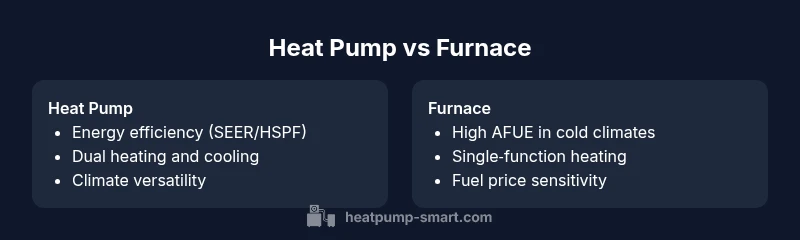
Heat pumps and furnaces accomplish the same core goal—keeping indoor spaces comfortable—by very different means. A heat pump moves heat energy from the outdoors to the indoors in heating mode (and reverses to cool in cooling mode), using a refrigeration cycle similar to an air conditioner. This method requires electricity but uses it to shift heat rather than generate it, which often yields higher seasonal efficiency (SEER/HSPF) than most gas furnaces. Furnaces, by contrast, burn natural gas, propane, or oil to generate heat. They can achieve very high nominal efficiencies (AFUE), but operating costs depend heavily on fuel prices. The best choice depends on climate, energy prices, and the home’s insulation. In milder winters, heat pumps frequently outperform furnaces on energy cost and comfort because they provide both heating and cooling with a single system. However, in severe cold, a furnace or hybrid system can offer more consistent baseline warmth, particularly when electric resistance backup is employed.
Energy Efficiency and Operating Costs
When evaluating energy efficiency, heat pumps and furnaces use different metrics. A heat pump’s efficiency is often expressed as SEER (seasonal cooling efficiency) and HSPF (Heating Seasonal Performance Factor), which measure performance over a typical year. In many homes, heat pumps deliver superior efficiency because they are not burning fuel; instead, they transfer heat and leverage ambient energy, which can lower utility bills in moderate climates. Furnaces rely on AFUE (Annual Fuel Utilization Efficiency) ratings, which indicate how effectively a gas furnace converts fuel into heat. While modern gas furnaces can reach high AFUE percentages, the cost of fuel and the price volatility of natural gas influence long‑term operating costs. Heatpump Smart analysis highlights that, in typical residential settings, heat pumps offer compelling energy savings in well‑insulated homes and climates that don’t experience prolonged extreme cold. In colder regions, efficiency gains can depend on the availability of a cold‑climate heat pump model or a dual‑fuel arrangement.
Climate and Comfort: Cold Weather Realities
Climate profoundly shapes the value proposition of heat pumps versus furnaces. In climates with mild to moderate winters, heat pumps often deliver excellent comfort with lower energy use and the added benefit of built‑in cooling in summer. In very cold climates, heat pump performance can decline as outdoor temperatures drop, leading to higher auxiliary heating usage. Modern cold‑climate heat pumps mitigate this through advanced refrigerants, improved defrost cycles, and, in some cases, hybrid (dual‑fuel) configurations that bring in furnace heat when needed. For homeowners living in regions that regularly experience subzero days, a furnace or a dual‑fuel system can provide back‑up warmth while still letting a heat pump handle the majority of heating load. Heatpump Smart’s analysis indicates that the best installations in cold regions often rely on a carefully designed backup strategy and appropriate thermostat controls to maximize year‑round comfort and efficiency.
Installation Considerations and Space Requirements
Installing a heat pump involves different site considerations than a furnace. Heat pumps typically require outdoor unit placement with proper clearances, as well as indoor air handling equipment (or an air handler) in conditioned space. Space planning matters because heat pumps function as a combined heating and cooling system; the indoor space must accommodate ductwork or a ductless mini‑split setup, depending on the chosen configuration. In contrast, a furnace system may occupy a different footprint, with venting and gas lines requiring careful installation. The upfront labor costs for heat pumps can be higher because of refrigerant sizing, electrical upgrades, and potential duct improvements, but long‑term energy savings often offset the initial investment. Heatpump Smart notes that proper commissioning, refrigerant charge, and electrical compatibility are critical for optimizing performance and reliability.
Long-Term Savings, Rebates, and Payback
Beyond annual operating costs, homeowners should consider rebates, tax credits, and utility incentives when comparing heat pumps to furnaces. Many regions offer incentives for heat pump installations, particularly when paired with efficient home performance upgrades. Heatpump Smart analysis indicates that such incentives can shorten payback periods and improve overall value, especially in homes with modern insulation, air sealing, and efficient thermostats. It’s important to verify eligibility, program caps, and application requirements early in the project. While a gas furnace may have lower upfront hardware costs in some markets, the complete picture—rebates, electricity rates, and maintenance—can tilt the calculation toward a heat pump in the right conditions. Overall, homeowners should conduct a holistic financial analysis that includes energy savings, maintenance, and potential incentives.
Maintenance and Reliability
Maintenance expectations differ between heat pumps and furnaces. Heat pumps require periodic cleaning of coils, filter changes, refrigerant leak checks, and seasonal performance assessments. Ductwork cleanliness and thermostat programming also play a significant role in maintaining efficiency. Furnaces require regular burner cleaning, ignition checks, and venting inspections to prevent carbon monoxide risks and ensure efficient operation. In both systems, professional annual checkups support reliability and can extend equipment life. Heatpump Smart emphasizes proactive maintenance as a key driver of long‑term efficiency and comfort. Homeowners should schedule pre‑season checks for heating and cooling to catch issues before peak demand seasons.
Noise, Zoning, and User Experience
Noise levels and zoning options are practical considerations that influence user satisfaction. Outdoor heat pump units can generate more ambient noise than a typical furnace cabinet, though modern units often use quieter compressors and better vibration isolation. Zoning strategies can maximize comfort by directing heating and cooling to specific areas, which helps manage energy usage. For many households, ductless mini‑split heat pumps offer flexible zoning without major ductwork. Furnaces, especially newer high‑efficiency models, tend to be quieter but still require adequate venting. When evaluating options, consider the home layout, room usage patterns, and comfort priorities to decide whether zoning a heat pump system is worth the investment.
Hybrid and Dual‑Fuel Solutions: A Practical Middle Ground
In very cold climates, a dual‑fuel or hybrid approach—combining a heat pump with a gas furnace—can offer robust performance with the efficiency benefits of heat pumps during milder periods and reliable warmth when temperatures plunge. These systems switch between heat sources automatically based on outdoor temperatures and energy prices. For new builds or major renovations, a hybrid strategy can deliver the best of both worlds: the efficiency of a heat pump most of the year, and backup heat from a furnace when needed. Heatpump Smart’s position is that a well‑designed dual‑fuel system should be evaluated with a local contractor who understands climate dynamics, utility rates, and building envelope improvements.
Decision Framework: A Practical Checklist
When deciding between a heat pump and a furnace, use this practical checklist:
- Assess climate: Do winters reach subzero regularly?
- Evaluate electricity vs gas/propane prices in your area.
- Check home insulation and air sealing status; better envelopes amplify heat pump efficiency.
- Consider cooling needs: If you want built‑in cooling, a heat pump provides both heating and cooling in one system.
- Review incentives: Are there rebates or tax credits for heat pump installation?
- Plan for backup heat: Will you need a furnace backup or dual‑fuel setup for extreme conditions?
- Review installation costs and payback timelines with a qualified contractor.
This framework helps homeowners, builders, and property managers make an evidence‑based choice aligned with climate, energy costs, and home performance goals.
Common Misconceptions About Heat Pumps
Several myths persist about heat pumps that can mislead decisions. Some people believe heat pumps cannot heat homes in cold climates; newer cold‑climate models and dual‑fuel configurations effectively address this concern. Others assume heat pumps are always cheaper to operate than furnaces; reality depends on local electricity and fuel prices, insulation quality, and usage patterns. Another misconception is that heat pumps don’t provide cooling efficiency; in fact, heat pumps excel at cooling in warm months as well. Debunking these myths requires looking at climate data, system sizing, and real‑world performance rather than marketing claims. Proper assessment with a trusted contractor is essential to avoid misinterpretation.
Real-World Scenarios: When a Heat Pump Shines
Imagine a home in a temperate climate with mild winters and hot summers. A heat pump can deliver efficient heating and cooling year‑round, delivering a cohesive experience and potentially lower energy bills due to dual‑purpose functionality. In a home with good insulation and a modern thermostat, the heat pump’s efficiency advantages are magnified. In colder regions with frequent subzero days, consider a dual‑fuel solution or a supplemental furnace to ensure dependable warmth. Real‑world installations show that the right mix of climate, insulation, and thermostat controls yields the best outcomes. Heatpump Smart’s practical guidance focuses on tailoring the system to the home’s specific climate and usage patterns rather than applying a one‑size‑fits‑all approach.
Practical Pre‑Buy Checklist for Homeowners
Before purchasing, gather key information:
- Current energy usage patterns and bills
- Local climate data and typical winter temperatures
- Building envelope performance (insulation, air sealing, window efficiency)
- Electrical capacity and compatibility with heat pump requirements
- Available incentives and tax credits
- Contractor qualifications and system design options (ducted vs. ductless)
- Maintenance plan and expected service intervals
A thoughtful pre‑buy process ensures you select a heat pump or furnace solution that aligns with climate, energy costs, and overall home performance goals. Heatpump Smart recommends collaborating with a qualified installer to validate sizing, refrigerant handling, and control strategies for optimal results.
Comparison
| Feature | Heat pump | Furnace |
|---|---|---|
| Energy efficiency (seasonal) | High SEER/HSPF in moderate climates | High AFUE ratings but dependent on fuel price and venting |
| Operating costs | Lower ongoing electricity use in mild winters; cooling included | Fuel costs fluctuate with gas/oil prices; heating bills can be higher in cold snaps |
| Climate suitability | Best in moderate climates with backup for extremes | Reliable in extreme cold with dual‑fuel or supplementary heat |
| Heat source mechanism | Moves ambient heat using refrigerant cycle | Generates heat by burning fuel |
| Installation cost range | Typically higher upfront due to equipment and modifications | Often lower upfront, with ongoing fuel costs |
| Maintenance needs | Coil, filter, refrigerant checks; thermostat programming | Burner and vent maintenance; filter and duct upkeep |
| Lifespan | Heat pumps: ~12–15+ years | Furnaces: ~15–20+ years |
| Best for | Energy savings and cooling integration | Reliability in very cold climates |
Advantages
- Lower running costs in moderate climates
- Dual heating and cooling in a single system
- Potential rebates and tax credits available
- Better for home comfort with precise controls
- Fewer fuel logistics and emissions in many regions
Disadvantages
- Higher upfront cost and potential electrical upgrades
- Performance drops in extreme cold without backup heat
- Refrigerant handling requires licensed tech
- Ductwork or zoning may add complexity and cost
Heat pumps are the generally preferred option when climate and electricity costs support efficiency gains, with a backup heat strategy for very cold periods.
In typical residential scenarios, a properly designed heat pump delivers year‑round comfort and energy savings. In regions with harsh winters, a hybrid or dual‑fuel setup often provides the best reliability while preserving most efficiency benefits. The Heatpump Smart team recommends evaluating climate, insulation, incentives, and long‑term operating costs to decide between a heat pump and a furnace.
Your Questions Answered
Is a heat pump more cost‑effective than a furnace overall?
In many homes, heat pumps offer lower long‑term operating costs due to efficient heat transfer and integrated cooling. However, the total value depends on climate, energy prices, and installation specifics. A hybrid option can bridge gaps in very cold periods.
Heat pumps save money over time in many climates, but your local energy prices matter.
Can heat pumps function well in very cold climates?
Modern cold‑climate heat pumps perform well in many sub‑zero conditions, especially when paired with an appropriate backup heat source. Dual‑fuel systems are a common solution in regions with harsh winters.
Yes, with the right model and backup heat, heat pumps can work reliably in cold climates.
What maintenance do heat pumps require compared to furnaces?
Heat pumps require regular coil cleaning, filter changes, and refrigerant checks, while furnaces require burner cleaning and vent inspections. Both benefit from annual professional servicing to maintain efficiency and safety.
Regular checks keep both systems running efficiently.
Are there incentives for choosing a heat pump?
Yes, many regions offer rebates or tax credits for heat pump installations, especially when paired with energy‑efficiency upgrades. Check local utilities and national programs for eligibility and caps.
Look for available rebates to reduce upfront costs.
Do heat pumps need backup heat during extreme cold?
In very cold periods, heat pumps may rely on supplemental heat. Hybrid systems or a fossil fuel backup can provide reliable warmth when outdoor temperatures are extreme.
Backup heat ensures warmth during the coldest days.
How should I start choosing between heat pump and furnace?
Start with climate data, energy prices, and home insulation. Get a contractor sizing and performance estimate, then consider incentives and a payback analysis to determine the best long‑term option.
Begin with climate and costs, then compare options with a pro.
Top Takeaways
- Assess climate and electricity costs before deciding
- Heat pumps provide dual heating/cooling in one system
- Consider hybrid or dual‑fuel options for very cold climates
- Check for rebates and tax credits to shorten payback
- Invest in home envelope improvements to maximize efficiency