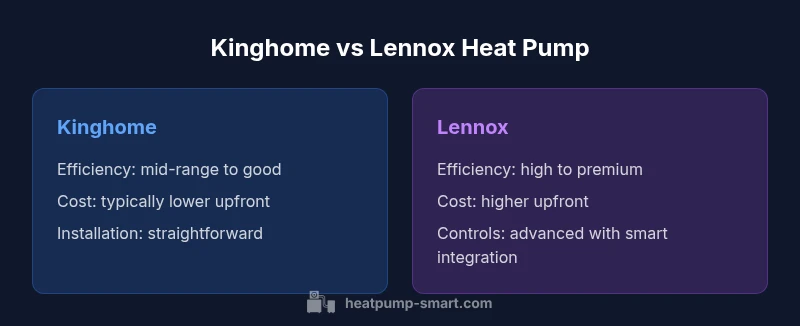
Kinghome vs Lennox Heat Pump: An Objective Comparison
A thorough, objective comparison of kinghome vs lennox heat pump options, covering efficiency, climate performance, installation, and total value to guide homeowners and builders in 2026.


Kinghome vs Lennox heat pump: both brands offer dependable air-source systems, but they target different priorities. Kinghome typically emphasizes upfront value and straightforward installation, while Lennox leans toward higher efficiency, advanced technology, and quieter operation. For homeowners seeking the best long-term energy savings, Lennox often has the edge; however, Kinghome can be a smarter choice when budget and installation complexity are primary concerns. Your climate, energy goals, and project budget will largely determine which brand aligns with your home.
Kinghome vs Lennox Heat Pump: Landscape and Positioning
In the market for a new heat pump, homeowners often confront a basic choice: go with a budget-friendly option like Kinghome or opt for a premium brand such as Lennox. When evaluating kinghome vs lennox heat pump, it's helpful to frame the decision around three factors: performance, total cost of ownership, and service accessibility. According to Heatpump Smart, the last few years have seen rapid improvements in inverter-driven compressors and variable-speed controls, which regardless of brand tend to deliver better comfort and efficiency than older, single-stage models. The Heatpump Smart team notes that both Kinghome and Lennox cater to different customer segments: Kinghome targets value-conscious buyers and straightforward installations, while Lennox targets installers and homeowners seeking peak seasonal efficiency and quiet operation. Your climate, energy goals, and project budget will largely determine which brand aligns with your home.
Core Technologies Behind Kinghome vs Lennox Heat Pump
The core technologies underpinning kinghome vs lennox heat pump decisions revolve around compressors, refrigerant management, and smart controls. Kinghome models commonly employ inverter-driven compressors and variable-speed fans to adjust output with demand, improving comfort without dramatically increasing energy use. Lennox models typically emphasize higher-efficiency compressors, advanced electronic expansion valves, and refined fan profiles that optimize airflow and dehumidification in a wider range of conditions. Regardless of brand, modern systems rely on communicating thermostats or app ecosystems to fine-tune performance, monitor system health, and enable proactive maintenance. When comparing kinghome vs lennox heat pump tech, consider how the control strategy translates to real-world comfort, especially with fluctuating outdoor temperatures.
Efficiency and Climate Performance
Efficiency and climate adaptability are central to the kinghome vs lennox heat pump decision. Lennox often positions itself in the high-efficiency tier with models designed for extreme weather performance. Kinghome tends to offer solid efficiency across its lineup, with value-oriented options that still leverage modern compressors and refrigerants. The practical implication is that Lennox can deliver better annual energy savings in very hot or very cold climates, while Kinghome provides reliable comfort at a lower upfront cost in milder climates or where electricity costs are moderate. When sizing and selecting, align model performance with your local climate profile and how you use your system across seasons.
Noise Levels and Comfort Features
Quiet operation is a frequent selling point in the kinghome vs lennox heat pump conversation. Lennox often includes advanced sound-dampening features and efficient fans that reduce perceived noise, particularly on standby and startup cycles. Kinghome typically emphasizes durable construction and streamlined components that minimize vibration and noise relative to older technologies, making it a strong choice for homes where outdoor equipment proximity is a concern. In both brands, comfort features such as variable-speed peripherals, smart zoning, and compatibility with thermostats influence perceived opulence and daily experience more than raw component count.
Installation, Sizing, and Compatibility
Sizing and installation quality are critical in the kinghome vs lennox heat pump comparison. Correct system sizing ensures optimal comfort and efficiency; over- or under-sizing leads to short cycling and degraded humidity control. Kinghome installations often enjoy shorter lead times and simpler configurations, particularly in projects with standard ductwork. Lennox installations, while potentially more complex, can offer optimized performance through larger service networks and more model options tailored to specialty climates. Always run a professional load calculation (Manual J) and check duct capacity, refrigerant lines, and outdoor-unit compatibility with your chosen indoor air handler. A well-matched pair is more important than choosing a brand in isolation, regardless of whether you pick kinghome vs lennox heat pump.
Durability, Warranty, and Service Networks
Durability and service access shape the long-term value of kinghome vs lennox heat pump choices. Lennox frequently provides longer or more comprehensive warranty options in many regions, backed by expansive dealer networks and dedicated service teams. Kinghome often relies on cost-conscious distribution with broad availability, but warranty terms can vary by model and area. In either case, confirm labor coverage, parts availability, and response times with your installer, and ensure the contractor has recent training on the specific models you’re considering. The real-world reliability track record will hinge on installation quality as much as hardware design.
Cost and Total Ownership Outlook
Total cost of ownership for kinghome vs lennox heat pump includes upfront equipment price, installation, ongoing energy use, maintenance, and potential repairs. Kinghome generally presents a lower upfront price point and simpler installation, translating into favorable short-term cash flow. Lennox tends to carry higher initial costs but can yield greater energy savings over time and longer warranty protection, potentially reducing lifetime operating expenses in the right climate. Use a conservative scenario to compare annual energy use and predicted maintenance needs, then factor in electricity rates in your area to estimate payback periods. Remember that the cheapest option today isn’t always the most economical long-term choice.
Real-World Scenarios: When Kinghome Shines vs Lennox Shines
For smaller homes or spaces with limited ductwork, kinghome vs lennox heat pump options that emphasize compact design and straightforward installation can significantly shorten project timelines and reduce disruption. In larger homes with variable occupancy and higher cooling loads, Lennox’s high-efficiency models and sophisticated controls may deliver more meaningful comfort gains and energy savings. In regions with extreme winters or summers, Lennox’s premium lines can demonstrate greater performance margins, but only if installed correctly and sized accurately. Consider your daily routines, energy costs, and comfort priorities when weighing kinghome vs lennox heat pump in real-life contexts.
Common Pitfalls and How to Avoid Them
- Skipping a proper load calculation can undermine any brand choice. Always run a Manual J/Manual D analysis before purchase.
- Underestimating duct leakage or insulation gaps reduces system effectiveness regardless of brand.
- Focusing solely on upfront price ignores long-term energy costs; model the two-life-cycle values to compare.
- Assuming all Lennox models are premium and all Kinghome models are basic; instead compare specific models within each brand.
- Failing to verify local warranty terms and service coverage can leave you exposed to unexpected costs.
Reading Specs: What a Kinghome vs Lennox Specification Sheet Really Tells You
Specification sheets reveal performance envelopes, comfort features, and installation requirements. Look beyond headline SEER or COP numbers and examine: part-load performance, refrigerant type, airflow rates, noise specs, and wiring/communication needs. Check compatibility with your existing thermostat or smart home setup. Compare the warranty terms, service networks, and maintenance schedules. A thorough read of the specs helps you differentiate kinghome vs lennox heat pump options and identify the model that aligns with your home’s needs.
A Practical Decision Framework for Kinghome vs Lennox Heat Pump
- Define priorities: upfront cost vs long-term energy savings. 2) Gather climate data and usage patterns for your home. 3) Run a detailed load and duct assessment. 4) Compare two representative models from each brand, not just the brand image. 5) Confirm warranty coverage and service network. 6) Choose a trusted installer with proven experience on both brands. This framework keeps the kinghome vs lennox heat pump decision transparent and grounded in your real-world conditions.
Practical Implementation Plan: From Assessment to Installation
- Hire a qualified HVAC professional to perform load calculations, duct inspections, and site assessment.
- Get multiple quotes that include equipment, installation, and any required upgrades to electrical or ductwork.
- Review warranty terms, maintenance requirements, and expected service intervals with the installer.
- Schedule installation during a favorable season to minimize disruption and ensure proper commissioning.
- Plan a post-installation check and first-season operating guide to maximize comfort and efficiency.
Comparison
| Feature | Kinghome heat pump | Lennox heat pump |
|---|---|---|
| Efficiency & performance (general) | Mid-range to good across models | High to premium across select models |
| Quiet operation | Moderate noise levels in many units | Typically quieter due to advanced dampening and controls |
| System compatibility | Broad thermostat compatibility; model-dependent | Wide control options and advanced integration commonly available |
| Warranty and service network | Warranty terms vary by model/region; solid support | Often stronger warranty coverage and larger service network |
| Installation cost & complexity | Usually lower upfront installation costs | Potentially higher due to premium equipment and setup |
| Price range | Budget to mid-range | Mid to high-end, premium pricing |
Advantages
- Clear differentiation in target audiences for quick decision
- Kinghome offers value-focused options with straightforward installs
- Lennox delivers higher efficiency and quieter operation
- Strong service networks and warranties in many regions
Disadvantages
- Kinghome models may lack some premium features and long-term efficiency gains
- Lennox can have higher upfront costs affecting ROI for budget buyers
- Both brands rely on installer quality; poor installation undermines performance
Lennox is the stronger choice for efficiency and quiet comfort, while Kinghome shines on upfront value and easier installation.
Lennox typically delivers better long-term energy savings and refined comfort, especially in challenging climates. Kinghome remains a sensible option when initial cost and installation simplicity are the priority. Your best pick hinges on climate, budget, and willingness to invest in premium controls or comprehensive service coverage.
Your Questions Answered
What is the main difference between Kinghome heat pumps and Lennox heat pumps?
Kinghome focuses on value and straightforward installation, while Lennox emphasizes higher efficiency and premium features. The choice depends on climate, budget, and comfort priorities.
Kinghome is value-forward, Lennox is performance-forward. Pick based on what matters most for your home.
Which brand is more energy-efficient overall?
Lennox generally offers higher efficiency in many models, especially in premium lines. Kinghome provides solid efficiency within its value-focused range.
Lennox usually leads in efficiency, but Kinghome can still be efficient in the right model.
How does installation cost compare between Kinghome and Lennox?
Kinghome installations are typically quicker and cheaper due to simpler configurations. Lennox installations can be more expensive due to premium equipment and controls.
Kinghome is often cheaper to install; Lennox may cost more upfront but offer higher performance.
Which brand is better for cold climates?
Both brands offer cold-climate models, but Lennox often has models with higher performance in extreme conditions. Always match the model to climate data and load calculations.
Lennox tends to perform better in very cold weather when correctly matched.
Do both brands use similar refrigerants?
Most modern systems use R-410A or similar refrigerants; exact refrigerant type varies by model. Verify with the dealer.
Refrigerants depend on the specific model; check the sheet or ask the installer.
What warranty should I expect?
Warranty terms vary by model and region. Lennox often offers longer coverage in many markets, but local terms are decisive.
Warranty length depends on model and region. Confirm with your installer.
Top Takeaways
- Prioritize long-term energy savings for harsh climates
- Balance upfront cost against projected operating costs
- Ensure accurate sizing and ductwork assessment
- Check warranty terms and service network before buying
- Use the side-by-side table to weigh performance factors