Lennox Heat Pump vs Air Conditioner: A Comprehensive Comparison
An objective, in-depth comparison of Lennox heat pumps and standard air conditioners to help homeowners decide based on climate, comfort goals, and budget.


In the lennox heat pump vs air conditioner decision, most homes benefit from understanding how each system delivers heating and cooling. A Lennox heat pump can provide year‑round comfort by moving heat rather than generating it, potentially lowering operating costs in moderate climates. In contrast, a conventional air conditioner primarily cools and may carry lower upfront costs, but you may need a separate furnace or electric heating source for cold months. The best choice hinges on climate, existing ductwork, and long‑term energy goals.
Lennox Heat Pumps vs Air Conditioners: An Overview
The lennox heat pump vs air conditioner decision centers on how each system handles heating and cooling. A Lennox heat pump combines both functions in a single unit by transferring heat between indoors and outdoors. In milder winters, this can translate to year‑round comfort with fewer moving parts and potentially lower energy use. A traditional air conditioner, by contrast, excels at cooling but relies on a separate heating system (often a furnace or electric resistance) for cold weather. For homeowners already invested in a Lennox ecosystem, the combined solution may offer better control, compatibility with smart thermostats, and streamlined service from a single provider. Heatpump Smart’s team emphasizes examining climate, ductwork, and the home’s insulation as deciding factors in the lennox heat pump vs air conditioner debate.
How a Heat Pump Differs in Heating and Cooling Cycles
A heat pump operates on a heat transfer principle, moving thermal energy rather than generating it through combustion or resistance heating. In cooling mode, it behaves similarly to an air conditioner, but in heating mode it reverses the cycle to pull heat from outside air and deliver it inside. The lennox heat pump vs air conditioner comparison becomes most meaningful in places with moderate winters or in well‑insulated homes where heat loss is minimized. Heat pumps can be paired with supplemental heat for extreme conditions, which is a common strategy in colder regions. The key to performance is the outdoor unit’s ability to exchange heat efficiently and the indoor system’s capacity to distribute that heat evenly.
Efficiency, Comfort, and Real‑World Performance
Efficiency is central to the lennox heat pump vs air conditioner decision. Heat pumps, especially modern variable‑speed models, can adjust output to match cooling or heating demand, reducing waste and improving comfort consistency. In practice, many homeowners notice steadier indoor temperatures and less humidity during cooling seasons with a heat pump. Heatpump Smart analysis shows that climate, insulation, and thermostat programming largely determine realized savings. For hot summer days, both options can maintain comfort, but heat pumps may outperform air conditioners in mid‑range temperatures when paired with efficient ducting and smart controls.
Lennox Technologies: What Sets Them Apart
Lennox offers a range of heat pump configurations, including two‑stage and variable‑speed compressors, which help modulate capacity for comfort and efficiency. In the lennox heat pump vs air conditioner comparison, these technologies can smooth temperature swings and reduce runtime on shoulder seasons. Enhanced features such as intelligent defrost, variable refrigerant flow, and compatibility with modern zoning systems can contribute to steadier comfort and potentially lower energy use. While these innovations offer benefits, the value depends on proper sizing, duct design, and maintenance.
When an Air Conditioner Might Be the Right Call
A standard air conditioner, paired with an efficient furnace or heat source, remains a strong option in certain scenarios. If winters require minimal heating, if upfront cost is a top priority, or if the existing ductwork is optimized only for cooling, an air conditioner with a separate heat source can be a straightforward solution. In a lennox heat pump vs air conditioner decision, cooling performance is often the primary driver, and an air conditioner can deliver reliable cooling with fewer components to service. Consider your climate, electricity rates, and how you plan to use the system year‑round.
Climate Zone Considerations: When a Heat Pump Excels
Climate plays a central role in choosing between a Lennox heat pump and a conventional air conditioner. In temperate to warm climates with mild winters, heat pumps often deliver excellent year‑round comfort and energy efficiency. In very cold regions, heat pumps may require auxiliary heat to maintain comfort during peak cold snaps. Proper installation, insulation, and duct sealing are essential for maximizing performance in any climate. The lennox heat pump vs air conditioner decision should factor in typical seasonal temperatures, humidity patterns, and the home’s heat loss characteristics.
Sizing, Ductwork, and Installation: Laying the Foundation
Sizing accuracy and duct integrity are critical in both options, but sizing errors tend to have a bigger impact on heat pump performance due to simultaneous heating and cooling duties. A correctly sized Lennox system should result in fewer temperature swings and more consistent comfort. Ductwork must be sealed and well‑insulated to prevent energy losses. For homes with existing ductwork, a professional assessment can reveal whether upgrades, zoning, or air sealing will unlock optimal performance. In the lennox heat pump vs air conditioner discussion, the quality of installation often defines long‑term reliability and comfort.
Installation Considerations: Costs, Ducts, and Sizing
While exact prices vary by region and home characteristics, the installation of either system should consider ductwork condition, electrical capacity, and space for the outdoor unit. Heat pumps may require outdoor clearances, specialized refrigerant lines, and modern thermostats, which can influence total costs. Air conditioners often have simpler installation if paired with an existing furnace. The decision should weigh not only initial costs but potential rebates, energy savings, and the system’s expected lifespan. A thoughtful assessment with a licensed contractor helps ensure the lennox heat pump vs air conditioner choice aligns with both budget and comfort goals.
Pros & Cons: A Balanced View for Homeowners
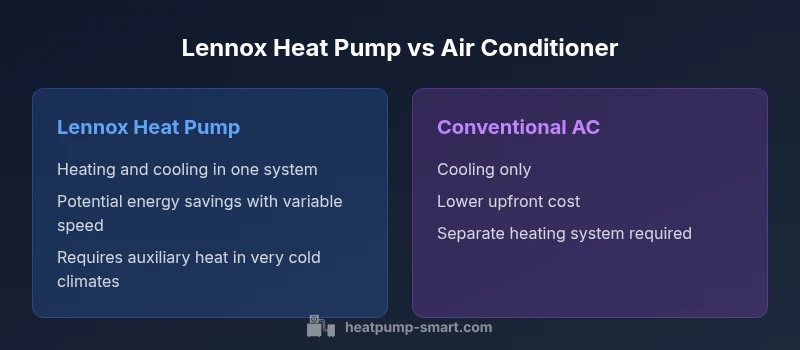
Choosing between a Lennox heat pump and a conventional air conditioner involves weighing practical advantages and tradeoffs. Heat pumps offer year‑round comfort and potential energy savings but may involve higher upfront costs and supplemental heat needs in extreme cold. Air conditioners typically provide strong cooling performance with lower initial cost, but heating relies on a separate system and may not be as energy‑efficient during winter. The best option depends on climate, insulation, usage patterns, and long‑term goals for home comfort and energy efficiency.
Real‑World Scenarios: Practical Takeaways for Your Project
If you live in a climate with mild to moderate winters, a Lennox heat pump can deliver efficient, continuous comfort with a single system. For homes that already have a robust heating system and live in extreme winter climates, pairing a high‑efficiency air conditioner with a complementary furnace may be financially attractive in the short term. Regardless of choice, investing in good insulation, air sealing, and a smart thermostat will maximize performance and homeowner satisfaction in the lennox heat pump vs air conditioner decision.
Comparison
| Feature | Lennox Heat Pump | Conventional Air Conditioner |
|---|---|---|
| Heating capability | Year‑round heating and cooling | Cooling only (requires separate heat source) |
| Climate suitability | Excellent in moderate winters with supplemental heat | Best in warmer climates or with existing heating |
| Efficiency potential | High with variable-speed technology | Depends on SEER rating; typically lower overall efficiency for heating |
| Upfront cost | Higher upfront due to combined system and equipment | Lower upfront as cooling-only unit |
| Maintenance needs | Similar refrigerant service; more components to monitor with heating function | Cooling service with fewer heating considerations |
| Lifespan and reliability | Longer system integration with modern controls | Requires separate heating system maintenance |
Advantages
- Year‑round comfort with a single system
- Potential for energy savings and better humidity control
- Centralized control and smart thermostat integration
- Space-saving compared with dual systems in some homes
- Stronger resale value in energy‑efficient homes
Disadvantages
- Higher upfront installation cost
- Performance depends on climate and proper sizing
- May require auxiliary heat in very cold conditions
- Complex installation if existing ductwork is inadequate
Heat pump wins for climate-appropriate homes with year‑round heating and cooling needs
In moderate climates, a Lennox heat pump typically delivers better overall efficiency and comfort. An air conditioner may be preferable where initial cost and simple cooling are the primary concerns, especially in extremely cold regions with limited heating capacity.
Your Questions Answered
What is the main difference between a Lennox heat pump and a traditional air conditioner?
The main difference is heating capability. A Lennox heat pump provides both heating and cooling by moving heat, while a traditional air conditioner cools only and relies on a separate furnace for heating.
A Lennox heat pump handles both heating and cooling by moving heat, while a standard air conditioner cools and needs a separate heater for warmth.
Can a Lennox heat pump replace my furnace?
In many homes, a heat pump can replace the furnace, especially when paired with a compatible backup heat source for very cold days. In colder climates, some households keep a supplemental heating system as a safeguard.
Yes, in many homes a heat pump can replace the furnace, often with a backup heat source for extreme cold.
Are Lennox heat pumps efficient in cold climates?
Heat pumps work best in cool to moderate winter conditions. In very cold climates, auxiliary heat improves performance, but efficiency gains depend on insulation, ducting, and system sizing.
They can be efficient in cold weather with proper sizing and insulation, though auxiliary heat is common in very cold days.
What maintenance do Lennox heat pumps require?
Regular maintenance includes filter changes, coil cleaning, refrigerant checks, and annual professional inspections. Proper maintenance helps sustain efficiency and prevents unexpected outages.
Keep filters clean, have yearly professional service, and monitor coil cleanliness for best performance.
Is a Lennox heat pump a good long‑term investment?
For homes in suitable climates, a Lennox heat pump can offer long‑term energy savings and comfort, potentially offsetting higher upfront costs through lower operating expenses.
In climate-appropriate homes, it can be a solid long-term investment due to energy savings and comfort.
How do rebates and incentives affect the choice?
Rebates and incentives vary by region and program. They can significantly affect total cost and payback periods, so check local programs and utility offers when evaluating the lennox heat pump vs air conditioner.
Look for local rebates and utility incentives; they can improve the economics of a heat pump.
Top Takeaways
- Prioritize climate when choosing between systems
- Inspect and seal ducts for best performance
- Consider intelligent thermostats for efficiency gains
- Account for auxiliary heating needs in cold climates
- Match system to home insulation and usage patterns